Get in Touch with Aubrik Company

Quick Specs
| Capacity range | 50 kg (benchtop) to 50 tons (heavy industrial), model-dependent |
| Axis configurations | Rotation-only turntable / tilt-and-rotate (typically 0-135°) / headstock-tailstock / dual-station (H-frame, Ferris-wheel) |
| Speed (RPM) | Sub-1 RPM (precision TIG) up to 30 RPM (MIG/SAW), varies by model |
| Grounding | Dedicated rotary ground path (slip-ring or brush), rated to weld amperage |
| Standards to check | AWS D14.0/D14.0M:2024, ANSI Z49.1-2021, ISO 10218-2:2025 (if robot-integrated) |
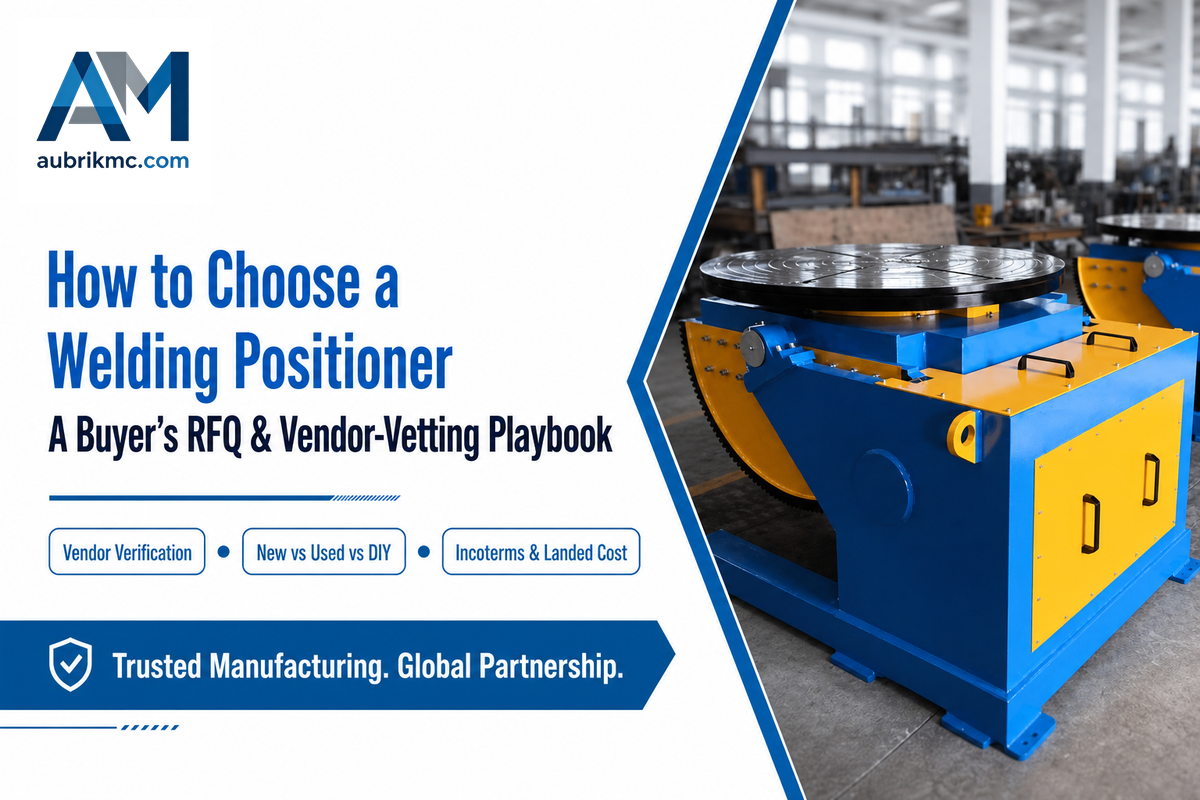
A welding positioner is a piece of equipment that spins or tilts the workpiece to keep the weld joint in the flat, downhand position so the welder doesn’t have to reach around the part. How to choose a welding positioner means specifying the capacity and motion your part requires and knowing the manufacturer behind it, since two machines with identical specifications might have the documentation of a reputable quality manufacturer or the quality documents of none at all. The benefits of using this class of equipment show up across nearly every one of the welding applications a shop takes on, from simple welding jobs on flat brackets to complex welding tasks on multi-axis shells, because a consistent welding position is what drives a genuinely high-quality weld and steady weld quality and consistency, whatever welding method the shop runs, whether the unit on the floor is a 50 kg benchtop model or a 50 ton industrial one.
In short: Size capacity to your heaviest part plus fixture with an eccentric-load margin, match rotation speed to your welding process, then — before you send a deposit — verify the manufacturer’s certifications through a public database rather than a logo on a webpage, and confirm what Incoterm and warranty terms actually cover if the unit ships from overseas.
- Rated capacity is the starting point, not the finish line – an off-center load severely reduces capacity as the part tilts.
- New, used, and DIY all have unique risk profiles apart from their purchase price.
- A manufacturer’s ISO 9001 claim can be confirmed via public records, but it’s one thing few purchasers ever bother to do.
- Selecting an Incoterm won’t absolve you of your responsibilities as the legal importer.
Positioner, Turntable, Rotator, or Manipulator, Naming the Category You Actually Need
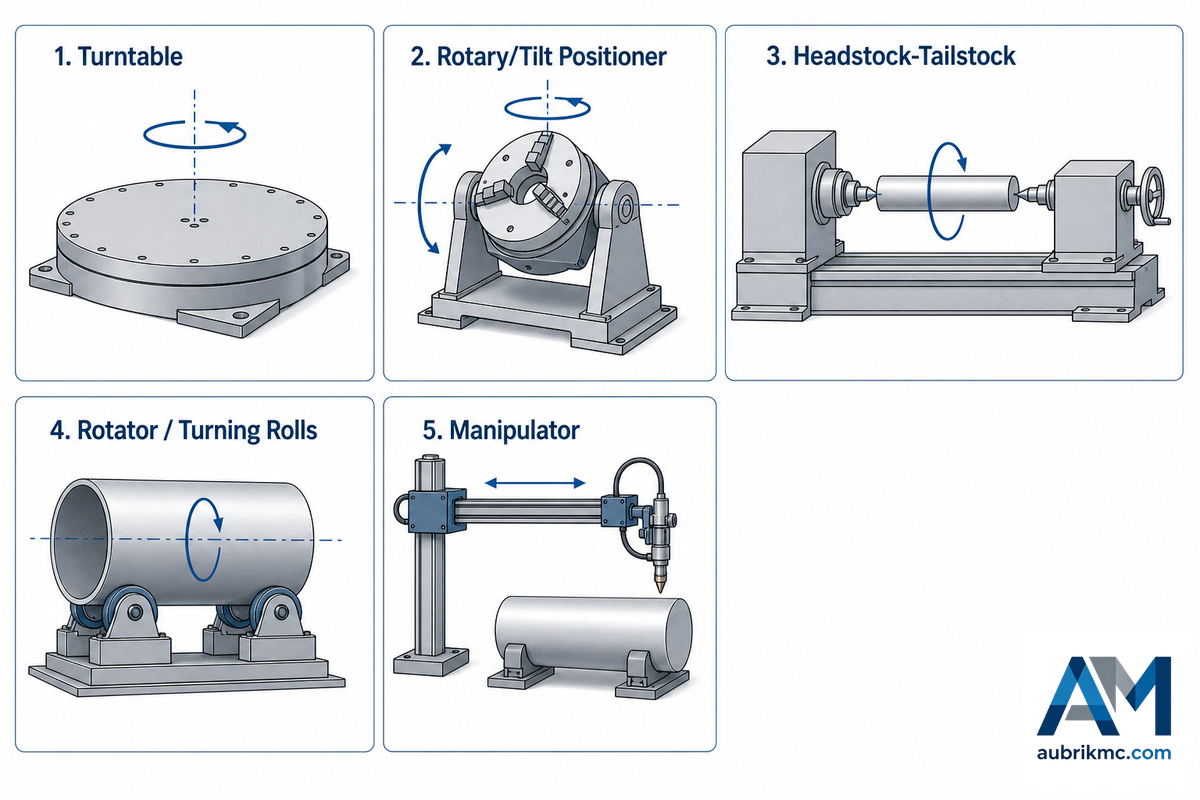
In many search results and sales discussions, these four terms, welding positioner, welding turntable, welding rotator, and welding manipulator, will be used almost synonymously, but they each denote different motion capabilities. Ordering the wrong type of equipment-even if the machine has the capacity and technical specifications-can render the purchase ineffective, leaving shops unable to perform the welding operations for which it was bought. Think of this guide to welding positioners as a short map of the different types of welding positioners on the market: the types of positioners below look similar in a catalog photo but behave very differently once a part is actually clamped in.
| Term | What Moves | Typical Fit |
|---|---|---|
| Turntable | Part, single-axis rotation only | Small, flat, or disc-shaped parts |
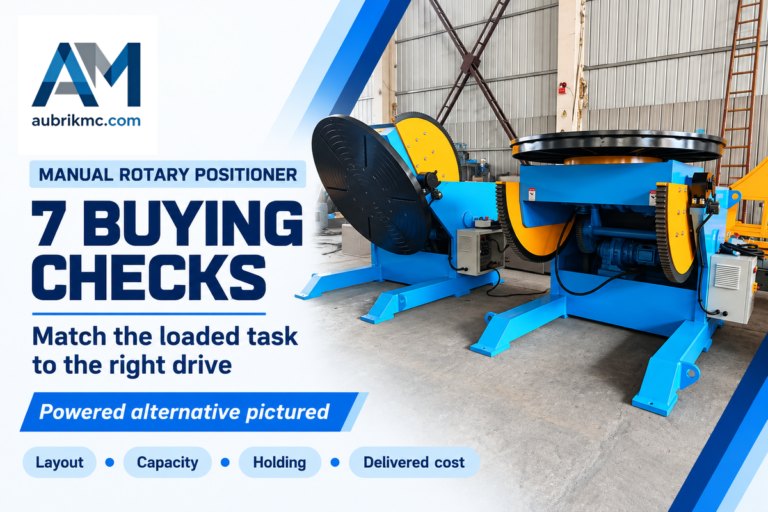
| Rotary/tilt positioner | Part, rotation + tilt | Brackets, flanges, irregular weldments |
| Headstock-tailstock | Part, supported between two centers | Long or heavy cylindrical assemblies |
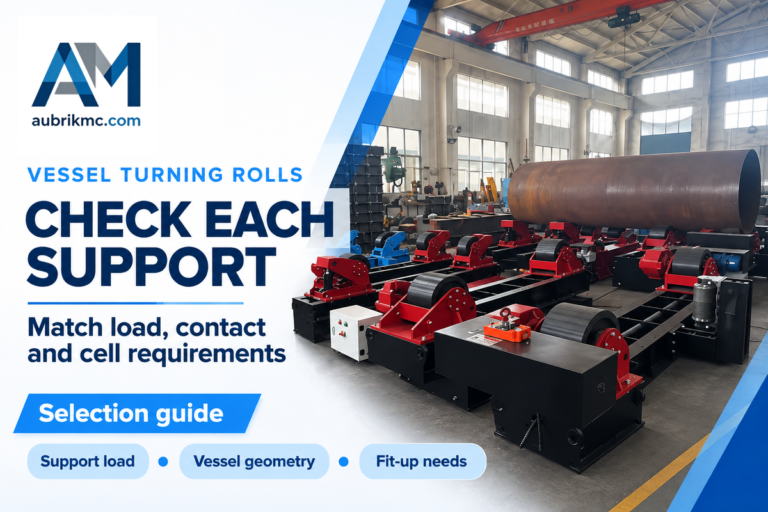
| Rotator / turning rolls | Cylinder on idler rollers, no chuck | Pipe spools, tank shells, pressure vessels |
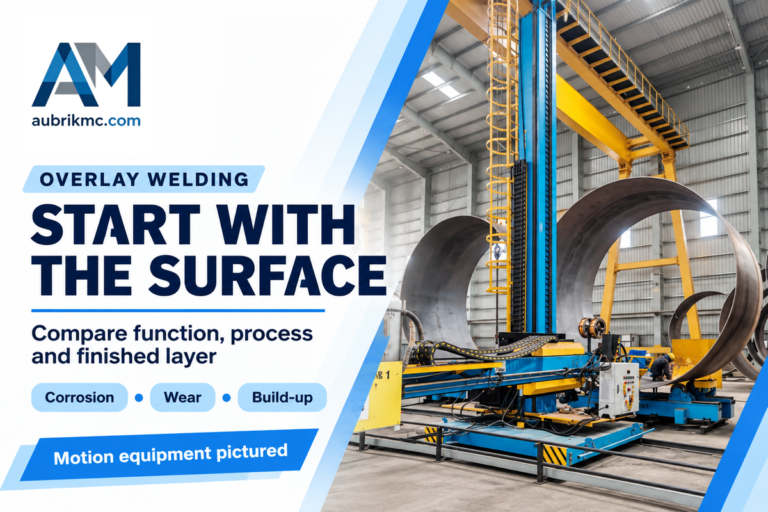
| Manipulator | Torch/welding head, not the part | Long seams on fixed or slowly-moving parts, often paired with a positioner or rotator |
- Positioners and rotary tables use a chuck or faceplate to clamp a round, flat, or bracket-mounted workpiece.
- Rotators rely on a set of idler rollers to spin cylindrical spools with no attachment at all to a faceplate.
- Headstock-tailstock assemblies, sometimes searched as a headstock tailstock positioner, secure long or heavy workpieces by sandwiching them between two centers.
- Dual-station positioners, with two positioners mounted on a common rotating base, are most cost-effective in automated welding systems and other automated welding cells where an operator can load one workpiece while the other is being welded robotically, keeping continuous welding running inside a robotic welding cell instead of idling between parts. This same welding automation logic is why positioners in robotic welding systems almost always show up in pairs rather than single stations once a shop moves from manual welding into robotic welding operations.
The consensus on fabricator forums is clear: shops that weld many pipes inevitably own a rotator or pipe welding positioner in addition to a standard rotating positioner, because they offer different workpiece clamping methods rather than competing. Proper categorization ensures weld quality and productivity will increase after the purchase, rather than merely shifting the bottleneck elsewhere in the shop floor. While Aubrik manufactures the entire range, including rotary and pipe positioners, along with welding turntables, this selection should be dictated by your part.
💡 Key Takeaway
When selecting your equipment, start by distinguishing the specific motion required: simple rotation, rotation with tilt, between-center support, roller support, or torch travel, prior to comparing individual machine models.
The Fast Technical Checklist: Capacity, Axis Type, Speed, and Guarding
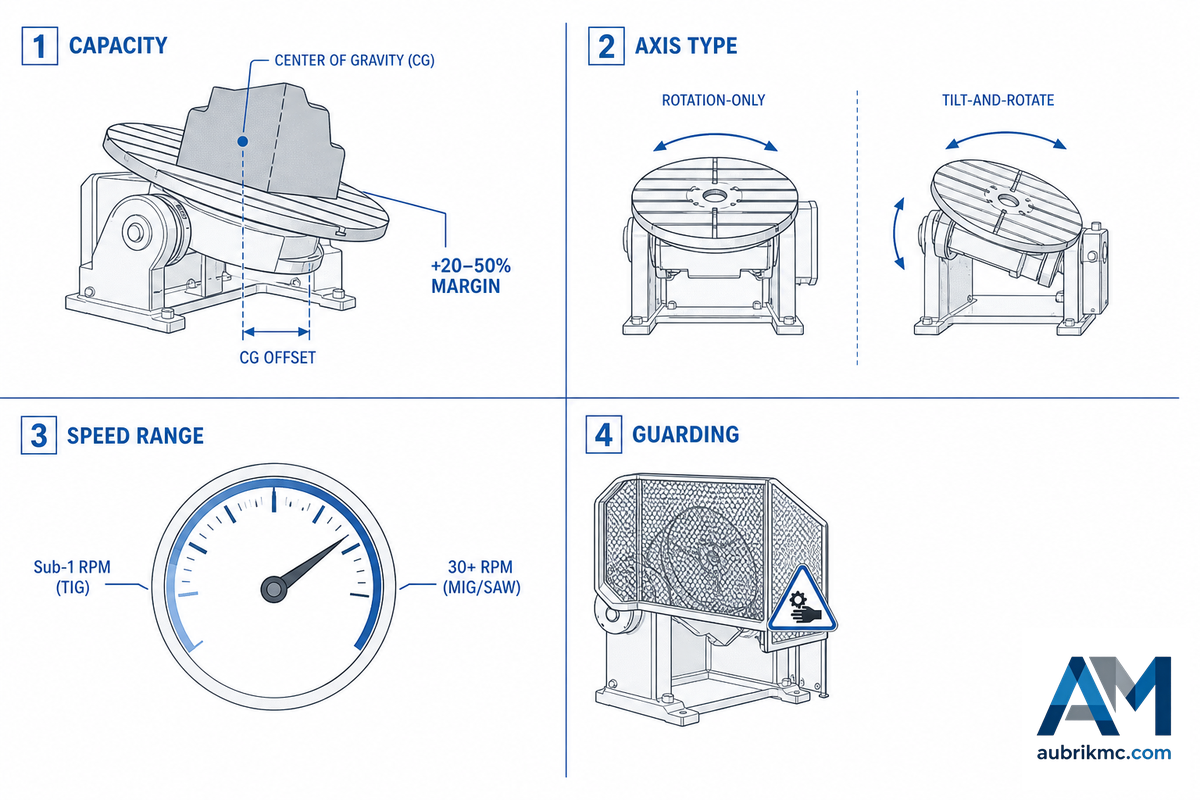
After you’ve identified the category, four key technical aspects-capacity, axis type, rotation speed, and guarding-will help you choose the right welding positioner and zero in on the exact model that will actually improve weld quality and avoid the cost of adding automation just for its own sake; this same welding positioner selection logic guides you to select a positioner whether you’re buying your first unit or replacing one already in the shop. Each of these factors is covered in more detail on Aubrik’s own welding positioner and turntable pages, and this checklist will get you prepared for your purchase.
- Capacity: Size to your largest part plus chuck, clamps, and fixture, not your average piece; add an extra 20-50% margin to accommodate the mass of the fixture and the off-set of the CoG (center of gravity). Most load capacity ratings were developed with the CoG at the center of the table; when that’s off-center, the drive system is battling torque and the capacity decreases as the table begins to tilt.
- Axis type: This will be selected according to your workpiece and is evident in the table above – if the part requires tilt axis access, it’s unlikely that it will run on a rotation-only turntable with an exceptionally powerful motor. Table/chuck sizes across this equipment group generally range from 200mm to 2500mm, dependent on your selected model.
- Speed range: TIG welding requires slow rotation, perhaps as little as less than 1 rpm so the weld puddle matches the speed and angle of the filler manually added, whereas the MIG/sub-arc process may work up to 30 rpm and more, when using higher travel speeds and in-line feed. Find out the lowest working speeds under load.
- Guarding: Under OSHA’s machine guarding rule, equipment is required to guard against hazards of the point of operation, in-going nip points, rotating parts, and flying chips or sparks. This matters most for units that are second hand, or homemade modifications, as these can come into the workshop – or be created – missing the guards found on any new, commercial grade unit.
- Using it day to day: Most operators just hold and rotate a control pendant to rotate the workpiece through the weld and hold the joint in the right welding position, but the rotation and tilt axes should be checked independently before the first production run, since a positioner that only passes a no-load spin test can still bind once real workpieces during welding add eccentric weight. Using a welding positioner well is mostly about this pre-production check, not the day-to-day operation itself, and shops that skip it end up quietly using welding positioners below their rated capacity just to stay safe.
📐 Engineering Note
Weld current needs to get to the workpiece by way of a rated rotary ground – a slip-ring or brush that’s adequately rated to the current you’re welding at, typically quoted to 600A on larger units. Drive motor ratings in this equipment vary greatly, from less than 1kW for small bench-mounted units to over 5kW for large industrial positioners. Should current try to go via the positioner bearings, it arcs from ball to race, pitting the bearings, and this doesn’t usually show up until months later as a worn drive.
Key Factors to Confirm Before Requesting a Quote
- Heaviest workpiece weight, plus fixture and clamp weight
- Center-of-gravity offset from the table centerline
- Required tilt range and rotation mode
- Welding process and its minimum stable RPM requirement
- Guarding present at time of delivery, not added after
New, Used, or DIY, Matching Total Cost to Duty Cycle
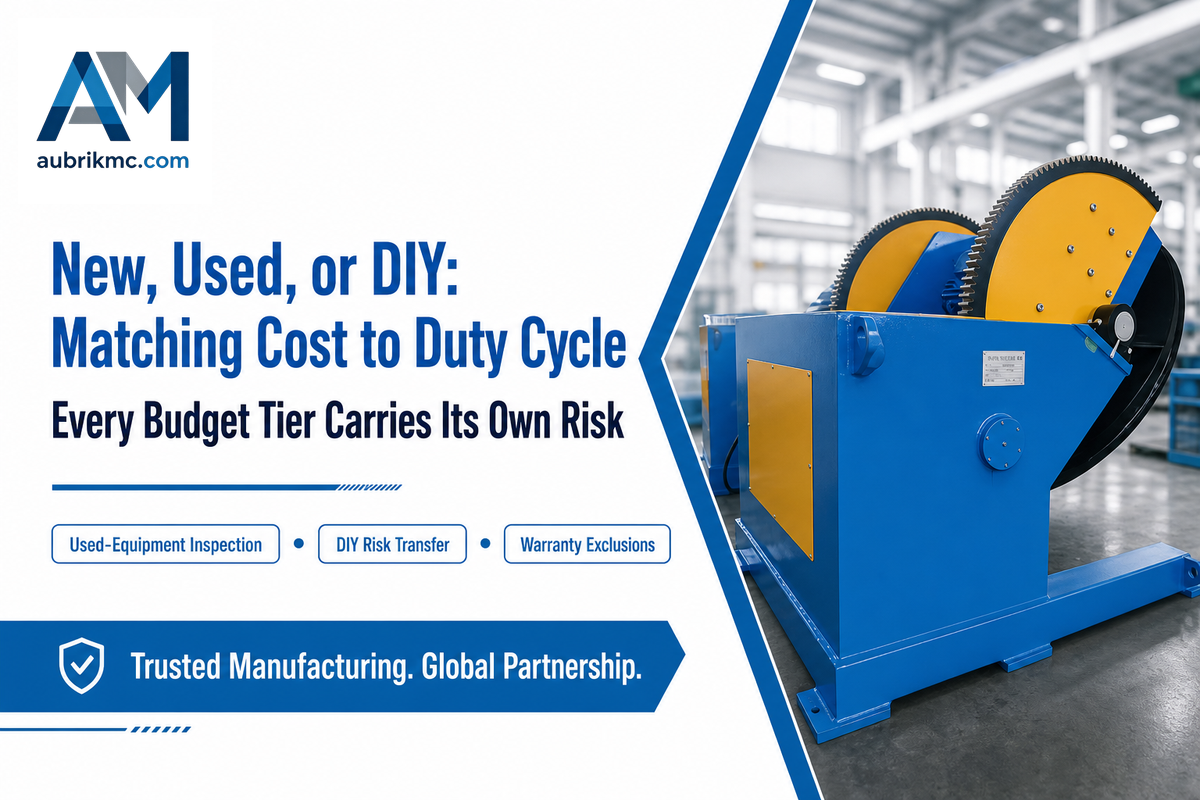
A positioner’s real cost is the figure on the purchase order – plus the risk you’re taking on what that order doesn’t tell you about the individual components. Buying new, used, or even building it yourself puts that risk in a different category.
✔ Advantages of Buying Used
- Lower upfront cost for light, occasional duty cycles
- Faster availability than a custom build
- Reputable used-equipment dealers often still offer some limited protection terms – “as-is” doesn’t automatically mean zero recourse
⚠ Limitations of Buying Used
- Wear to bearing, ground-path and drives aren’t cataloged unless maintenance logs are present from the seller. Also not documented are the units total hours.
- Guarding may have been removed or never installed to meet today’s standards
- No manufacturer warranty on the mechanical build, only what the reseller offer
Let’s transfer the same type of categories that are used by heavy-equipment buyers everywhere else and apply it to the positioner to create a simple checklist.
- Drive motor condition and bearing play under load
- Grounding-path integrity, not just the control panel
- A known history of running or servicing, and not a verbal estimate of it
- Real world, live demonstration under actual load- no posed pictures of a static machine
A DIY build-retrofitting a turntable from a surplus motor and gearbox under 1kW-throws every one of those risks squarely onto the builder’s own engineering judgement: eccentric load capacity chart, grounding path rating, and guarding are all items no one has tested but the person who built the unit. That’s an acceptable gamble for a low-stakes hobby project or a prototype. That’s a different equation when the workpiece is a pressure vessel, or a structural weldment produced at a current high enough to arc-pit an unrated bearing.
⚠️ Common Mistake
Presuming that warranty will cover labor or downtime. Under the federal Magnuson-Moss Warranty Act disclosure rules the FTC enforces, a written warranty must spell out its own exclusions, and in practice those documents often exclude labor charges and nearly always exclude consequential damages-the cost of lost production while the equipment is non-operational. Carefully read the exclusions before incorporating “12-month warranty” into your personal risk math-whether the unit is new or used.
9-Point Vendor Verification Framework
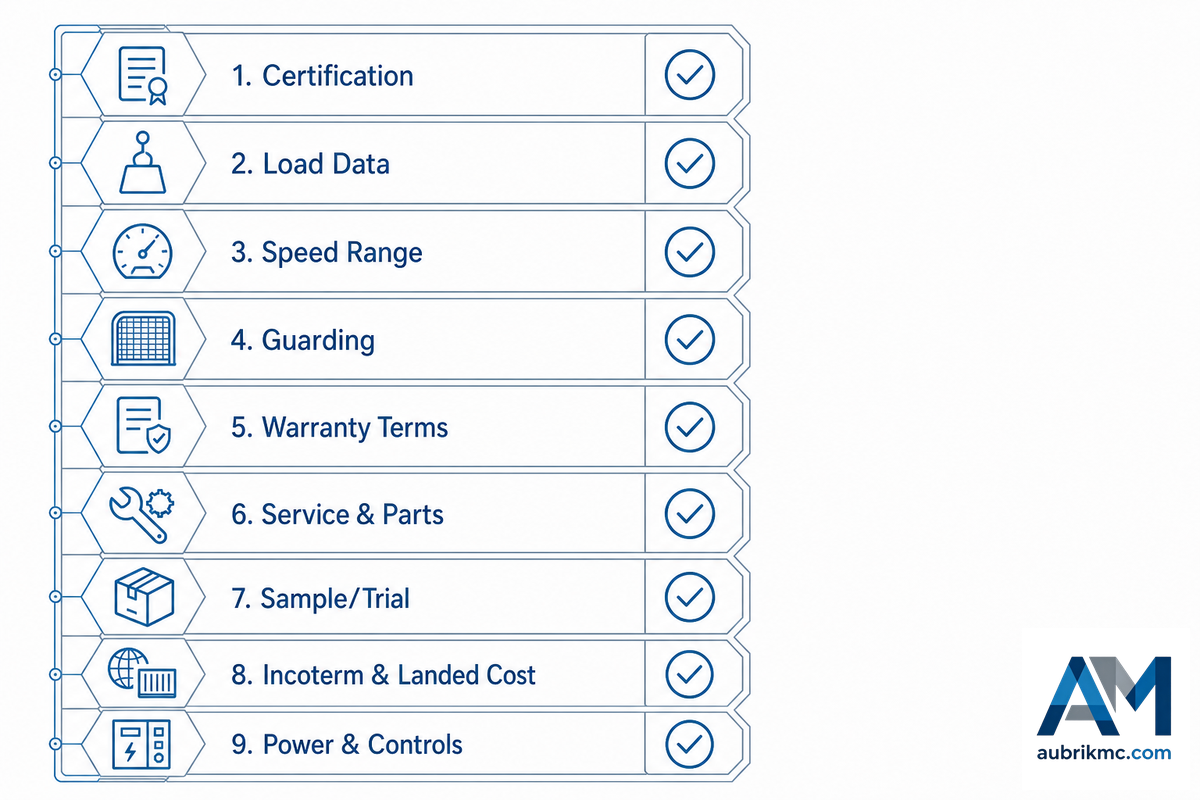
Once you know what to order, the more difficult problem is who to order it from: RFQ red flags, certification validation, and sample requests are all far more important than simple specification comparisons. Most guides that discuss this precise term will just advise you to “look for the ISO 9001” certification-however, a claimed certificate and a verified certificate are two completely different things, just as a generic RFQ template is not the same as a template that actually vets potential suppliers. The 9-Point Vendor Verification Framework outlined below summarizes all the critical checks from this guide into a pre-deposit process.
| Category | What to Confirm | Why It Matters |
|---|---|---|
| 1. Certification | Named ISO 9001/CE certificate number, not just a logo | Certificates can be verified independently via IAF CertSearch; logos cannot |
| 2. Load data | Model-specific torque/eccentric-load chart | A headline capacity number without a chart hides the tilt-and-offset de-rating |
| 3. Speed range | Usable RPM range under load, not motor top speed | A stated 0.03-30 RPM range means little if it isn’t stable under your part’s actual weight |
| 4. Guarding | Confirmation guarding ships installed, not added after | OSHA 1910.212 treats rotating-part guarding as a purchase-time requirement, not an afterthought |
| 5. Warranty terms | Written duration (commonly 12 months) + explicit exclusions (labor, consequential damage) | Vague “industry-standard warranty” language is itself a red flag |
| 6. Service & parts | Named regional contact for spare parts and service | “Email us” with no named contact usually means no real regional support exists yet |
| 7. Sample/trial | Test-weld video on your own part geometry | A generic demo part hides how the machine handles your actual eccentric load |
| 8. Incoterm & landed cost | Quote broken out by Incoterm (FOB/CIF/DDP), not one bundled number | The gap between FOB and DDP commonly runs 10-20% of the machine’s price |
| 9. Power & controls | Supply voltage (typically 220V or 380V) and fieldbus compatibility if robot-integrated | Wrong voltage assumptions surface as a phase-converter surprise after shipping, not before |
In reference to the first item specifically: a ISO 9001 certification may be confirmed without having to take a seller’s word for it. ISO does not certify companies directly, but rather, accredited certification bodies do-yet, a certificate’s accreditation status may be verified independently on IAF CertSearch, the universal directory that consolidates information on accredited and certified bodies, allowing a buyer to verify the certification and accreditation status of any company in one place, in either individual or bulk searches. As of 2026, Global ACI (Global Accreditation Cooperation Incorporated) has succeeded in fulfilling the coordinating functions formerly provided by the IAF and ILAC, so a company’s documents only indicating the old IAF marking are not automatically false, though it would be wise to query as to which body holds the current accreditation on record.
“A manufacturer that hesitates to run a documented test weld on your own part geometry, not their demo part, is telling you something before the machine ever ships.”
The fourth and final tool in the evaluation process is a sample or trial request, just as effective for domestic vendors as for international ones – a brief trial period, or at the very least a video demonstrating a test weld on your own part design, before you make full payment. Manufacturers confident in their equipment will readily accept a reasonable request of this nature, and if the vendor is unwilling to perform the demonstration using your specific parts, rather than a generalized demo model, that reluctance is already telling you something valuable.
💡 Key Takeaway
Certification, load ratings, warranty stipulations, and contact for service are all independently verifiable prior to making any deposit; if any one of them appears unconfirmable, account for the associated risk in your purchasing decision, rather than relying on unfounded trust.
Buyer Scenarios, Three Real Purchase Paths Worked End-to-End
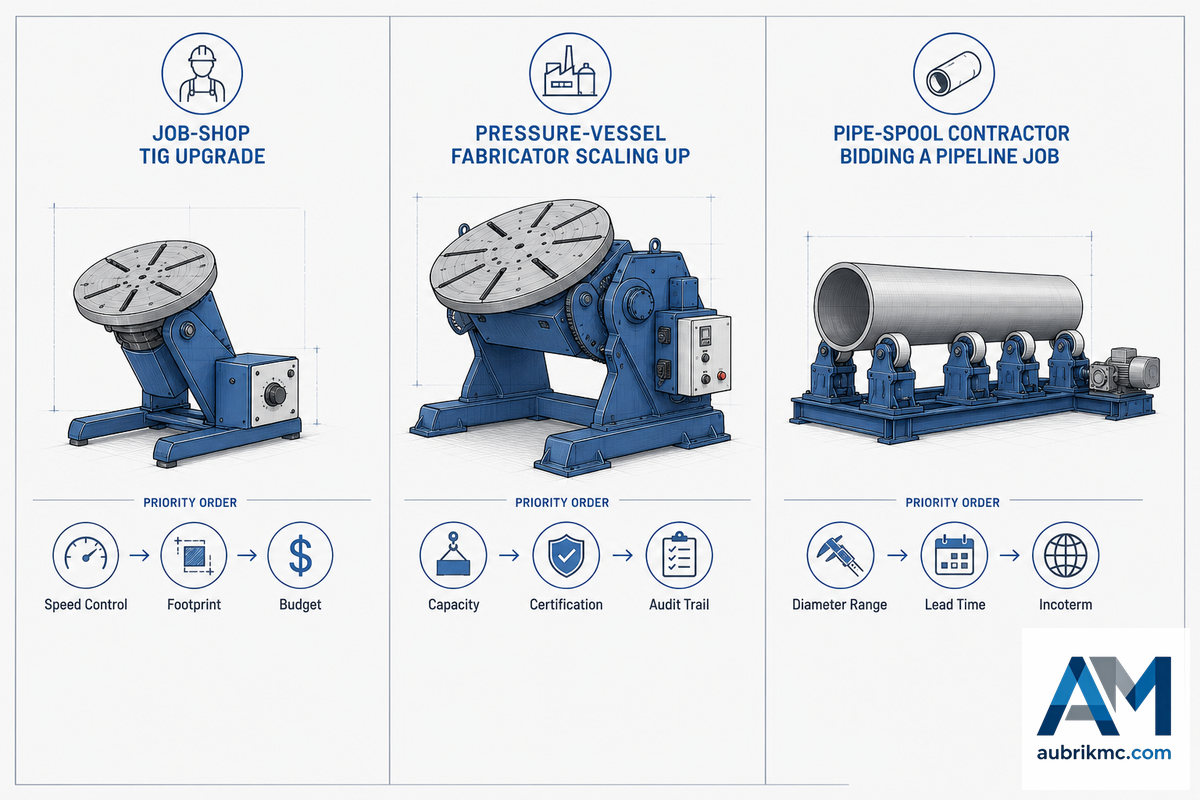
Here, those factors vary in weight based on who’s doing the buying, and we’ve boiled most of the common real-world decision paths down to three basic scenarios.
Scenario 1, The Job-Shop TIG Upgrade
A small fabrication shop welding stainless brackets on a benchtop fixture decides to add its first powered positioner. Priority order here runs speed control first (a stable sub-1-RPM range for TIG matters more than raw capacity), then footprint, then budget tier – this buyer is a strong candidate for a new entry-level unit rather than used, because the shop has no in-house means to verify a used unit’s low-speed stability before it’s already on the floor.
Scenario 2, The Pressure-Vessel Fabricator Scaling Up
Here capacity and certification lead: the workpiece is heavy, often well over 5,000kg once fixturing is added, and the center-of-gravity offset is significant enough that the fabricator’s own quality system, typically built around ASME Boiler and Pressure Vessel Code compliance, likely requires documented supplier certifications for its own customer audits. This buyer should run the full 9-point vendor verification before anything else, because a capacity mis-size or an unverifiable certificate creates downstream audit risk, not just a mechanical one.
Scenario 3, The Pipe-Spool Contractor Bidding a Pipeline Job
This buyer needs a rotator or pipe positioner sized to a diameter range, not a single diameter, because the contract will likely include multiple spool sizes across a multi-week schedule running well over 8hr shifts. Its RFQ should specify a diameter range and roller spacing rather than one dimension, and – since pipeline contracts often run tight delivery schedules – lead time and Incoterm choice (covered next) become as important as the machine spec itself.
Decision Framework: Match Your Scenario
- If your priority is speed control on small parts → weight the RPM range and control precision over raw capacity
- If your priority is certified capacity for audited fabrication → run the full vendor verification before comparing prices
- If your priority is a diameter range under a delivery deadline → specify a range in the RFQ, and confirm lead time and Incoterm before capacity
Sourcing From Overseas Manufacturers, Incoterms, Landed Cost, and Warranty Risk
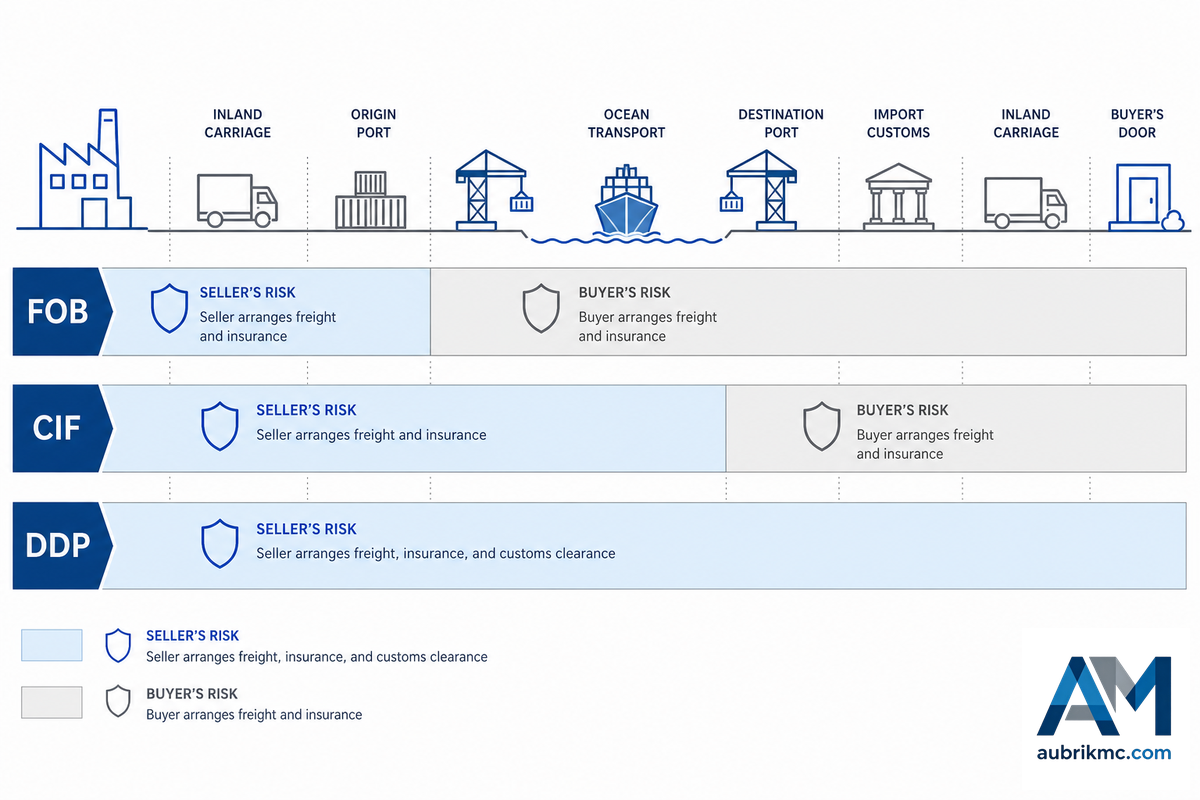
Most welding positioners sold into the U.S. market today are manufactured overseas, which makes the shipping terms on a quote as consequential as the machine spec itself.
| Incoterm | Who Carries Freight/Insurance Risk | Best Fit |
|---|---|---|
| FOB | Buyer, from the origin port onward | Buyers with an existing freight-forwarder relationship who want to control carrier and rate |
| CIF | Seller arranges freight + insurance to destination port | Buyers wanting simpler logistics but still handling customs clearance themselves |
| DDP | Seller carries duties, taxes, and delivery to the buyer’s door | First-time importers who want one all-in number to budget against |
That trade-off is fairly direct: the Incoterms rules themselves (published by the International Chamber of Commerce) only define who carries which risk at each shipping stage – they set no savings percentage, and no independently audited figure exists for one. As an informal rule of thumb passed around among freight-forwarding sources rather than a measured statistic, buyers with the relationships to manage FOB themselves sometimes estimate savings somewhere in the 10-20% range versus paying a seller to bundle everything into a DDP price – treat that range as a starting assumption to verify against your own freight quotes, not a guaranteed number. A first-time importer without that infrastructure usually finds the DDP premium worth paying simply to get one predictable landed number.
- Ask for the quote broken out by Incoterm, not a single landed number – a supplier confident in its logistics chain will usually quote FOB and DDP side by side.
- Comparing both numbers side by side is how you actually see the freight and insurance premium, instead of taking one bundled figure on faith.
Just because you purchase on DDP (Delivered Duty Paid) terms doesn’t take away your own legal responsibility as buyer. Under 19 U.S.C. Section 1484, the importer of record, meaning whoever’s name is on the entry documents, is legally responsible for using reasonable care to correctly report declared value, tariff classification, and duty for your imported machine regardless of the Incoterms under which it shipped.
A DDP quote can bundle the seller’s logistics cost into one number; it does not transfer your own compliance obligations if you are the importer of record on the paperwork.
For any first-time overseas buyer, consult your freight forwarder or customs broker to clarify who’s named importer of record before you just assume “DDP” absolves you.
⚠️ Important
As discussions about overseas machine purchasing play out, there’s a recurrent theme: the two items buyers wish they’d vetted better before committing were the certs and service, not machine specs, which were almost universally found to be correct.
Planning for Future Robot-Cell Integration Before You Buy
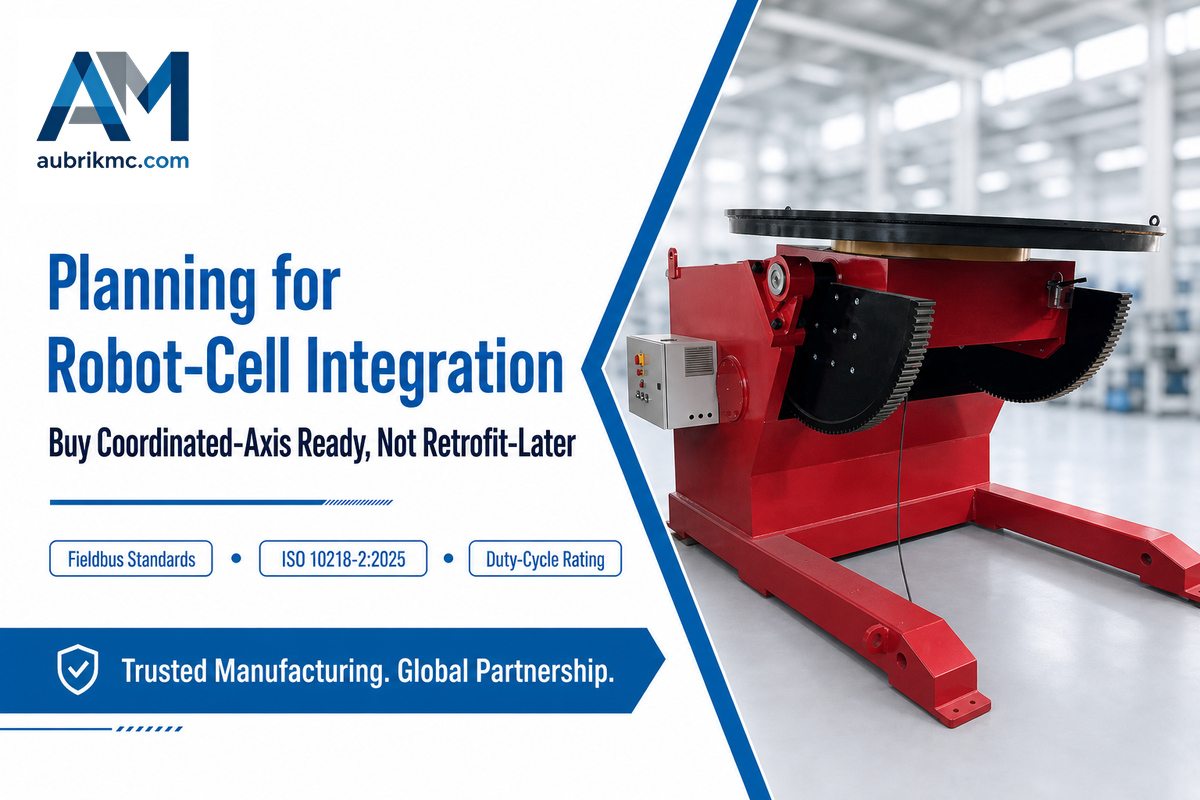
What worked as a positioner for manual welding now may become the auxiliary axis of a robot cell someday, provided you account for three requirements now that are far more painful to retrofit:
- It must be usable as a coordinated axis, not just an on-off platform
- Its control interface must communicate using a standard industrial fieldbus (EtherCAT, PROFINET, or DeviceNet)
- Its drive and grounding must be adequate for continuous, full 8hr duty — a robot cell doesn’t take the scheduled breaks a manual operator does
NIST’s own survey of industrial manipulation technologies notes that positioning and manipulation equipment built with automatic reset, high repeatability, and rugged design is what actually integrates cleanly into a future automated cell, rather than needing replacement.
If a future 2-3 yr robot upgrade is even a possibility, ask about the positioner’s compliance with fieldbus standards and its duty-cycle rating, particularly ISO 10218-2:2025, which supersedes the 2011 standard in defining requirements for robot cells and applications integration, operation, and maintenance. Retrofitting an axis that isn’t coordinated from the outset will be significantly more expensive than ordering one right from the beginning.
💡 Key Takeaway
At a minimum, plan ahead and spec your positioner with coordinated axis capability and a standard fieldbus interface, it’s only a few extra dollars now, but will cost much more to do later.
Industry Outlook: Why Vendor Verification Is Becoming the Real Bottleneck
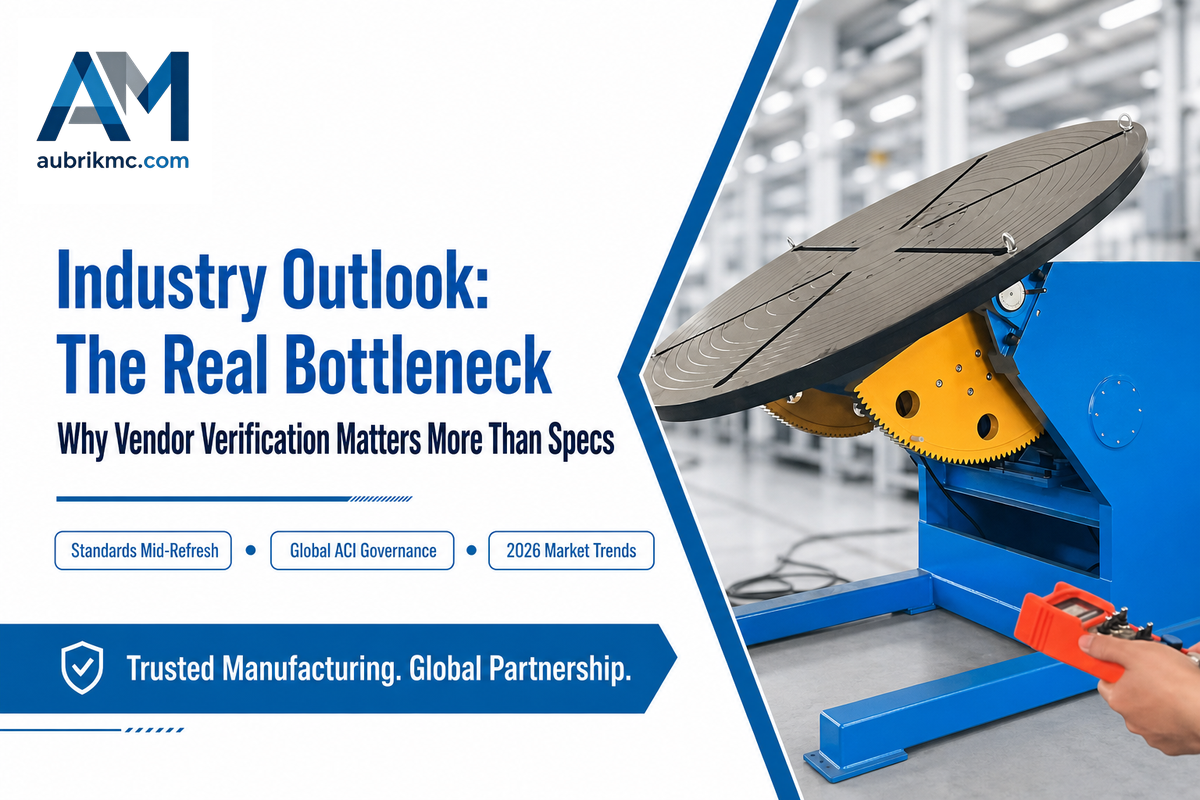
Online interest in “welding positioner” has steadily increased over 2026, and a significant amount of available online content offering advice on the topic comes from equipment manufacturers, many in the same cluster of international suppliers. This is the real change worth watching: information on machine specifications is abundant, whereas ensuring the integrity of the seller you’re dealing with has become more complex.
- Standards are mid-refresh: AWS D1.1, the Structural Welding Code for Steel, was updated in 2025, and ISO’s robot-cell safety standard moved to its 2025 edition the same year – buyers citing older editions in their own specifications risk referencing withdrawn requirements.
- Accreditation governance changed in 2026: Global ACI assumed the coordinating roles previously split between IAF and ILAC – a detail that matter if your own vendor-verification checklist still only mentions “IAF” by name.
Market-research estimates put the global weld positioner market in the mid-hundreds-of-millions of dollars, growing at a mid-single-digit annual rate through the early 2030s, figures worth noting only as background context, since they say little about which specific manufacturer or configuration is right for a given shop’s next purchase.
As a manufacturer that has built positioners, manipulators, and rotators since 1999, Aubrik’s engineering team sees the verification gap directly in RFQ conversations: buyers increasingly ask for the torque/eccentric-load chart at specific offsets – sometimes down to a 10mm tolerance – and certificate numbers up front, rather than accepting a headline capacity figure – a sign the buyer-side diligence described in this guide is becoming standard practice, not an edge case.
Why We Write This
Most manufacturer-published buying guides for welding positioners – including some on this site’s own product pages – are written to help a reader compare models.
This guide is deliberately different: it assumes the reader can find capacity and speed specs elsewhere, and instead spends its depth on the part of the purchase that spec sheets don’t cover – vetting who actually builds the machine. Reviewed by the Aubrik technical team.
What documents should I request from a welding positioner manufacturer before paying a deposit?
View Answer
Ask for the ISO 9001/CE certificates by name and number – not just a logo on the page – the model-specific torque and eccentric-load chart, written warranty terms, and confirmed spare-parts/service contact information. A manufacturer that can’t produce these promptly, or that only offers a generic catalog PDF, is a real-time signal worth weighing before a deposit, not a paperwork formality.
Is it worth buying a used welding positioner, and how do I check its condition?
View Answer
It can be, if the duty cycle is light and you can inspect the drive, bearings, and grounding path in person or via video before paying. Real risk with used units sits in undocumented wear on exactly the components a spec sheet can’t show – ask for run-time hours, maintenance records, and a live demonstration under load, not just photos.
What Incoterm should I choose when importing a welding positioner from an overseas manufacturer?
View Answer
FOB puts more logistics and risk on the buyer but usually lowers the quoted price; DDP shifts more risk – and cost – to the seller. Your right choice depends on whether your shop has an existing freight-forwarder relationship; if not, a landed DDP-style quote is usually easier to budget against, even at a higher line-item price.
How do I structure a sample or trial request before committing to a full order?
View Answer
Ask for a test-weld video on your own part geometry, not the manufacturer’s demo part. Reluctance to demonstrate on your specific workpiece is itself useful information.
What warranty and spare-parts terms should I expect, and what’s a red flag?
View Answer
Most manufacturer warranty agreements are 12 months, covering defects of workmanship and components, and come with a promise to supply spares and a specific person (rather than a general email) to call for help with equipment from outside of your country. Look upon warranty statements that give a period but no spare parts supply commitment, no specific person to call in case of failure, or no mention of who is the contact person for service on foreign machinery, as major red flags. These will only typically surface on first failure, at the time when the purchaser is in the weakest negotiating position – equipment not running and sales stop means they’re going to need it running very soon, and the seller knows this.
That’s why the verification process should be conducted before the deposit, and not on receipt of the first support call. An experienced purchaser will negotiate on the basis of a stated contact, and written confirmation of parts availability, not on an oral agreement made during a sales call.
References & Sources
- AWS D14.0/D14.0M:2024, Machinery and Equipment Welding SpecificationAmerican Welding Society
- ANSI Z49.1-2021, Standard for Safety in Welding, Cutting, and Allied ProcessesAmerican National Standards Institute
- 29 CFR 1910.212, General Requirements for All MachinesU.S. Occupational Safety and Health Administration
- ISO, Certification and Accreditation Verification (IAF CertSearch)International Organization for Standardization
- ISO 10218-2:2025, Robotics, Safety Requirements, Part 2: Industrial Robot Applications and Robot CellsInternational Organization for Standardization
- 19 U.S.C. § 1484, Entry of MerchandiseCornell Law School Legal Information Institute
- Survey of Industrial Manipulation TechnologiesNational Institute of Standards and Technology
Related Articles
- Welding Positioners & Turntables: full technical selection guide, capacity, geometry, and speed matching
- How to Use a Welding Positioner Correctly: Setup, Grounding, and Speed
- Heavy Duty Welding Positioner: Capacity, Tilt, and RPM Guide
- How to Size a Pipe Welding Positioner Before You Request a Quote
- How to Choose a Rotary Welding Positioner Without Oversizing the Machine