Get in Touch with Aubrik Company
// MODULE_HERO_SYS.01
Wuxi ABK Machinery · Established 1999
Aubrik, Welding Equipment Manufacturer for Welding Automation & Turnkey Production Lines
Aubrik is a welding equipment manufacturer who builds the full chain of welding automation – from a single welding positioner to a complete wind tower production line – and backs every machine with ISO 9001 quality control, CE conformity and a one-year warranty. Since 1999 we have shipped approximately 1,000 welding machines and 200 cutting machines a year to fabricators in Spain, Germany, Russia, India, Brazil and beyond.
- [ TECH_DATA_MATRIX // LIVE_CAPACITY ]
- 1,000+200 Welding + cutting sets / yr
- 1999 Founded (25+ yrs)
- 8 Equipment categories
- ISO 9001 · CE Certified & EU-compliant
- 20+ Export countries
[SYS-01: MARKET_STATUS]
Sourcing Welding Equipment Shouldn’t Force a Choice Between Price and Proof
Most fabricators evaluating a new welding supplier are stuck between two bad options: pay a premium to a known Western brand, or take a chance on a cheaper import and hope the controls, the spare parts, and the after-sales support hold up.
That second fear is well earned – on professional welding forums the recurring complaint about imported gear is rarely the steel. Buyers praise the frame and blame the electronics, the missing parts, and the silence after the sale.
[SYS-02: PROCESS_CAPABILITY]
A welding positioner, rotator or manipulator is a welding automation tool, not a commodity. Its job is to hold heavy work in the flat (1G) position so the arc run longer and cleaner – which is exactly where most shops are losing money.
Aubrik closes the gap on both sides at once: the engineering that raises arc-on time, and the manufacturing discipline – certificates, stocked parts, documented commissioning – that removes the “taking a chance” feeling from buying out of China.
[SYS-03: FIELD_DATA_RECORD]
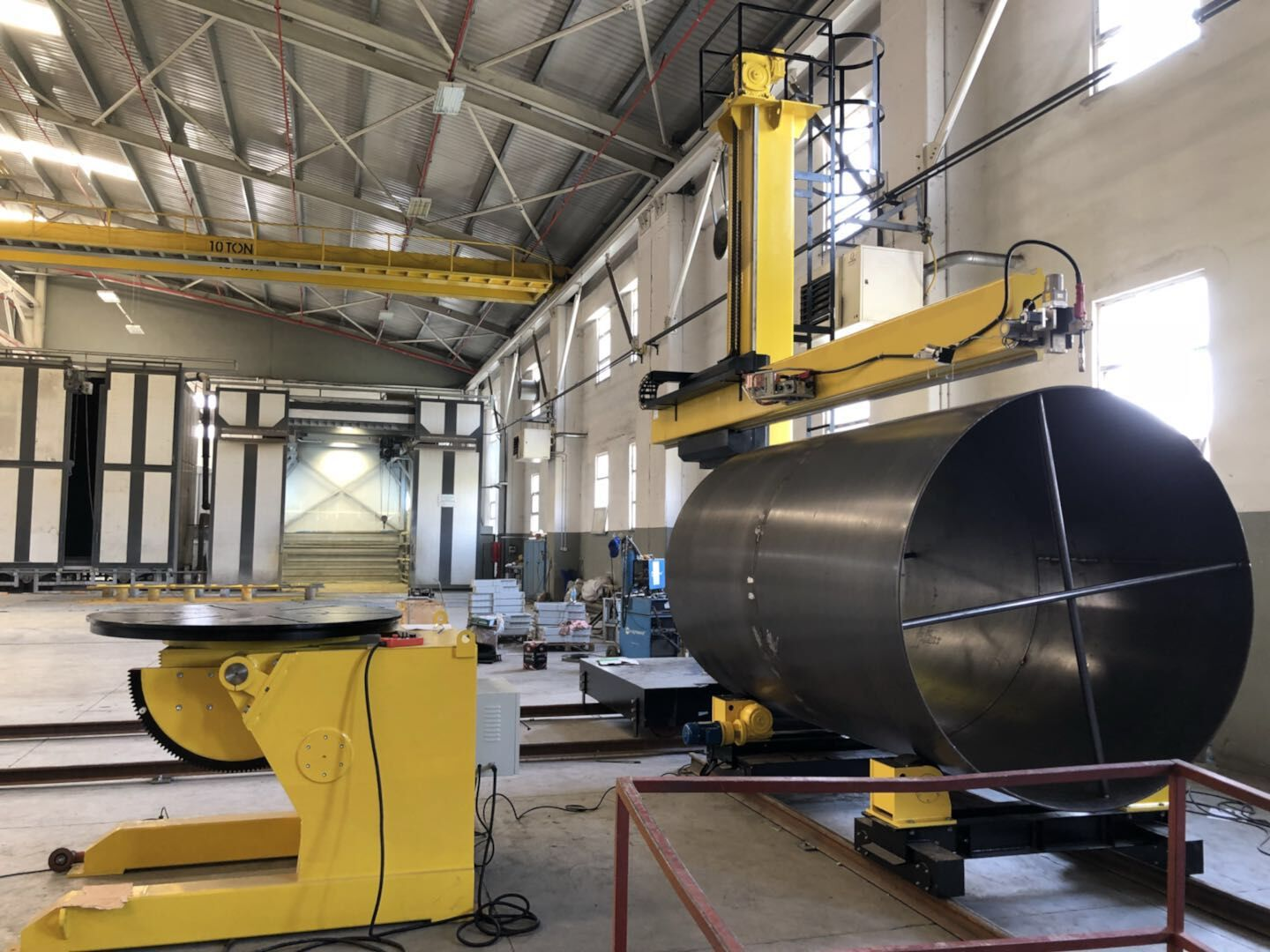
Take a pressure-vessel shop welding a 40-ton, 4 m-diameter shell. On fixed stands the welder works overhead and out of position, arc-on time collapses, and every circumferential seam need grinding and re-runs. Put that shell on a 60-ton turning roll under a column-and-boom manipulator and the same seam runs flat at full submerged-arc deposition –
847
The documented result on exactly this kind of setup is 847 radiographic examinations with zero defects.
Integration Capability
The Aubrik Machine-to-Line
The Aubrik Machine-to-Line
Coverage Spectrum
A fabricator rarely needs one machine in isolation. You need a positioner today, a turning roll next quarter, and – when an order for forty wind towers lands – a full production line that ties them together. Sourcing each from a different vendor multiplies the integration risk and the finger-pointing when something doesn’t fit. The Coverage Spectrum maps Aubrik’s eight categories along a single axis: from a standalone machine, to an integrated cell, to a complete turnkey line.
| Equipment Category | Type / Variants | Capacity / Reach* | Core Process | Integration Scale |
|---|---|---|---|---|
| Welding Positioners & Turntables | Rotary, pipe, heavy-duty | 10 kg – 100 t | MIG / TIG / SAW | Machine |
| Welding Rotators & Turning Rolls | Self-aligning, conventional | 5 – 500 t / set | SAW / GMAW | Machine |
| Welding Manipulators (Column & Boom) | Column & boom, pipe manip. | 2×2 – 7×7 m | SAW / GMAW | Cell |
| Robotic Welding Systems | 6-axis, cells, cobots | 3–25 kg payload | MIG / TIG / arc | Cell |
| H-Beam & Steel Structure Line | Assembly, SAW, blast | 5-stage line | Gantry SAW | Turnkey Line |
| Wind Tower Production Line | Rolling, girth welding | 1.5 – 7.5 m dia | SAW | Turnkey Line |
| Boiler Production Equipment | Membrane-wall, panel bend | ~30 t / day | Multi-torch SAW | Turnkey Line |
| CNC Machining & Metal Welding | Custom CNC, contract weld | ±0.01 mm | TIG / MIG / SAW | Service |
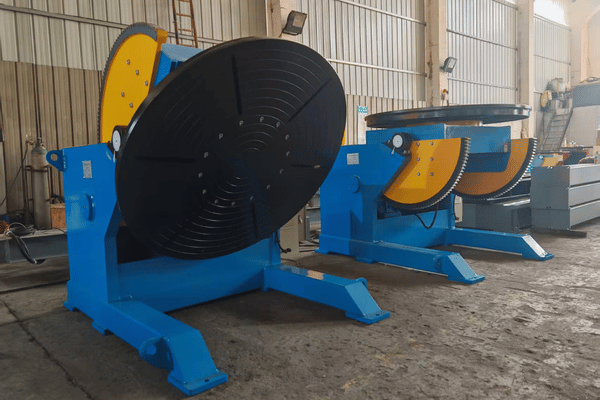
01
Welding Positioners & Turntables
SPEC: Rotary · pipe · heavy-duty
DATA: 10 kg–100 t · headstock-tailstock
DATA: 10 kg–100 t · headstock-tailstock
Explore Systems
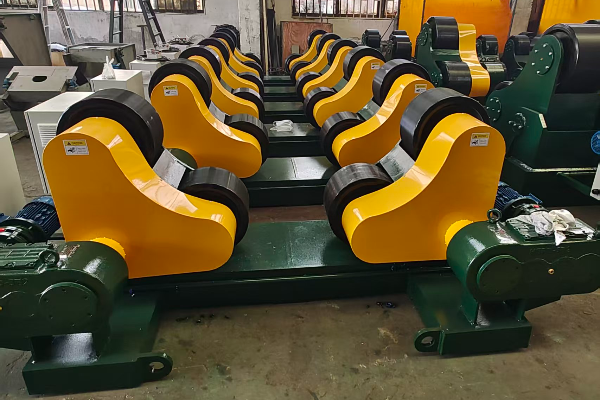
02
Welding Rotators & Turning Rolls
SPEC: Self-aligning · conventional · fit-up
DATA: 5–500 t/set
DATA: 5–500 t/set
Explore Systems
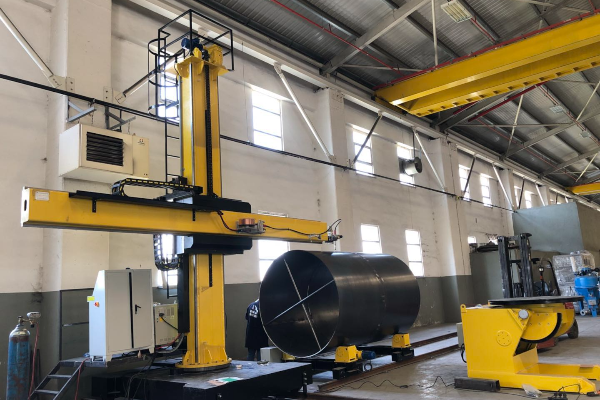
03
Welding Manipulators (Column & Boom)
SPEC: Column & boom · SAW flux recovery
DATA: 2×2–7×7 m
DATA: 2×2–7×7 m
Explore Systems
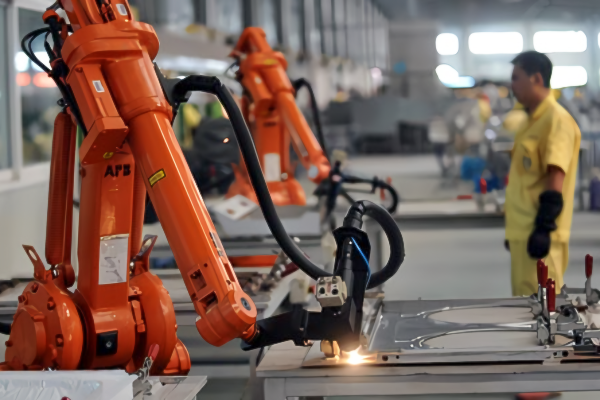
04
Robotic Welding Systems
SPEC: 6-axis robots · pre-engineered cells
DATA: Cobot integration
DATA: Cobot integration
Explore Systems
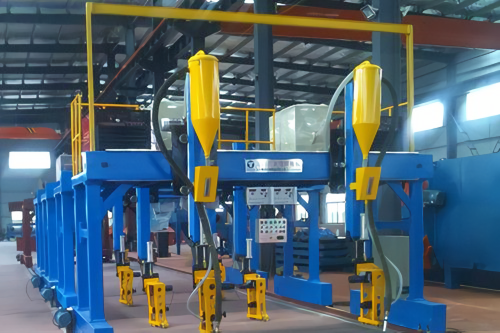
05
H-Beam & Steel Structure Line
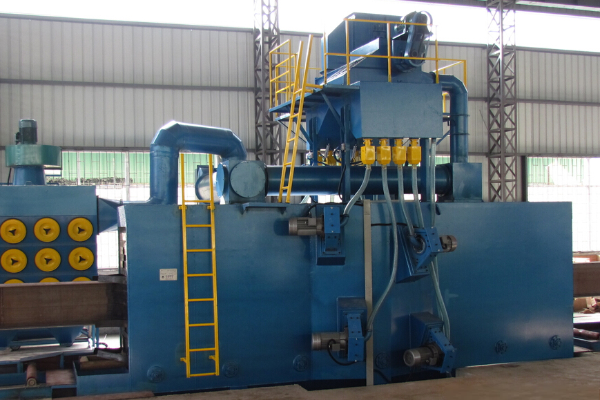
PROC: Assembly · straightening · blast
CORE: Gantry SAW integration
CORE: Gantry SAW integration
Explore Line
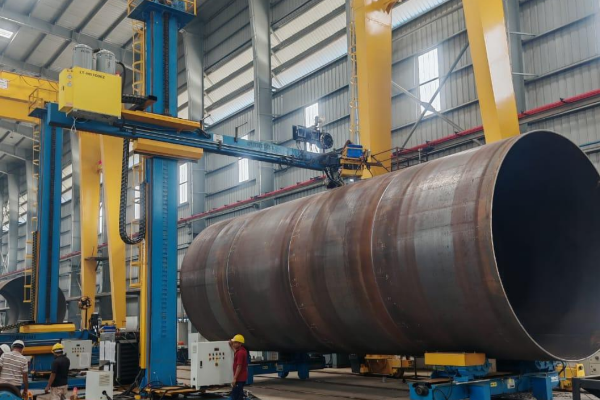
06
Wind Tower Production Line
PROC: Plate rolling · longitudinal & girth
DATA: 1.5–7.5 m diameter
DATA: 1.5–7.5 m diameter
Explore Line
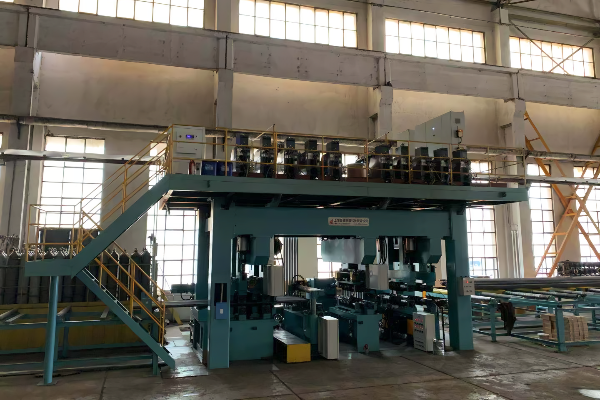
07
Boiler Production Equipment
PROC: Membrane-wall · tube-to-tube
CORE: Panel bending
CORE: Panel bending
Explore Line
08
CNC Machining & Metal Welding
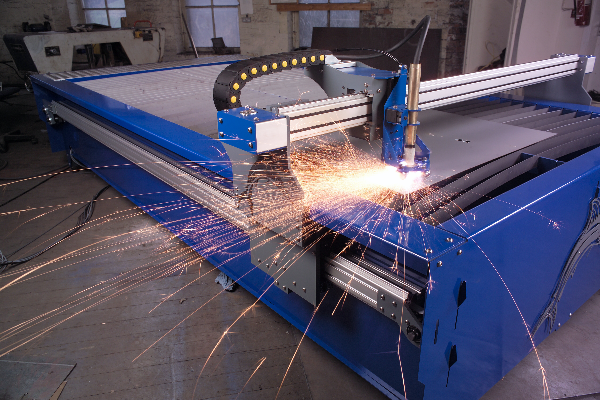
SVCS: Custom CNC · plasma cutting
PROC: Contract TIG/MIG/SAW welding
PROC: Contract TIG/MIG/SAW welding
Explore Services
[SYS-EVALUATION] // 01
Component Supplier or Turnkey Manufacturer? The Capability Index
That’s the difference between a component supplier and a turnkey manufacturer. And as we approach it with total frankness, the Capability Index will score it so you know where a standalone machine still make good sense.
[WARNING] // PROCUREMENT TRAP
Here’s the trap most buyers walk into: they buy a robot from one vendor, positioners from a second, and a power source from a third, then discover the costly part isn’t any single machine, it’s making them work as a system.
As one fabricator who ran three robotic cells put it, the robot is the easy part; the failure is treating a cell “like a manual welding station that happened to have a robot arm,” and getting the surrounding ecosystem wrong leaves you with “a $500,000 coat rack.”
$100,000–$150,000
Systematic savings achieved by sourcing a multi-process platform from one manufacturer.
Avoids the “switch suppliers down the road” lock-in.
Get Instant Quote
[DATA] // CAPABILITY MATRIX
| Capability Spec | Typical single-category supplier | Aubrik (Full-Range Manufacturer) |
|---|---|---|
| Standalone machines (positioner / rotator / manipulator) | Yes | Yes — 8 categories |
| Pre-engineered robotic welding cells | Sometimes | Yes |
| Turnkey production lines (wind tower / H-beam / boiler) | Rarely | Yes |
| In-house manufacturing capacity | Varies / outsourced | 1,000 welding + 200 cutting sets / yr |
| ISO 9001 quality system | Varies | Certified |
| CE — Machinery Directive 2006/42/EC | Often missing | Compliant |
| Warranty + OEM / customization | Varies | 1-yr warranty + OEM |
| Single-source project accountability | No (multi-vendor) | Yes |
| Honest “where automation stops” guidance | Rare | Yes — we’ll tell you |
[PROCESS] // ENG LOGIC
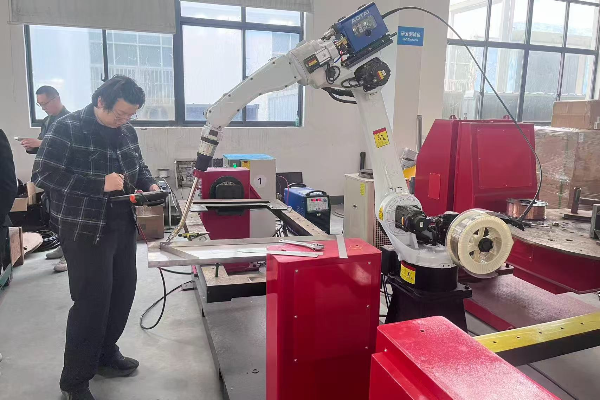
Across the range the engineering logic is the same: a mechanized welding system removes the variability of hand work, an automated welding system repeats it at high-volume, and a complete welding automation system ties material handling, positioning and the arc into one workflow. These automated systems cut rework because the torch follows the same path on every pass, and on automotive frames, pressure parts or wind-tower sections, that repeatability is the entire return. Our automation solutions scale the way a shop grows: one machine, then a cell, then a line.
[LIMITS] // APPLICATION
However, automation isn’t the answer for every project, and we will not claim otherwise. The honest trade-off is worth saying out loud, because we’re candid about these instances as well. For workpieces in low volumes – say, five to ten pieces of identical shape – or for single parts or on constricted field applications where an experienced welder and his standalone positioner are still the optimal solution we’ll so acknowledge that. Some manufacturers selling only full-lines might hesitate to do that since the goal there isn’t your weld, but their largest invoice.
[SYS_OVERVIEW // V.7.4 DUAL-CORE]
Industries We Equip
From Pressure Vessels to Wind Towers
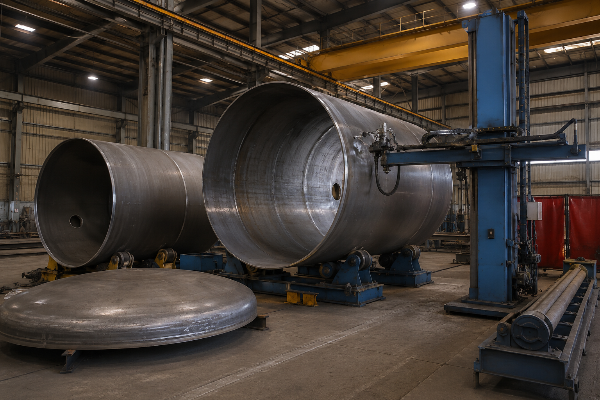
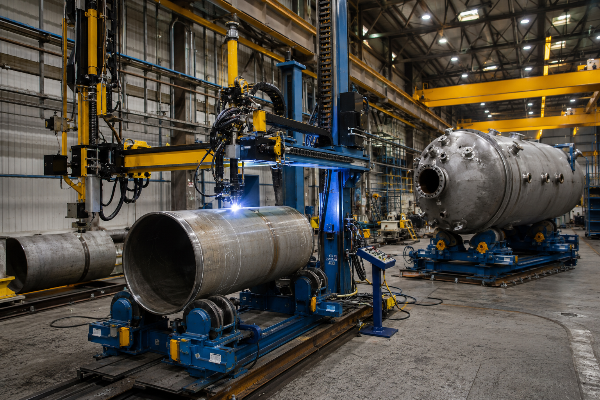
How can one manufacturer produce for both pressure vessel shops and wind tower yards? It’s because the motion problem is fundamentally the same: rotating large, cylindrical or structural work pieces under a continuous arc while positioned accurately, with the required repeatable quality. The only difference is the scale. While on shore the wind tower line can rotate workpieces 1.5 to 5 meters in diameter, with 15- to 60-mm wall thickness, and up to 100 tonnes, offshore monopiles are now topping 800 tonnes. In comparison, a boiler membrane wall line, turns tube-and-fin elements at around 30 t a day using submerged arc welding with multi-torch heads.
01
Pressure vessels & tanks
SPEC.APP
Cylindrical shells, heads
SYS.EQP
Rotators, rolls, manipulators
02
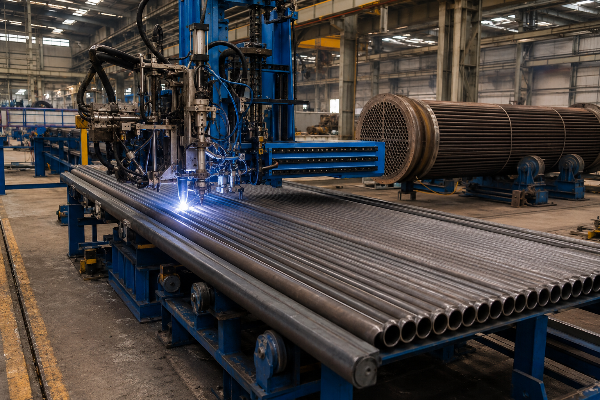
Petroleum & chemical
SPEC.APP
Pipe spools, reactors
SYS.EQP
Pipe positioners, col & boom
03
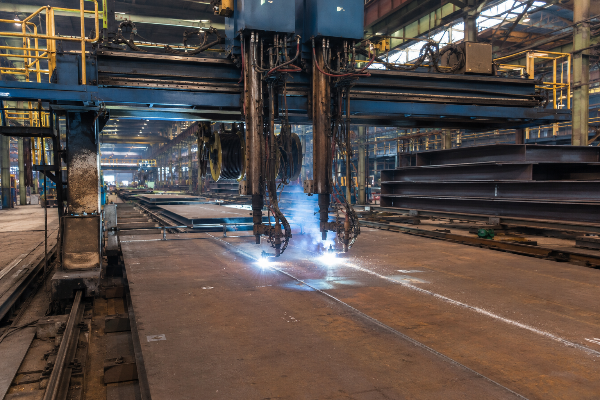
Power generation
SPEC.APP
Boiler membrane walls
SYS.EQP
Boiler production line
04
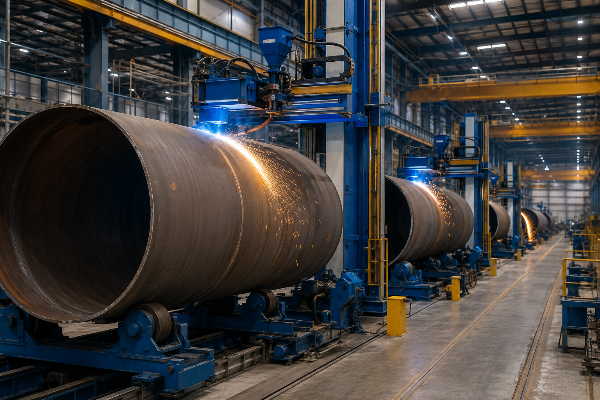
Shipbuilding
SPEC.APP
Heavy sections, panels
SYS.EQP
HD positioners, gantry SAW
05
Wind energy
SPEC.APP
Tower sections, monopiles
SYS.EQP
Wind tower production line
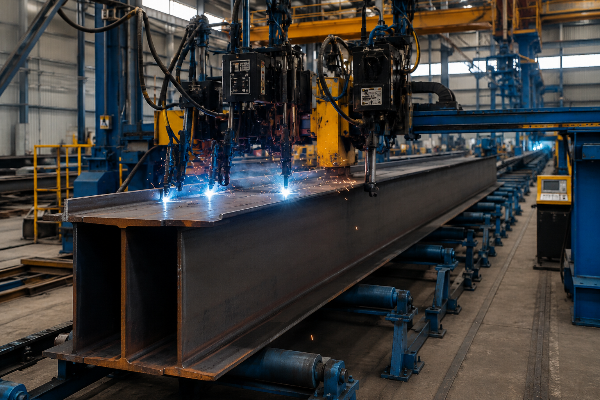
06
Steel construction
SPEC.APP
H-beams, box columns
SYS.EQP
H-beam & steel structure line
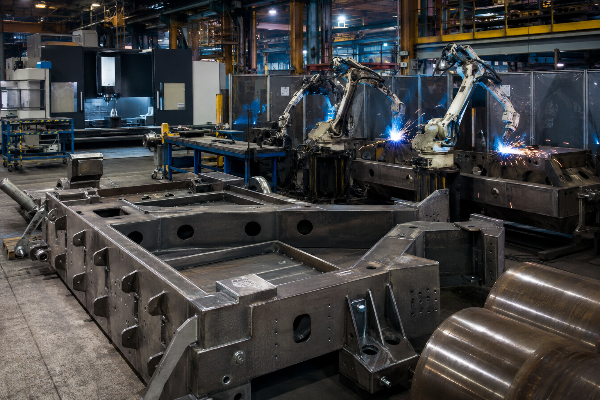
07
Heavy machinery
SPEC.APP
Frames, rolls, custom parts
SYS.EQP
Robotic cells, CNC + welding
Why Choose Aubrik, Capacity, Track Record, and Verifiable Trust
01 // BUYER VARIANCE & CAPACITY
The honest version of the “Chinese manufacturer” objection isn’t “Made in China is bad.” Professional buyers frame it as variance: it’s taking a chance. Our answer is to remove the chance with numbers you can verify. Aubrik was founded in 1999 with USD 1.4 million in registered capital, and runs an annual capacity of roughly 1,000 welding machines and 200 cutting machines. That scale isn’t a marketing line, an independent industry roundup of welding-rotator manufacturers lists our group (Wuxi ABK) with the same profile: founded 1999, ISO and CE certified, products built to European standards, and customers in over 20 countries. Industrial fabricators get the full welding technology stack from one source, the machines, the positioner accessories like chucks and grippers, and the fixturing a welder needs to hold work in the flat position.
02 // FORUM VERDICT & QUALITY CONTROL
The forum verdict on imported gear is consistent and useful: the frame and the build are usually fine; the failures live in the controls, the electrical spec, and the spare-parts pipeline. One buyer who specified a Chinese laser line summed up the realistic mental model, build quality “on par with USA-made shop equipment,” and a genuinely good outcome once the supplier sent an install technician who “had the machine on and cutting material within a few hours.” What separated good Chinese equipment from bad, a long-time reseller noted, was whether the work was “overseen by an engineer, not some person promoted to ‘Quality Control Expert.'” That is precisely the role an ISO 9001 manufacturer with its own engineering fills.
[DATA_CORE]
VAL_01
0%
of a welding operation’s total cost is labor — which is why arc-on time, not equipment price, decides your cost per meter of weld.
Industry economic analysis (Cal Poly, citing Summers & Stevens, 2008). Figure reflects published industry data, not an Aubrik-specific measurement.
[FIELD_REPORT]
We weld in 1G wherever we can and we own the welding coordination in-house, every machine is tested under load before it ships, and we keep the wear parts that actually fail, like drive wheels and chucks, on the shelf. The shops that get burned by imports get burned on parts and controls, not on steel. So that is where we put our quality effort first.
[DATA-SPEC-01]
COMPLIANCE MATRIX
Certifications & Compliance, ISO 9001, CE, and What They Actually Prove
A logo on a homepage proves nothing, a knowledgeable buyer verifies the certificate's issuer, scope and expiry. Aubrik's compliance is worth understanding precisely, because the standards govern two different things. The CE mark on our equipment — positioners, rotators, manipulators, robotic cells — is granted under the EU Machinery Directive 2006/42/EC, which sets the essential health and safety requirements for machinery placed on the European market and requires a Declaration of Conformity. For the welded steel structures our lines produce, H-beams, wind tower sections, the relevant framework is EN 1090, which ties each Execution Class (EXC1–EXC4) to a welding quality tier under ISO 3834.
This distinction matters because ISO 9001 alone is not proof of weld quality. Welding is formally a "special process" under ISO 9001, its result can't be fully verified by inspecting the finished part, so weld competence is demonstrated through ISO 3834 (welding quality management) plus qualified procedures (ISO 15614) and qualified welders (ISO 9606 / AWS D1.1). When you evaluate any welding supplier, ask which of these they hold and in what scope. We expect that scrutiny.
SEQ. 01 //
ISO 9001
Quality management system
SEQ. 02 //
CE · 2006/42/EC
Machinery Directive conformity
SEQ. 03 //
European standards
Build & design compliance
SEQ. 04 //
FAT available
Factory Acceptance Test on request
[INDEX: SOURCING-01]
Procurement Guide, Lead Time, OEM, Warranty & Global Logistics
[DIAG-01] VENDOR ANALYSIS
The single most common, and most expensive, buying mistake in welding equipment is choosing on price instead of application; vendors report machines being replaced "within months" when a unit can't keep up with production.
40%
The second is underestimating support: industry analysis attributes up to 40% of unplanned downtime to missing or delayed spare parts. Both are sourcing-discipline problems, and both are answerable up front.
One fabricator who compared imports put the real objection plainly: "We looked at the ones from Asia and found them to be cheap built and parts were long lead time."
We answer that with stocked wear parts, correct-voltage controls, and a stated lead time you can hold us to.
[PROC-02] ARCHITECTURE
How an Aubrik order is structured
Price movers are load capacity and axes, automation level (manual vs plc/hmi vs robot integration), welding and number of torches, and degree of integration (single machine vs line). Instead of a sticker price, you get a quote tailored to your workpiece and throughput, with a firm lead time, options (OEM vs custom), a 1-year warranty and a recommended bill of critical spares for parts that wear to keep readily in your own inventory rather than languishing on a cargo ship.
[PARAM-03] SPECIFICATIONS
Pricing
Application-based quotation (factors above) —
request a quote →
Customization / OEM
Built to your spec, branding and voltage (50/60 Hz handled correctly)
Warranty
1-year free warranty on all products
Spare parts
Wear-part kit recommended at order; parts kept available
Logistics
Optimized export logistics to 20+ countries
Acceptance
Pre-shipment load testing; Factory Acceptance Test on request
[SYS-CORE] // INTERACTIVE TOOLKITS
Aubrik Engineering Solutions & Toolkits
[TL-01]
PROCUREMENT
Equipment Selector
Streamline your procurement process. Quickly identify the optimal Aubrik welding machinery based on your specific production parameters.
Launch Tool
[TL-02]
CALCULATION
Automation ROI Calculator
Make data-driven investment decisions. Accurately project cost savings and efficiency gains from implementing our automated welding systems.
Calculate ROI
[TL-03]
DEPLOYMENT
Supplier Readiness Checklist
Ensure seamless integration and deployment. Use our comprehensive checklist to verify your facility's operational and supply chain preparedness.
View Checklist
As a welding equipment manufacturer,
Aubrik gives you one accountable source for positioners, rotators, manipulators, robotic cells and complete production lines
[GUARANTEE]
— certified, load-tested, and supported.
[ Q-01 ]
Is a Chinese welding equipment manufacturer reliable for export projects?
Yes, conditionally, and experienced buyers treat it as a probability question, not a verdict. Reliability comes down to selecting an established maker with proven field installations, ISO 9001 and CE certificates you can verify by scope and expiry, a documented warranty and spare-parts policy, and references from similar industries. Aubrik meets each of these: certified since the early years of a business founded in 1999, exporting to 20+ countries, with pre-shipment load testing and a Factory Acceptance Test available on request.
[ Q-02 ]
What's the real risk with cheaper imported welding equipment?
On professional forums the frame and mechanical build are usually rated fine, the failures cluster in the controls, the electrical spec, and after-sales. One buyer's $2,000 import — "It only rotates one direction, even when switched to reverse" — shipped with a 50 Hz European plug despite a 220 V order. We treat exactly those points as the priority: controls tested under load, correct voltage and frequency for your market, and stocked wear parts.
[ Q-03 ]
Can one supplier deliver both single machines and a complete production line?
That's the point of our range. You can buy a single welding positioner now and add rotators, manipulators and a robotic cell as volume grows, or commission a full wind tower, H-beam or boiler line as one engineered system. Single-source supply removes the multi-vendor "finger-pointing tax," and buying a coordinated platform rather than stitching separate systems together typically avoids six-figure integration costs.
[ Q-04 ]
How does welding automation actually pay for itself?
Through arc-on time. A manual welder spends only about 10–12% of the day actually welding; positioners and automation push that toward 70% or more, and since labor is roughly 70% of welding cost, that's where the savings come from. Published industry analyses put typical payback for welding automation in the 12–24 month range, with a peer-reviewed study measuring about a 40% reduction in welding time versus manual work.
[ Q-05 ]
Do you provide OEM and customization?
Yes. We build to your specification, voltage and branding, and offer OEM services across all eight equipment categories. Tell us the workpiece, capacity and process and we'll configure the machine or line around it.
[ Q-06 ]
Which welding processes do your machines support?
MIG/MAG (GMAW), TIG (GTAW), submerged-arc (SAW) and arc/stick across the range, with multi-torch SAW on the membrane-wall and gantry lines for high deposition on thick structural work.
Trending now