Get in Touch with Aubrik Company

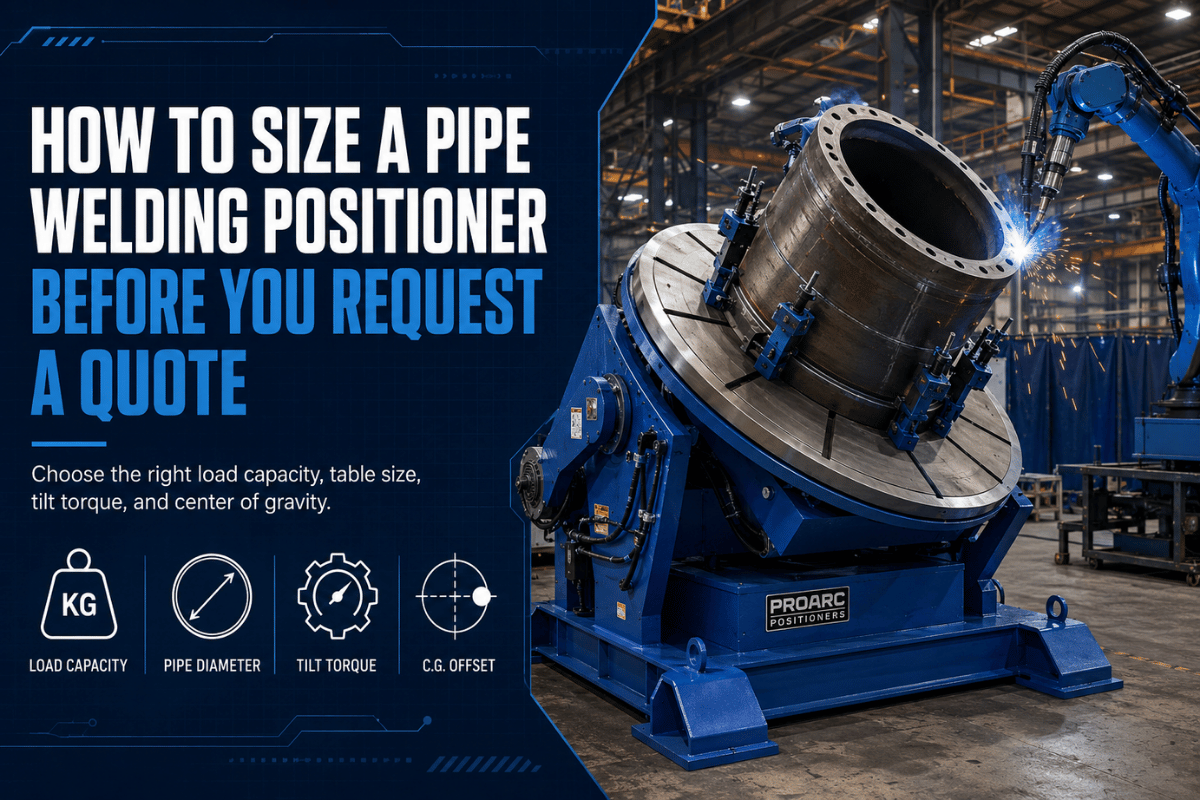
A pipe welding positioner may solve a current problem in an industrial fabrication shop: welding pipe needs constant rotation, the welder requires an attainable position, and the customer requires a machine the size of the load even before the first purchase order.
Quick Welding Equipment Specifications To Confirm First
- Pipe outside diameter and wall thickness.
- Total workpiece weight, including chuck, fixture, and tack-up aids.
- Required rotation speed, tilt range, and operator control method.
- Whether the workpieces need turning rolls, tailstock positioners, manipulators, floor turntables, or a mixed cell.
- Forloads 1-50 tonandpipe of diameter40 -2500 mmwe offer youthe range pipe welding positioner .
What a Pipe Welding Positioner Changes for the Welder
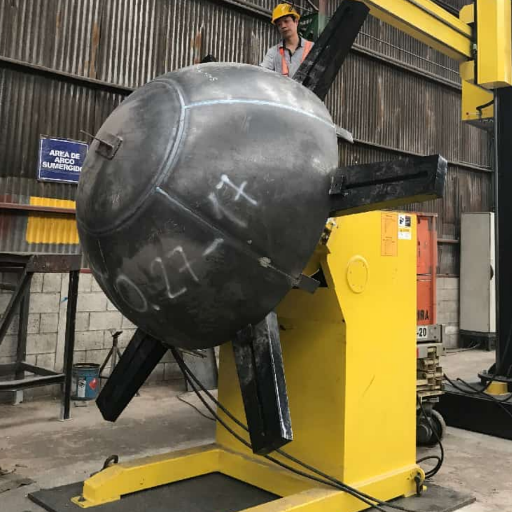
With the pipe welding positioner, the job piece is held in place by the pipe and thus the rotation doesn’t have to move around the pipe on each pass. The practical effect of the equipment will be shifting the job from chasing the joint to presenting the joint in an adjustable position for better ergonomics and weld quality.
This comes into its own when the shop is in question as the pipe welding is seldom a single simple seam all round. The operative may have to tack, rotate, then re-check the fit-up, tweak up the chuck, alter the torch position, then carry back to the weld, all without disturbing the work piece rigging. The HSE describe weld positioning as the procedure of presentation of the piece, generation of relative motion, speed direction control, and repositioning for subsequent weld.
Engineering note: ask the supplier where the capacity rating applies. A centered, balanced pipe is not the same load case as a long spool hanging off a chuck.
Pipe Rotation Fit Matrix: Positioner vs Turning Rolls vs Turntable vs Manipulator
Which equipment is required is determined by the way in which it must support the pipe and where the weld head needs to be situated. A positioner, turning rolls, floor turntables, and a manipulator can rotate or support medium to large workpieces; the wheel contact and workholding method change the result.
| Decision point | Pipe welding positioner | Turning rolls / rotator | Turntable | Manipulator |
|---|---|---|---|---|
| Main job | Grip and rotate pipe or spool work. | Support cylindrical work from below. | Rotate parts on a flat faceplate. | Move the weld head. |
| Best workpiece | Pipe ends, flanges, fittings, short spools. | Long cylinders, tanks, vessels. | Small parts and round assemblies. | Large parts where torch travel is the issue. |
| Load contact | Chuck, faceplate, fixture, or headstock-tailstock. | Rollers under the shell. | Faceplate or table slots. | No main load support. |
| Tilt need | Common when joint access changes. | Usually not the primary function. | May be fixed or limited. | Torch angle changes, not workpiece tilt. |
| Rotation control | Driven rotation with speed control. | Driven and idler rolls. | Table rotation. | Coordinates torch travel. |
| Tailstock use | Useful for longer or heavier spools. | Not typical. | Rare. | Not applicable. |
| Common accessory | Chuck, fixture, foot pedal, pendant. | Idler roll, roller stand. | Fixture plate. | Column, boom, wire feed, torch slide. |
| Buyer’s risk | Ignoring eccentric load. | Poor roller fit to diameter. | Overhang beyond table rating. | No workholding plan. |
| Best next step | Send pipe, load, chuck, and tilt data. | Send diameter and shell length. | Send fixture plate layout. | Send weld path and torch access. |
JMT’s welding positioning catalog separates these roles clearly: positioners revolve and pivot workpieces, manipulators move torches, and rotators are used to rotate cylindrical work for tanks and pressure vessels.
Capacity Stack: Tailstock Positioners, Pipe Load, and Rated Tons
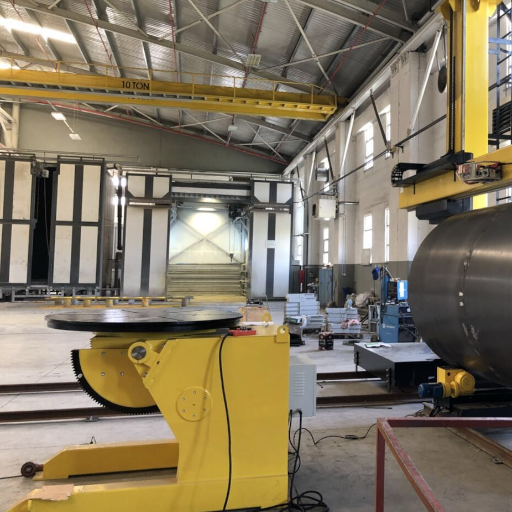
A 5-ton label does not automatically mean every 5-ton pipe setup is safe. Capacity changes with how the load sits, how far the center of gravity is from the rotation axis, how much fixture weight is added, and whether the pipe is supported by a tailstock.
The HSE points out that positioning equipment has the same stability problem as other load-carrying equipment: design load ratings should not be exceeded, and the safe working range should be marked or charted. OSHA load-handling guidance also flags uncontrolled off-center loading and overloading as instability risks.
Capacity Stack Checklist
- Pipe weight after cut length is known.
- Chuck, fixture, gripper, or faceplate weight.
- Distance from center of gravity of pipe to face of positioner or centre of rotation
- Tailstock requirement for long pipe or overhang.
- Rotation torque and tilt torque listed by the supplier.
- How much safety margin do the guidelines of your plant and the manual of the manufacturer require?
Rotation Speed, Tilt, Accessory, and Control Details to Check
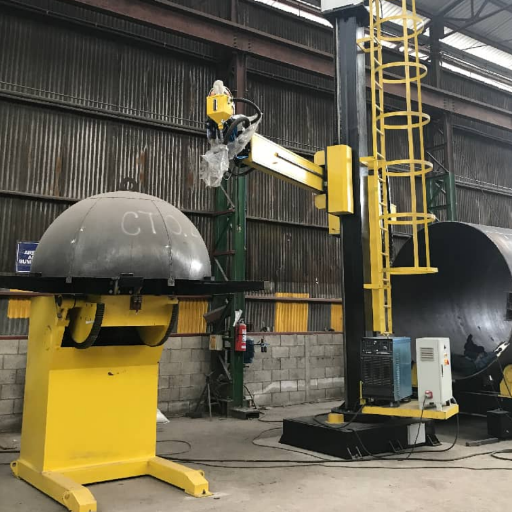
Speed control goes further than just maximum RPM. In pipe welding’s case the operator requires precision low speed range, clean start up and stop, as well as an operation approach suited to the station. A foot switch can help with manual welding; in a motorized cell it may be more important to employ a PLC or interface a signal.
Competitor specification sheets show which fields should appear in every RFQ, whether a buyer is checking a new or used unit. A typical Bulldog pipe welding positioner page lists 0.1-1.75 RPM variable speed rotation, 20,800 in/lb rotation torque, 20 in. self-centering 3-jaw chuck, pendant control, E-stop, and a foot pedal. Those numbers are not an Aubrik spec, but they show the level of detail a serious buyer should request.
Five checks before you approve the speed range
- Define pipe OD, wall, and expected weld process.
- Check whether welding process requires continuous rotation or index tilt.
- Ask how speed changes under load.
- Check tilt stability at the heaviest working angle.
- Perform a control method test on the shop floor that the operator will perform.
RFQ Specification Sheet for a Pipe Welding Positioner
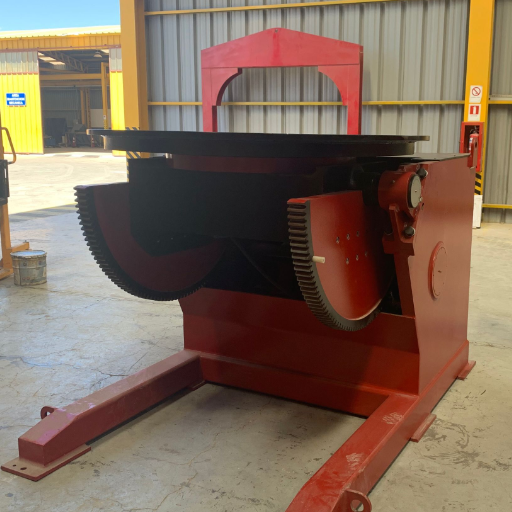
Prior to quoting, provide sufficient data so an engineer can accurately size heavy-duty welding equipment for manufacturing work. Founded in 1999, Aubrik specializes in producing welding equipment and CNC cutting machinery, supported by an experienced R&D team with over 20 years of industry expertise. This helps the engineer report most accurately.
| RFQ field | What to send | Why it matters |
|---|---|---|
| Pipe OD and wall | Minimum, maximum, and common production sizes. | Sets chuck, roller, fixture, and clearance needs. |
| Workpiece weight | Pipe plus fittings, flange, fixture, and tack-up hardware. | Prevents under-sizing by rated tons alone. |
| Weld process | MIG, TIG, SAW, robotic welding, or mixed process. | Affects speed control and interface needs. |
| Support method | Chuck only, fixture, tailstock, pipe stand, or turning rolls. | Controls stability and overhang risk. |
| Controls | Pedal, pendant, VFD, PLC, or robot interface. | Matches the operator and automation plan. |
| Compliance package | ISO 9001, CE, inspection records, manual, spare parts. | Supports import, acceptance, and maintenance. |
| Delivery target | Required date, port, installation window. | Lets the supplier confirm build and logistics fit. |
| Service expectation | Warranty, training, commissioning, spare parts. | Reduces hidden ownership cost. |
Aubrik’s pipe welding positioner product page lists ISO 9001 + CE certification and 7-30 day delivery for this welding equipment product series. The company profile also notes annual capacity of 1,000 welding equipment sets and 200 cutting equipment sets, plus a one-year free warranty and OEM service. Buyers who need surrounding equipment can also review the broader Aubrik welding positioners range before narrowing the RFQ.
When to Ask for a Custom Pipe Welding Positioner
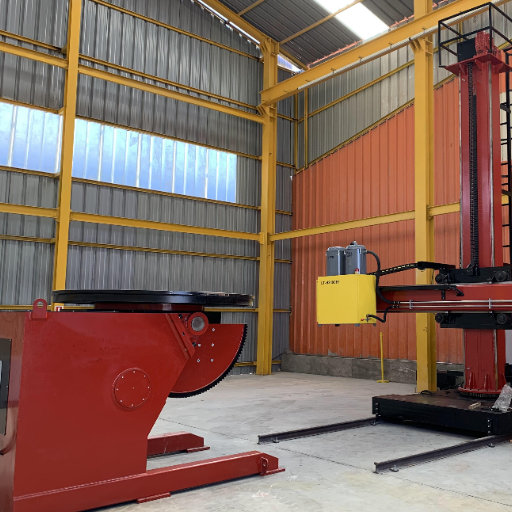
A standard adjustable welding equipment model usually suffices when welding diameter, load, and control requirements fall within the published range. Ask Aubrik for a custom review if pipe, chuck requirements, fixed-height station, welding needs, manipulator, turning rolls, robotic welding system, or unusual eccentric fittings present complexity.
Lincoln Electric’s welding table top positioner literature shows models suitable for manual use, or combined with mechanical automation and manipulators. Include motorized rotational control, manipulation clearance, and facility layout with the RFQ if your system integration requires that level of coordination, rather than presenting automation as a late-stage afterthought.
For a model-based assessment, compare Aubrik’s pipe welding positioner specifications with your welding diameter, load, and welding process requirements before you request pricing. When the project also needs commissioning, layout advice, or operator training, send the same RFQ notes through Aubrik service support so the equipment quote and service scope match.
Industrial Fabrication Outlook: Buyers Are Asking Better Questions
US search interest around pipe welding positioner saw growth from 110 monthly searches in June 2025 to 480 by October 2025. Treat this as evidence of interest, not necessarily a future prediction; it indicates an increased emphasis on pre-quote comparison, efficiency, productivity, and clear RFQ parameters for welding equipment.
In 2026, the more pertinent query should not be merely about welding capacity, but rather “What secure operating range fits my pipe, fixture, rotation, tilt and support setup?” That is where a supplier specialist can help the buyer find an economical model fit.
Engineering Acceptance Checks Before You Buy
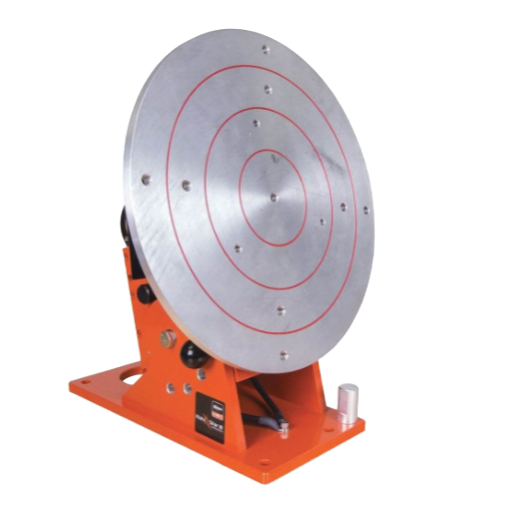
A quote can look correct on paper and still fail at acceptance if the buyer has not defined the test condition. Treat the pipe welding positioner as a load-handling station, not only as a rotating table. The OSHA load-handling guidance explains why a rated load changes when the load center moves; the same principle matters when a pipe spool, chuck, and fixture sit away from the rotation axis.
A practical RFQ should ask for a trial condition. For example, tell the supplier whether the shop will test a 900 kg spool, a 1,200 kg spool, or a 2,000 kg spool; whether the pipe OD is 40 mm, 325 mm, or 2500 mm; and whether the chuck holds a 6 in, 12 in, or 24 in workpiece. Those values are not universal model ratings. They are the numbers an engineer needs to check torque, tilt, fixture reach, and the safe working envelope. If the fixture adds 120 kg and moves the center of gravity by 300 mm, the positioner should be reviewed as a system.
📐 Engineering Note
Ask for the rated load condition, the distance from faceplate to load center in mm, and the allowable tilt angle at the heaviest working position. The OSHA load composition guidance is written for lift trucks, but its warning about unstable load composition is a useful reminder for any rotating support station.
Acceptance should also check documentation. ISO 9001 is a quality management standard, not a substitute for a machine-specific load chart. CE marking helps with European market access, but the buyer still needs the manual, inspection checklist, electrical drawings, and a signed capacity statement for the actual fixture. Where below-the-hook lifting or suspended handling is involved around the cell, use the ASME B30.20 below-the-hook lifting devices page as a reminder to separate lifting-device rules from the welding positioner itself.
| Acceptance item | Example number to provide | What it protects |
|---|---|---|
| Pipe OD range | 40 mm to 2500 mm | Chuck, roller, and clearance fit. |
| Trial workpiece load | 900 kg, 1,200 kg, or 2,000 kg | Rated-load review under real setup. |
| Fixture add-on weight | 120 kg fixture plus 30 kg tack aids | Prevents hidden overloading. |
| Load center offset | 300 mm from rotation face | Checks eccentric load and torque. |
| Chuck opening | 6 in, 12 in, or 24 in | Confirms gripping and centering method. |
| Rotation control | 0.1 RPM crawl test and 1.5 RPM production test | Checks low-speed weld control. |
| Shift duty | 8 hours per shift, 2 shifts per day | Sets motor and gearbox duty expectations. |
| Production sample | 10 joints or 24 spools | Gives an acceptance sample size. |
| Warranty expectation | 1 year with spare parts list | Links service scope to purchase risk. |
A buyer can turn those rows into two acceptance scenarios. For a light spool cell, the test might use a 325 mm pipe OD, a 900 kg workpiece, a 120 kg fixture, and a 0.1 RPM crawl speed for TIG root passes. For a heavier fabrication cell, the test might use a 1200 mm pipe OD, a 2,000 kg workpiece, a 24 in chuck, and an 8 hour shift duty target. Both examples should include who loads the pipe, which side the operator stands on, how the foot pedal or pendant is guarded, and whether the workpiece needs a tailstock before tilt starts.
Procurement should keep these scenarios attached to the purchase file. A supplier can quote a stronger model, a different chuck, or a support stand only when the numbers are visible. Aubrik can also check whether the request is a standard positioner job, a mixed positioner-plus-turning-rolls job, or an OEM station requiring PLC signals. That distinction matters because a buyer may be comparing a 1 year warranty, spare-part stock, commissioning time, and operator training at the same time as the purchase price. A lower equipment price is not a saving if the first 10 joints need extra rigging or if the cell loses 2 hours every shift to re-centering.
For high-mass work, acceptance should include a handling route, not only a weld test. The AWS Welding Digest discussion of heavy weldments points back to planning, handling, and verification before heavy pieces move through production. That is why the RFQ should name the crane approach, floor space, operator side, and pipe loading sequence. Aubrik can then match the pipe welding positioner, welding positioner family, and any service support to the way the cell will be used, not just to a tonnage label.
Buyers comparing suppliers should also check the manufacturer behind the offer. Aubrik’s company profile gives the background for Wuxi ABK Machinery, founded in 1999, with welding equipment and CNC cutting machine production capacity. For a first conversation, the Aubrik homepage and the product page together give enough context to route the RFQ to the right product group.
FAQ
What is a pipe welding positioner used for?
View Answer
It is used to rotate, hold, and tilt pipe or round workpieces so the weld joint stays in a reachable position. The goal is not only faster rotation; it is steadier access for the welder, fewer re-rigging steps, better ergonomics, and better control of weld quality during fit-up and production.
What is the difference between a pipe welding positioner and pipe turning rolls?
View Answer
A pipe welding positioner commonly grips or fixtures the workpiece and may tilt it. Turning rolls support a cylindrical part from below on rollers and rotate it around its own axis. Long tanks and vessels often fit turning rolls better; pipe ends, flanges, fittings, and short spool work often fit a positioner better.
How much capacity should a pipe welding positioner have?
View Answer
Start with the real pipe weight, then add chuck, fixture, and gripper weight. After that, check the center of gravity, eccentric load, tailstock support, and rotation/tilt torque chart. If those details are missing, the ton rating alone is not enough for a safe purchase decision.
Do I need a chuck or tailstock?
View Answer
Use a chuck when the pipe needs driven gripping or repeatable centering. Consider a tailstock when the workpiece is long, heavy, or likely to overhang the faceplate. For some applications, a pipe stand or turning rolls may be the better support method. If the supplier cannot explain the difference between chuck load, overhung load, and supported load, pause the quote and ask for a capacity chart.
Can a pipe welding positioner work with a manipulator or automated welding system?
View Answer
Yes. For benchtop or floor stations, confirm rotation control, work height, and signal interface first.
Next Step
Send your welding diameter, wall thickness, peak load, fixture configuration, weld process, and control parameters, then review the Aubrik pipe welding positioner product page for model applicability and inquiry steps.
References & Sources
- HSE: Positioning equipment for manual and automatic welding
- AWS Welding Digest: Handling heavy weldments
- OSHA: Load handling and center of gravity
- OSHA: Load composition and stability
- ISO: ISO 9001 quality management systems
- ASME B30.20: Below-the-hook lifting devices
- Aubrik: Pipe Welding Positioner product page