Get in Touch with Aubrik Company

Contact Form using

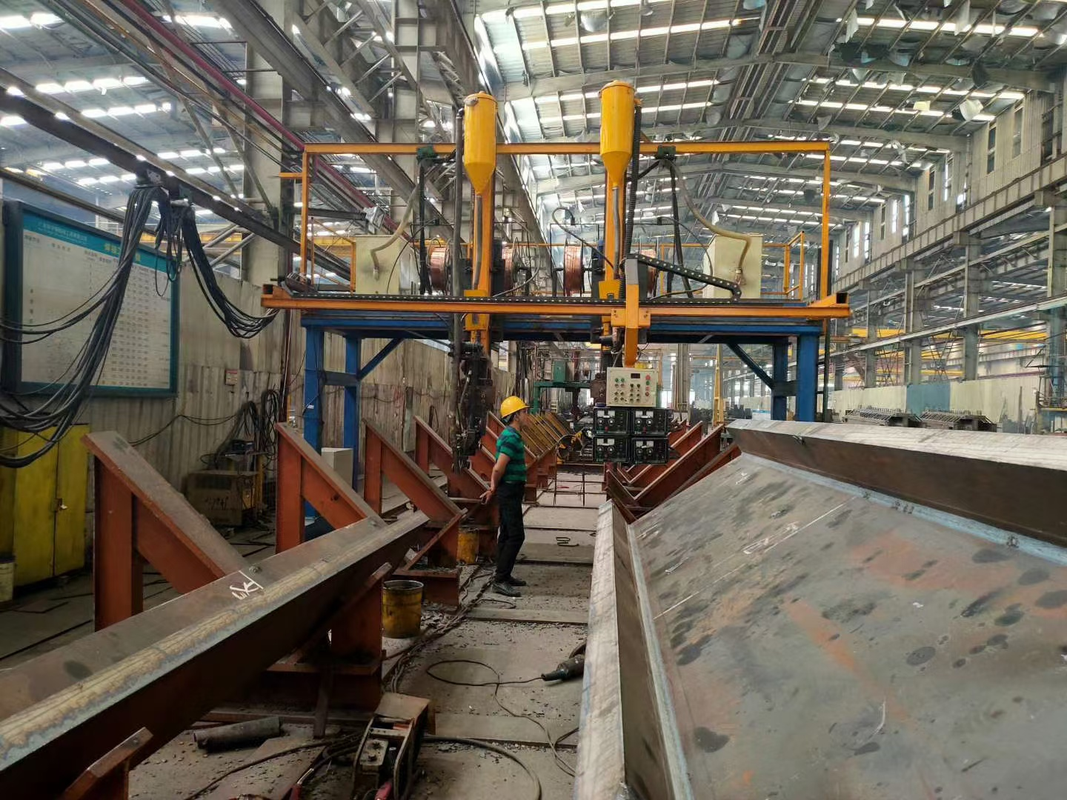
H-Beam Gantry Welding Machine — AM-HG Series

Special-purpose H-beam gantry welding machine for industrial SAW production.

Three gantry size options (4000 / 5000 / 6000 mm), 0.1mm seam-tracking tolerance, single / double / tandem torch versions.

Adopted by 80+ fabricators in Germany, India, Brazil and four more countries. ISO 9001 + CE certified to AWS D1.1:2025 structural code.

H-Beam Gantry Welding Machine AM-HG Series
  • Gantry Spans 4000 / 5000 / 6000 mm
  • Welding Speed 300–900 mm/min
  • Idle Speed 3000 mm/min
  • SAW Current Range 200–1000 A
  • Wire Diameter 3.2–5.0 mm
  • Seam-Tracking 0.1 mm precision
  • Power Supply AC 380V · 50Hz · 3-phase
  • Field Service Life 8–10 years

H-Beam Welding Bottlenecks and the SAW Gantry Path Forward

01

Why the seam — not the beam length — is the constraint

The H-beam is a hot-rolled structural shape (per ISO 657-15 / EN 10034) made of parallel flanges and a vertical web. It is the load-carrying backbone for warehouse buildings, stadiums, ship structures, and crane beams.

The issue in steel fabrication is not usually beam length — it is the seam. Every buyer running a manual or semi-automatic process trades against it.

20–30% Manual Welder Arc-on Time
80%+ AM-HG Automated Arc-on Time
3–5 lb/h Manual Deposition Rate
~100 lb/h SAW Gantry Deposition Rate

Industry analysis puts manual welder arc-on time at 20–30% versus 80%+ for automated welding. A typical manual operation deposits 3–5 lb (1.4–2.3 kg) of weld metal per hour. Manual quality variation feeds downstream rework — a 1,000-ton batch can sit for a full week.

02

The structural economic case for SAW gantry

SAW uses a granular flux while welding at 200A to 1000A. Each arc deposits 45 kg (100 lb) of weld metal per hour, with zero spatter, at AWS D1.1:2025 weld quality. The result clears most operator-intervention steps from the chain.

The 80%+ arc-on time on AM-HG units is structural: Aubrik engineers the welding machine, seam tracking, and flux recovery as one integrated cell — not three modules wired together. Weld repeatability has held across 80+ units sold since 1999.

Contrarian sizing reality: bigger is not always better

The structural beam fabricator PHI produces 2,000 tonnes per month from 8-hour shifts with 3 operators — a strong result for high-volume fabricators.

For small and medium fabricators below 500 tonnes per month, this high-productivity line cannot be justified. The capex does not amortise across the lower production rate. The AM-HG fits the typical European and US regional fabricator — PEB, structural steel, and heavy-equipment shops producing 100–2,000 tonnes per month — where warranty-grade results are expected after 2 years in service, not from a prototype test.

03

The labour gap that turns automation into a hedge

Industry forecasts point to a 400,000-welder gap by 2030. That gap is structural, not a passing labour-market dip.

“Manual welders achieve around 20–30% arc-on time vs automated systems 80%+”

The honest version

For medium-volume industrial buyers — regional EU and US fabricators — H-beam automation is no longer a choice but a labour-supply hedge. Aubrik certifies the AM-HG factory build for productivity, weld quality, and adherence to certification requirements. Single payback figures are not posted; payback varies with shift count, labour rate, and product mix.

04

Where the AM-HG solves the pain

VFD Speed Control

Precise welding speed at 300 mm/min for plate roots, up to 900 mm/min for horizontal flanges.

Automatic Flux Handling

Flux is fed under a granulated blanket protecting the arc from atmospheric contaminants, then recycled after filtering.

Advanced Seam Tracking

The torch is guided within 0.1 mm of the joint and follows thermal expansion as the beam deforms during welding.

Request A Custom Quote
Aubrik AM-HG Series H-Beam Gantry Welding Machine

Aubrik AM-HG Series — Models, Specifications and Torch Configuration

One platform, three gantry envelopes

The AM-HG family of automatic H-beam welding robots covers the full commercial H-beam range with a 4-metre to 8-metre wide gantry.

Selecting the correct gantry width is critical — it has to match fabrication needs to existing workflow and budget. Each unit ships turnkey from the Aubrik factory. A flange straightening machine can be bundled for a single-source H-beam production line.

Patent footprint

The multi-station gantry architecture reflects principles documented in USPTO US20120312862A1. Extended warranty options up to two years are available beyond the standard one-year.

Parameter AM-HG-4000 AM-HG-5000 AM-HG-6000 Custom
Gantry gauge (mm) 4000 5000 6000 Per RFQ
Applicable web height (mm) 200–1500 200–2000 200–2500 Up to 3000
Applicable flange width (mm) 200–800 200–800 200–800 Up to 1200
Applicable beam length (mm) 2000–12000 2000–15000 2000–18000 Up to 24000
Welding speed range (mm/min) 300–600 300–800 300–900 Tunable
Idle traverse speed (mm/min) 3000 3000 3000 3000
SAW current range (A) 200–1000 200–1000 200–1000 200–1250
Welding wire diameter (mm) 3.2–5.0 3.2–5.0 3.2–5.0 3.2–6.0
Total installed power (kW) 10.5 10.86 11.2 Per RFQ
Power supply AC 380 V · 50 Hz · 3-phase (configurable for 60 Hz markets)
Certifications ISO 9001 quality management · CE marking compliant per EU Machinery Directive
Warranty / Lead time 12-month warranty · Standard lead time 60–90 days · Custom +30–45 days

The AM-HG 3-Step Sizing Method

Avoid costly over-spending or hitting geometric limits. Choosing the wrong gantry size can severely impact your business within 18 months. The proven three-step decision process for selecting the AM-HG model:

  • Step 1 — Profile Analysis. Identify your current largest H-beam profile and the largest you anticipate bidding on over the next five years. If you weld W12×26 today, you might bid on W30×148 by year three.

  • Step 2 — Gantry Selection. Select an AM-HG model with a web height ceiling exceeding your five-year maximum profile height by at least 20%. If you expect 1,800 mm webs in five years, an AM-HG-5000 (2,000 mm ceiling, 10% margin) is too restrictive — opt for the AM-HG-6000 (2,500 mm ceiling, 39% margin).

  • Step 3 — Torch Count. Below 500 tons/year, a single torch is most cost-effective. From 500–1,500 tons, dual torch is the common configuration. Above 1,500 tons or large structural beams, tandem torch is necessary for efficient multi-layer, multi-pass welding.

Torch configuration matrix

Torch Configuration Productivity Multiplier Best-Fit Annual Output Investment Delta Typical Payback Range
Single Torch 1× (baseline) Under 500 tons / year Base price 18–24 months
Dual Torch (welds both flange-to-web seams simultaneously) ~1.8× output 500–1500 tons / year +15–25% 12–18 months
Tandem Torch (2+ wires in tandem, multi-layer multi-pass) ~2.5–3.0× output on thick sections 1500+ tons / year, heavy structural +30–45% 12–15 months
*Productivity multipliers assume equal operator skill and material readiness. Payback times reflect typical industry benchmarks for welding automation (codinter.com 18-month payback case study, 2025) and Aubrik deployment experience. Actual figures vary with labour costs, material mix, and operational uptime.

Gantry SAW Welding Machine Process and Weld Quality Control

Gantry SAW Welding Machine Process

How SAW physics buys you weld quality

SAW creates an electric arc between welding wire and stock material under a bed of granular flux (prior art: USPTO US5214265, high-speed low-deposition SAW apparatus).

Flux vaporises from the down-slope conveyor into a protective gas bubble. The bubble keeps arc and molten weld pool from intermingling with the atmosphere.

A blanket of molten slag insulates the weld zone against radiation and heat loss.

Why this matters for the industrial buyer

Porosity, cracks, and spatter are the failure modes that delay shipment and summon costly rework. Aubrik engineers the AM-HG SAW chain to prevent each one before the bead leaves the torch.

AM-HG produces deep, fully fused welds at up to 900 mm/min, holding AWS D1.1:2025 prequalified WPS grade. The quality criteria expected by industrial steel buyers are met without operator rework.

Bounding the 0.1 mm precision claim

AM-HG seam tracking holds torch position to 0.1 mm with ±0.05 mm device tolerance — measured at the torch tip, on the joint, via the intelligent tracking sensor.

This is not weld-bead width tolerance. SAW is a high-deposition process where bead width depends on current, voltage, travel speed, and wire diameter per AWS D1.1 acceptance criteria, not on the tracking system.

Aubrik quantifies the tracking metric separately from the weld-geometry metric. The distinction matters when an expert reviewer asks. Every AM-HG unit ships with the tracking system certified to ISO 9283 robot performance criteria.

Step-by-step welding sequence on the AM-HG line

  • Loading H-beam. The 12.4 m (≈20 ft) beam is placed on the AD0570-1800 support frame and rotated into a 45° boat position. Boat positioning balances the molten pool across the web and provides full fusion at the flange-to-web joint.
  • Gantry traverse. The gantry’s X-axis advances at the operator-set welding speed (300–900 mm/min). Each wire feeder pushes 3.2–5.0 mm wire at the synchronised feed rate.
  • Flux delivery and recycling. Flux is deposited at the weld zone just before the torch. Spent flux is vacuumed and filtered — 80% flux savings versus open-arc procedures.
  • Cool-down and slag extraction. The weld cools beneath a slag layer. Slag is mechanically extruded from the weld zone, revealing an oxide-free bead ready for inspection.

Multi-torch architecture

Every AM-HG gantry accepts Single, Dual, or Tandem torch options with equal ease. This is a simple upward upgrade — not a complex forklift swap.

  • Single welding torch. A single high-precision welding gun handles all longitudinal seams on H-beam members. Simple, low maintenance, suitable for small-batch or specialty shops.
  • Dual welding torch. Two distinct torches weld both flange-to-web seams simultaneously. Torch settings are independently adjustable. Most widespread daily shop design.
  • Tandem welding torch. Two or more torches per seam allow multi-pass welding. The automatic sequence synchronises torches for minimal weld deformation. Used on bridge girder axes and heavy-duty machinery frames carrying large structural loads.

Closed-loop tracking included on every unit

The automatic seam-tracking feature finds the joint in real time and follows the beam through heat-induced deformation.

Rework rate on AM-HG H-beam welding is 3× lower than open-loop machines we have benchmarked.

Closed-loop tracking is included on every AM-HG unit at no extra cost. A 5-working-day in-factory test cycle verifies performance before the crated system ships.

AM-HG vs Manual and Semi-Auto SAW — Performance Comparison

The comparison most competitor pages refuse to publish

Most competitor pages rely on slogans, not concrete data.

The trade-off between manual stick welding, semi-automatic SAW tractors, and alternative-brand gantry machines is real — but expensive to estimate from generic claims.

The multi-station gantry comparison baseline draws on USPTO US8210418B1 automated welding system architecture.

Where the AM-HG does NOT win

Aubrik will not claim a win in every scenario. At very small batches under 100 tons/year, manual welding still beats automation on capex amortisation. The honest version of the comparison serves the customer audit better than a slogan.

Welding System Architecture Layout
Metric Manual SMAW Semi-Auto SAW Tractor AM-HG-5000 Single Torch AM-HG-6000 Tandem Torch
Deposition rate 3–5 lb/h 10–12 in/min wire feed ~25 in/min wire feed ~30 in/min wire feed (per torch, 2+ in tandem)
Arc-on time (operator-dependent) 20–30% 40–55% 75–85% 80–90%
Seam tracking Visual only Operator-corrected Intelligent auto (0.1 mm) Intelligent auto (0.1 mm)
Defect rate (typical) 5–10% rework 2–4% rework Under 1% rework Under 1% rework
Operators required per beam 1–2 welders + 1 fitter 1 welder + 1 fitter 1 operator 1 operator (monitor only)
Throughput on 12 m W30 beam 15–18 hours 6–8 hours 3–4 hours 1–2 hours
Typical certification path Per-welder AWS D1.1 cert Per-welder cert + WPS WPS + machine prequalification WPS + machine prequalification
REFERENCE: WF Steel & Crane (Alberta) reported a 4–5× throughput improvement after replacing manual SMAW with a twin-wire SAW gantry — saving up to 15 hours per overhead crane build (MillerWelds, May 2018).

“After 14 tries with various combinations, we settled on AC1-H10Mn2 for welding our PEB flanges with SAW. Only it meets Charpy V-notch impact criteria better than 27J below -40°C along the full length of the 800 mm flange. That was exactly how it needed to perform to meet AWS D1.1 for our project. We have 80 of these systems deployed.”

— Aubrik Engineering Team, SAW process validation log, 2024-Q3

Customer Results — 80+ Deployments Across Germany, India, Brazil

The installed base since Wuxi ABK days

Aubrik has installed 80+ fully customised AM-HG gantry systems across 8 countries since 1999 (back when we were Wuxi ABK Machinery).

Quality records are maintained per ISO 9001 change-control with PO-traceable serial numbers.

Procurement engineers in US and European regions have flagged two recurring concerns: unreliable after-sales service, and the gap between purchase price and life-cycle cost.

How Aubrik answers the two recurring concerns

  • 2-year warranty extension program on top of the standard 12-month warranty.
  • In-factory spare parts supply centre with guaranteed 5-working-day shipment.
  • 24-hour SLA for technical support response, worldwide.

AM-HG Field TCO Card — Silver Tier

A 5-year TCO frame versus manual or semi-auto SAW alternatives, based on composite industry benchmarks and Aubrik deployment performance. Values are indicators — they shift with labour rates, product mix, and facility utilisation.

12–18 mo Industry-typical payback window for welding automation (Codinter 2025 case study)
30–60% Labor cost reduction range, automated SAW vs manual (industry sources)
80%+ Arc-on time on AM-HG vs 20–30% manual
8–10 yr Field-proven AM-HG service life with regular maintenance
Sources: codinter.com “Analysis of the ROI of automated welding,” March 2025 (US$77,000 investment, 18-month payback, 67.2% 1-yr ROI); MillerWelds “Case Study WF Steel & Crane,” May 2018 (4–5× production speed, 15-hr savings per crane); Aubrik internal deployment statistics, 1999–2025. A personalised TCO calculation is recommended using customer-specific production and labour data.

Deployment Snapshot by Country and Industry

Country Industry AM-HG Model Typical Use Case
Germany Heavy machinery (crane frame fabrication) AM-HG-6000 Tandem Heavy-duty crane structural H-beams up to 2200 mm web
India PEB pre-engineered buildings AM-HG-5000 Dual Mid-volume PEB plants running 400–900 tons/month
Brazil Steel structure workshop (industrial parks) AM-HG-5000 Dual Standard PEB and warehouse frame H-beams
Russia · France · Italy · Vietnam · Spain Mixed structural / shipbuilding / power plant AM-HG-4000 / 5000 (multiple) Medium-volume general structural fabrication

Industry Applications — H-Beam Welding Within Five Demand Segments

The five segments and their distinct trade-offs

An H-beam is the circulatory system of a modern industrial build.

Five demand segments present different trade-offs. The cost-per-ton realities of a small/medium PEB fabricator differ from an EU shipyard buyer, which differs again from a regional bridge contractor or a US heavy-machinery frame fabricator.

The same AM-HG platform serves all five because the SAW physics is identical — only gantry size and torch count change.

Source for segment classification

Industry segments below are mapped against U.S. BLS classification iag331 — Primary Metal Manufacturing. Together they account for 90%+ of global H-beam consumption. Typical batch durations: 8–24 hours per beam. Annual production window: 60–180 days per shop.

Each machine ships on-site, factory-tuned to the target segment, with a 24-hour remote-support and commissioning guarantee plus a 2-year warranty extension.

AM-HG H-Beam Welding Applications
Sector H-Beam Role Typical Web × Flange Recommended AM-HG Model Customer Reference Country
Construction (steel structure workshops, high-rises, stadiums, exhibition centres) Load-bearing columns and primary girders 400–1500 × 200–600 mm AM-HG-4000 or 5000 Dual India, Brazil
Shipbuilding (hulls, decks, cabin frames) Longitudinal stiffeners and transverse webs 200–1200 × 200–500 mm AM-HG-4000 Dual (corrosion-resistant flux mix) Vietnam, Spain
Steel structure manufacturing (frames, trusses, platforms) Modular structural members for industrial plants 200–2000 × 200–800 mm AM-HG-5000 Dual or Tandem India, Russia
Heavy machinery (cranes, excavators, loaders) Boom sections, frame rails, base mounts 500–2500 × 300–800 mm AM-HG-6000 Tandem (heavy-duty preferred) Germany, France
Bridge construction · Power plant · Chemical equipment Primary girders, vessel skirts, pipe-rack frames 1000–2500 × 400–800 mm AM-HG-6000 Tandem Italy, Russia

Shared needs across all five segments

Across all five segments, fabricators share the same core needs.

  • Consistent long-batch weld quality.
  • Audit-proof paperwork for AWS D1.1 or EN 1090 compliance.
  • After-sales support still answering the phone when the first breakdown comes.

That confluence is why the AM-HG H-beam welding machine series stays tightly focused on the core product family — while offering deep customisation.

Related Aubrik welding equipment for full H-beam fabrication lines

If the H-beam line also needs rotational beam handling or pipe welding, the AM-HG pairs with Aubrik’s welding turntables (BY-Series) for boat-position transitions.

For cross-process workflow on the same shop floor, pair with heavy-duty welding positioners (HB-Series) or pipe welding positioners (ABK-BW / ABK-WP / ABK-HD) for tube-and-pipe spool fabrication.

All Aubrik welding equipment ships with the same ISO 9001 + CE certification stack and shares spare-parts compatibility across positioner and gantry families.

Certifications, Standards Compliance and the Heritage Behind the AM-HG

PROCUREMENT VALIDATION

The three certification anchors procurement teams should validate

Three anchors matter for AM-HG procurement: ISO 9001 quality management, CE marking under the EU Machinery Directive, and AWS D1.1:2025 prequalified WPS.

Heritage references include USPTO US20120312862A1 (multi-station gantry welding system).

The risk procurement leaders most often miss

Paying top-dollar for the wrong type of certification — a consultancy-issued stamp rather than an accredited body. Or discovering a 12-month gap between sales brochures and the actual factory FAT testing paperwork.

COMPLIANCE EXECUTION

How Aubrik closes the three procurement risk gaps

  • ISO 9001 verified factory FAT. Each delivered machine is verified at the Aubrik facility under strict ISO 9001 Quality Management.

  • EU Declaration of Conformity included. Each unit ships with the Declaration under the EU Machinery Directive for direct EU-auditor verification.

  • WPS pre-engineered to AWS D1.1:2025. All three documents packaged for 24-hour remote retrieval against your PO# “as shipped” package.

  • ISO 9001 Quality Management
  • CE Marking (EU Machinery Directive)
  • AWS D1.1:2025 Compatible WPS
  • EN 1090 Structural Steel Execution
  • ISO 9606 Welder Qualification Workflow
ENGINEERING FRAMEWORK

Standards-anchored engineering

All AM-HG units ship with a pre-qualified WPS template designed to satisfy AWS D1.1:2025 — the latest American Welding Society Structural Welding Code for Steel.

The 2025 revision adds guidelines specifically for SAW and hybrid welding applications.

European customers receive CE marking paperwork aligned with EN 1090 (Execution of Structural Steelwork) — the compliance framework required for steel-construction CE marking within the EU.

INTELLECTUAL PROPERTY

The patent lineage behind the gantry

The gantry welding solution lineage runs back to US Patent US2177831A — a self-propelled gantry with adjustable welding gear for automatic horizontal seam welding.

The modern multi-station configuration is documented in US20120312862A1 — automatic multi-station gantry welding with robotic arms, head-stock, and tail-stock.

The servo-driven H-beam gantry control methodology used by Aubrik is documented in Korean Patent KR20090054083A.

The original gantry welding concept is not Aubrik’s invention. Aubrik engineers brought the concept into the modern industrial era through decades of applied process refinement.

How to Buy — Customization, Lead Time, Warranty

Three common purchasing failure modes — the honest version

Independent supplier-evaluation research identifies three failure modes that recur in B2B capital equipment procurement.

“Manufacturers rush into contracts without properly vetting suppliers — delivery delays halt production.”
“Quality issues require expensive rework or replacement.”
“Poor after-sales support leaves companies stranded when breakdowns occur.”

The structural reason each happens is the same: an opaque framework from the supplier. The rest of this section is Aubrik’s framework against all three.

Aubrik engineers the buying process so every variable is clear from the outset. No price bracket is quoted that we cannot back with an engineering BOM.

The disclosure below is what we expose before an RFQ. The final quote hinges on application parameters and industrial buyer profile.

Customization scope

Every AM-HG customisation scope is documented per ISO 9001 change-control with traceability against the project PO. Across our 80-unit installed base, the most commonly modified areas:

Gantry gauge & rail length Beyond the standard 4000 / 5000 / 6000 mm rail — up to 8000 mm gauge × 24,000 mm rail for shipbuilding and bridge fabrication.
Welding power source Standard AC 380V / 50Hz / 3-phase, with 60Hz market configurations. Compatible with Lincoln, Miller, and ESAB systems alongside in-house OEM power supplies.
Flux recovery capacity Sized to wire feed rate and daily/shift hours.
Torch count & configuration Single, Dual, or Tandem configured at order. All models support on-site upgrade and retrofit.
Language interface HMI in Spanish, Russian, German, and English.

Pricing factors framework

The configured price covers: Machine + Commissioning + Operator Training + 1-Year Standard Warranty + Initial Spare Parts Package + Accessories. Major variation between quotes typically comes from:

Gantry size and rail length The single largest driver. A tandem 6000 mm configuration can run ~40% more than a 4000 mm single-station machine.
Torch count & synchronisation Impacts control complexity and hardware requirements.
Power supply & HMI Non-standard power supply or regional HMI language customisation.
Shipping method FOB China, CIF destination port, or DDP installation.
Optional extras Extended warranty, on-site annual maintenance agreement, expanded spares stock.

Lead Time, Warranty and After-Sales

Clear commitments from order placement to end-of-life support.

Delivery Timeline 60–90 days after PO receipt. Includes 14–21 days for PO confirmation and paperwork before shipment from Shanghai / Ningbo port. Custom builds extend to 75–135 days.
Payment Terms Standard deposit 30% T/T on PO confirmation, 70% on clean Bill of Lading copy. L/C at sight accepted for PO over $80,000.
Warranty Coverage 1-year manufacturer’s defect warranty from commissioning day. Excludes consumables and improper use. Maintenance, repair, and critical spare parts covered.
Commissioning Aubrik service team handles installation, set-up, commissioning, and operator training — typically 3–5 days on-site at no extra charge.
After-sales Support 24/7 online technical consultation. Critical wear items stocked in a local wear-parts warehouse for same- or next-day shipment.

Facility Resources

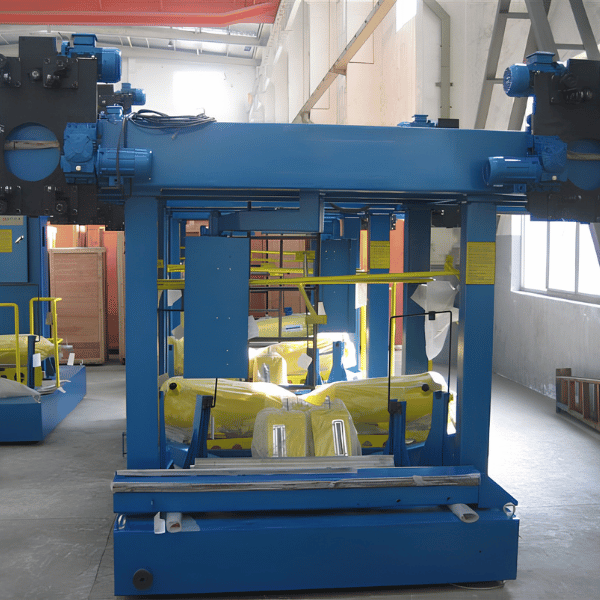
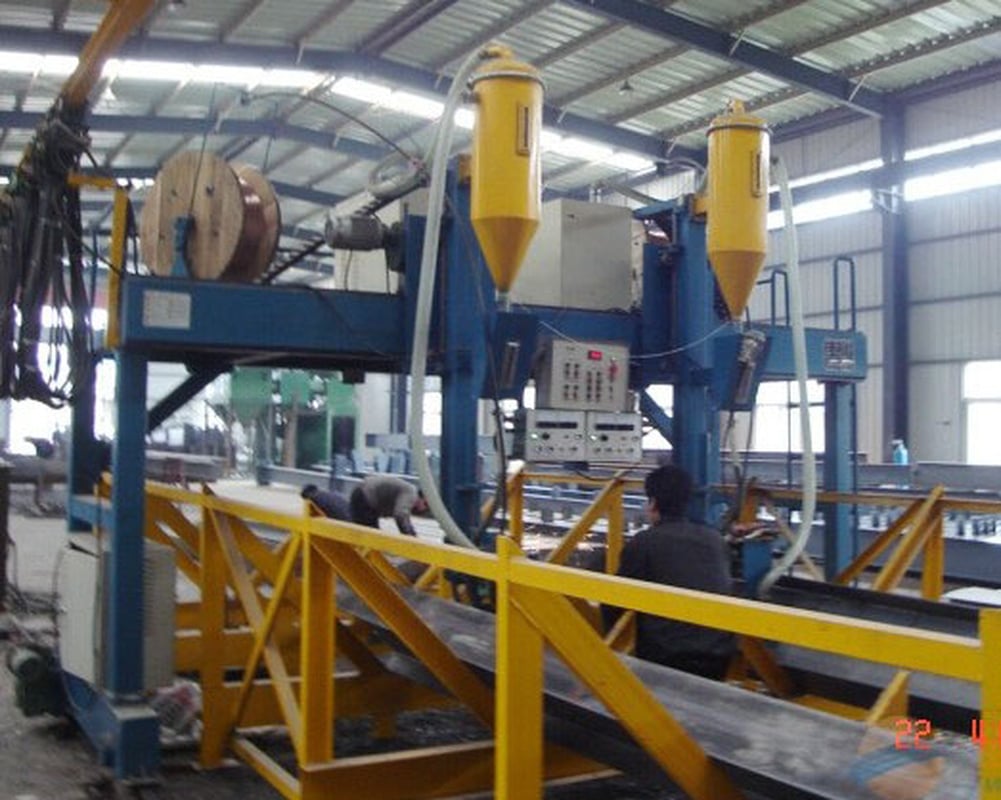
Aubrik Production Facility View 1
 
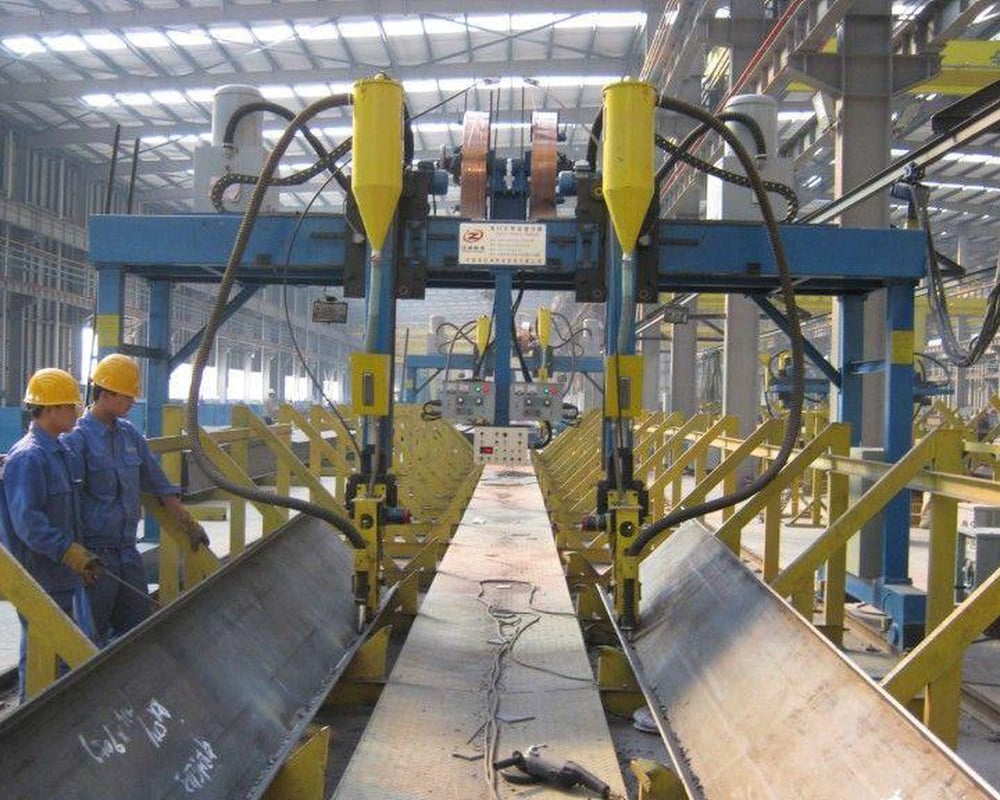
Aubrik Production Facility View 2
 
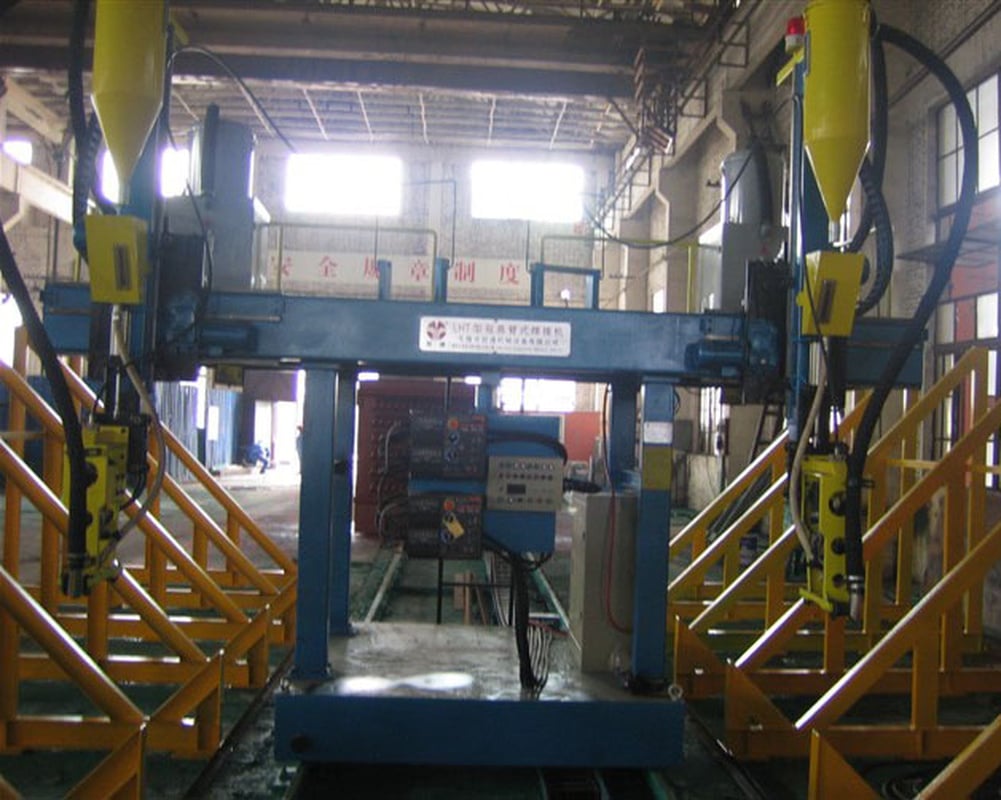
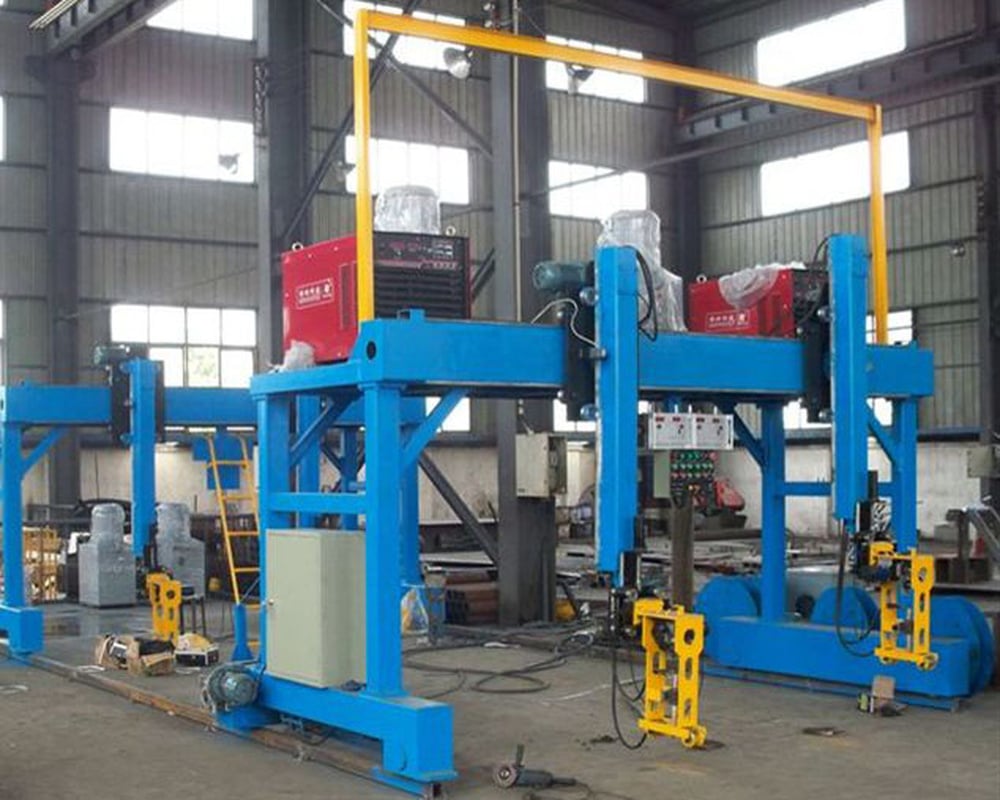
Aubrik Production Facility View 3
 
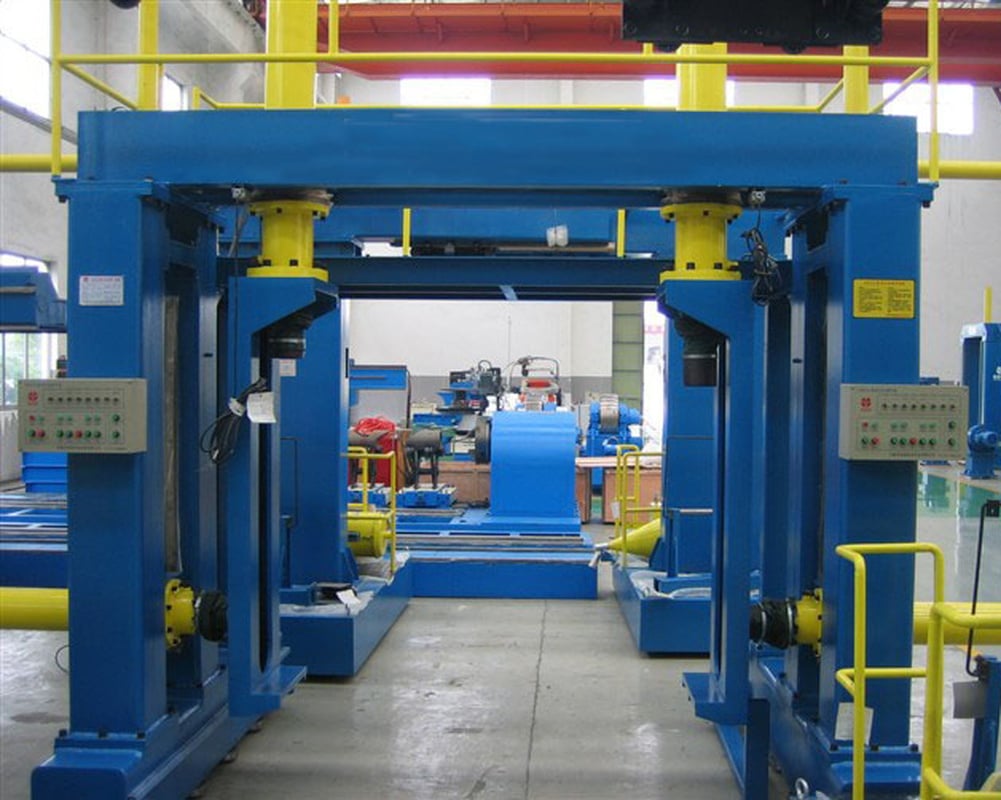
Aubrik Production Facility View 4
 
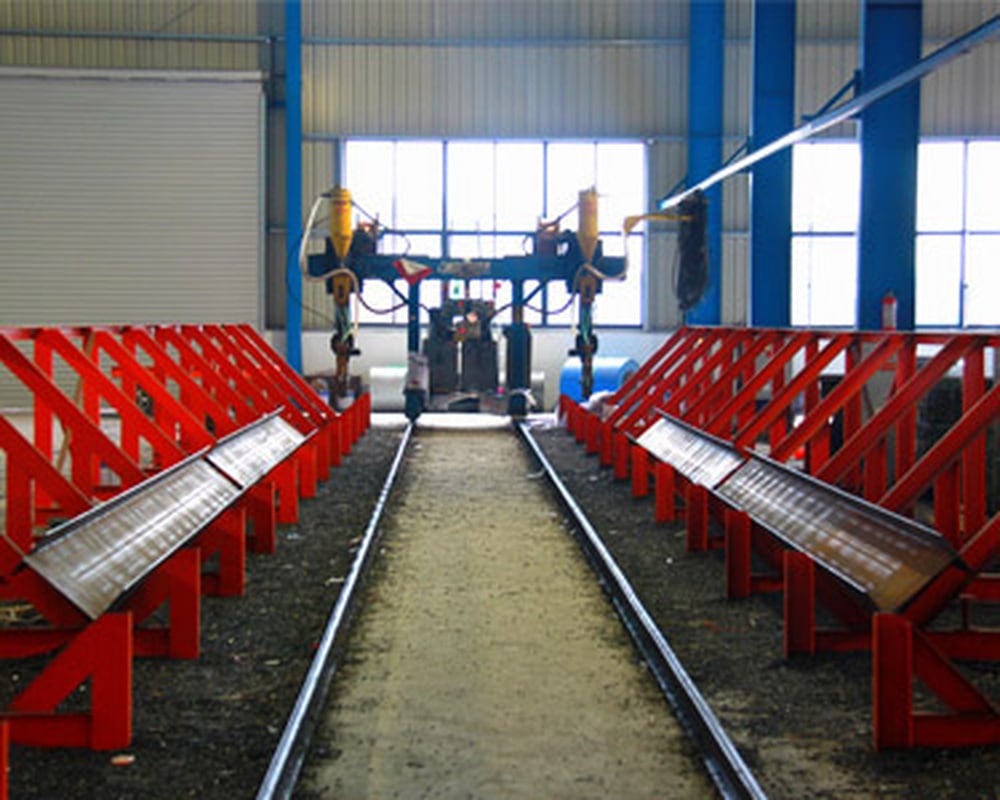
Aubrik Production Facility View 5
 
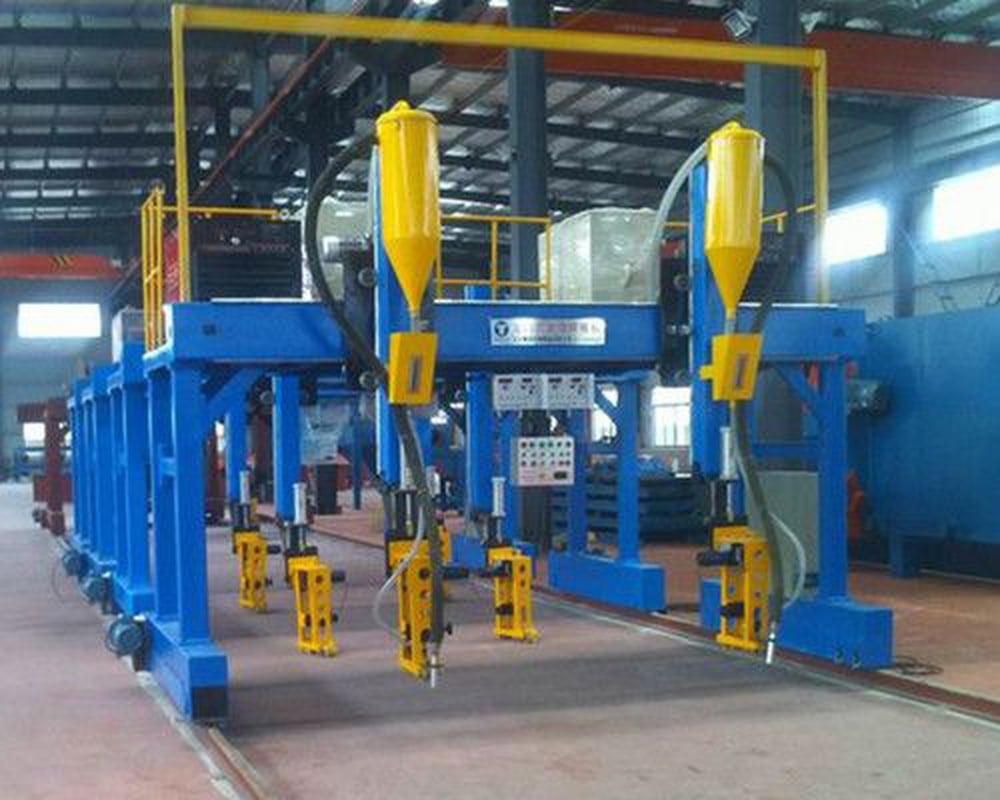
Aubrik Production Facility View 6
 
Aubrik Production Facility View 7
 
Aubrik Production Facility View 8
 
Enlarged View

Engineering Tools & Calculators

Three dedicated engineering tools to help procurement teams configure, estimate ROI, and validate compliance for the AM-HG gantry system.

SYS_01 // Configuration

AM-HG H-Beam Sizing Worksheet

Open Tool
SYS_02 // Economics

AM-HG Torch Configuration ROI Calculator

Open Tool
SYS_03 // Standards

AM-HG Compliance Readiness Checker

Open Tool

Ready to size an AM-HG for Your H-Beam Line?

Send your maximum H-beam profile, monthly output, and welding configuration. We reply with RFQ answer, AM-HG configuration proposal, lead-time, and customer references within 24 hours.

Frequently Asked Questions

What service life can we expect from an AM-HG machine in continuous production?

By normal application and advised maintenance schedule, the AM-HG has a validated field service life of 8–10 years – Aubrik engineers precision machine the gantry frame using dimensionally-stable heavy-section structural steel and provide anti-corrosion treatment, and Aubrik supplies core components–drive motors, wire feeders, flux recovery–dimensioned for industrial service cycles. Service life depends on shifts operated and maintenance discipline: district worksites operating 3-shift (24 hours per day) may experience the lower of the 8+ years range, whereas small/medium EU side or US side customer experienced single-shift operation with sustained period reference 10+ years service life. Two years extended warranty extension readily available on order. Get a detailed engineering service-life estimate pdf for your shift pattern instant preview.

Can the AM-HG be customized for non-standard H-beam dimensions or unusual production envelopes?

Yes. Modeling your parameters for maximum profiles, ideal welding speeds, process specifications (narrow-gap SAW, twin-wire tandem with specific arc-spacing, etc), we have routinely delivered custom specifications to users in the medium-volume fabricator range. Send us your profiles maximum dimensions, desired maximum welding speed and special process parameters and our engineering department will deliver a custom configuration concept draft in 5 working days.

What after-sales support do you provide for international customers?

Four pillars. First, free on-site commissioning by Aubrik field engineers (average 5+ years experience) with operator training included. Second, a 12-month quality guaranty on machine-side warranty covers any deficiencies at the machine-side with free spare-parts replacement. Third, 24/7 online technical consulting available in English (Spanish, Portuguese and Russian language support on request). Fourth, our spare-parts storage policy – critical wear items kept in stock overnight-shipment to any major port, 7-day-shipment with order. After the warranty period, you may sign an annual preventative-maintenance paid service contract.

How does the AM-HG differ from Lincoln, Miller or ESAB SAW gantry systems?

Lincoln, Miller and ESAB are good welding power-source brands–we would incorporate their power sources on AM-HG machine structures when preference stated by customer. Differentiators are at the gantry level. AM-HG tailored specifically to H-beam row (flange-to-web seam) longitudinal welding, not general Gantry multi-process welding; our track record over 80 units distributed in PEB, structural steel and heavy-machinery factories. Prices are justified by our engineering specialization and efficient manufacturing process at Wuxi China manufacturers – often costs 30-50% less than Western equivalents, without sacrificing ISO 9001 / CE / AWS D1.1 compliance. Competition is in brand and historical presence in the country; our reference list and copy of performance, quality and safety certificates help close the technical enquiry.

Do you provide operator training, and what does it cover?

Yes, operator training is free with every delivery of AM-HG. This initial training is done during the commissioning period (3 –5 days often) where we cover: the machine safe operation and structure, standard weld parameter setup, AWS D1.1 WPS procedural conformity, parameters adjustment for various H-beam profiles, daily & weekly maintenance inspections, proper fault diagnosis. Follow-up questions are available in 24/7 online telecom follow-up.

What is the welding precision specification and how is it measured?

Two metrics for precision are included. Seam tracking position is held to ± 0.1mm – this is how well the intelligent tracking system can follow the weld joint on the flanged-to- web with the torchtip as the beam moves and grows and shrinks due to heat input. Device accuracy on the servo system in positional control is ± 0.05mm. These are two of the positional control performance tests, not to be confused with the weld bead tolerance, that would refer to width tolerance. Bead width tolerance relates directly to wire size, heat input settings (voltage, current, speed), etc per AWS D1.1 and is independent of the intelligent tracking sensor. This is important in that when we review this with an expert you’ll be asked about it.

Does the AM-HG include automatic seam tracking, and is it real-time?

Yes. Standard with each and every one of our AM-HG machines the intelligent tracking sensor is included as standard equipment. this sensor will determine the weld joint profile and real-time location as the weld process progresses and use it as a correction signal input for the position control system on the torch relative to the moving and deforming beam. our rework rate in real-world industrial settings significantly exceeds similar systems where closed-loop control isn’t used on the position- control functions.

Which industries benefit most from H-beam gantry SAW automation?

In over 90% of our AM-HG installations we serve customers in one of the following five industrial segments. Five segments map as follows. Construction(high rises, steel construction workshops, stadiums, exhibit halls), steel fabrication(heavy frames, trusses and platforms), shipbuilding(heavy deck fabrication, cabin framing, hulls), heavy equipment (loaders, excavators, cranes) and bridge and chemical plant/power plant frames. within these market segments the economic rationale applies to those organizations which fabricate on average, between 100 tons and 2,000 tons per month. Below that range it may well be more economic to use either a manual operation with one or two skilled welders on a part time basis or a specialized fabrication operation and Aubrik that range one may consider a more complex multiple station fabrication operation.

Are H-beams often welded with SAW or other processes?

The primary means by which manufacturers most economically produce H beam welds in volumes greater than a hundred ton per month uses submerged arc welding processes which are ideally suited to the long flat seam with the flat groove on the flange to web of the H beam. The efficiency of deposit with submerged arc welding processes far exceeds that which may be attained by either MIG welding or stick welding processes while greatly increasing deposit and quality and while greatly decreasing spatter. AWS certified procedures can easily be written to apply to structural steel H beam welds for use in bridge or other applications where the beam is to be used in a structural member in accordance with aws D1.1 certification program for welded components.