Nehmen Sie Kontakt mit der Aubrik Company auf

CNC-Bearbeitungs- und Metallschweißdienstleistungen: Einkaufsleitfaden


Einkaufsleitfaden für gefertigte und bearbeitete Bauteile
So planen Einkäufer CNC-Bearbeitung und Metallschweißen in einem kontrollierten Arbeitsablauf
CNC-Bearbeitungs- und Metallschweißdienstleistungen bezeichnet in diesem Leitfaden den koordinierten Beschaffungsumfang für geschweißte und bearbeitete Bauteile, nicht einen allgemeingültigen Fertigungsablauf oder eine Aussage über die Fähigkeiten eines bestimmten Lieferanten. Die Beschaffung aus einer Hand wird einfacher, wenn die Anfrage vom zu liefernden Bauteil ausgeht: von den Funktionsmerkmalen, der revisionsgeführten Zeichnung, der Abnahmegrundlage und den bei der Übergabe benötigten Nachweisen. Dieser Leitfaden ist ein Rahmen für die Vorbereitung einer Angebotsanfrage, keine Bearbeitungsfolge, keine Schweißanweisung und kein Ersatz für die vertraglichen und technischen Projektanforderungen.
Sobald die technische Spezifikation für ein kaufmännisches Gespräch über die Fertigungsmöglichkeiten bereit ist, dient Aubriks integriertes Leistungsspektrum für die Fertigung als separates Ziel für dieses Gespräch.
Auf einen Blick: Spezifikation in dieser Reihenfolge erstellen
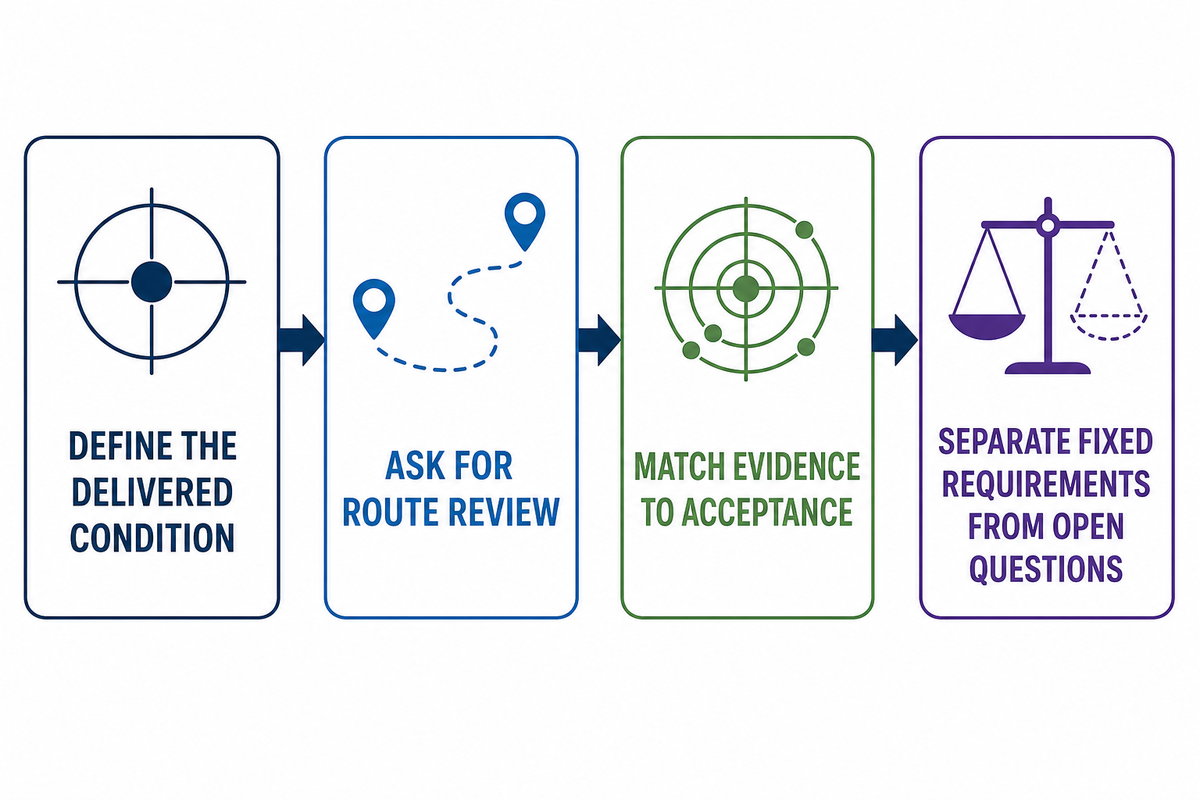
- Lieferzustand definieren: Schnittstellen, kritische Merkmale und die maßgebliche Revision festlegen.
- Prüfung des Fertigungsablaufs anfordern: Nicht voraussetzen, dass das Schweißen vor oder nach der Bearbeitung bei jedem Bauteil die richtige Lösung ist.
- Nachweise auf die Abnahme abstimmen: Sichtprüfungen, Maßprüfungen sowie projektspezifische ZfP oder Aufzeichnungen klar unterscheiden.
- Feste Anforderungen von offenen Fragen trennen: Dadurch werden Angebote vergleichbar, ohne den Lieferanten zu Mutmaßungen zu zwingen.
Der technische Kontext einer ASME-Analyse zu Toleranzabweichungen bei Schweißbaugruppen verdeutlicht, warum der Lieferzustand den Ausgangspunkt für die Besprechung des Fertigungsablaufs bilden sollte.
Mit den Anforderungen an den Lieferzustand beginnen, nicht mit dem Fertigungsablauf
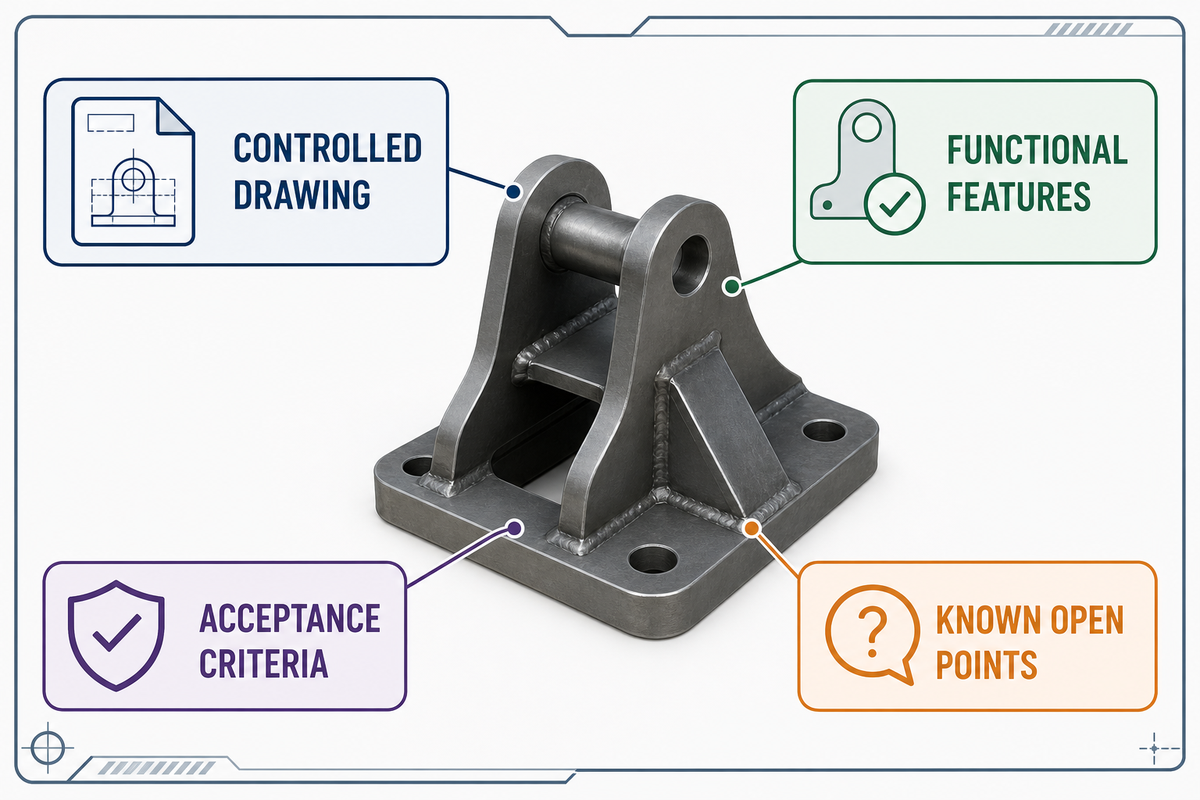
Einkäufer beginnen eine Anfrage mitunter mit der Nennung von Verfahren: CNC-Bearbeitung, Schneiden, Schweißen, Schleifen, Beschichten und Montieren. Das ist ein sinnvoller Anfang, sagt dem Lieferanten aber nicht, welche Flächen im Lieferzustand zusammenwirken müssen oder anhand welcher Nachweise dies belegt wird.
Bessere Spezifikationen beginnen mit der Funktion des Bauteils. Handelt es sich um eine Bezugsfläche, eine Dichtschnittstelle, ein Befestigungsbild, eine Bohrung, einen Lastpfad oder eine Baugruppe mit optischen Anforderungen? Halten Sie diesen Zweck direkt in Verbindung mit der revisionsgeführten Zeichnung fest, statt ihn in einer separaten E-Mail oder nur im Gedächtnis des Einkäufers zu belassen.
Fehlt dieser Zusammenhang, kann sich die Unklarheit bis ins Angebot fortsetzen, weil der Lieferant entscheiden muss, was zu prüfen und zu schützen ist und welche Revision maßgeblich sein soll; nehmen Sie deshalb Abnahmekriterien und bekannte offene Punkte in die Angebotsanfrage auf, bevor Werkstoffarbeiten oder die Herstellung von Spannvorrichtungen beginnen.
Abgrenzung des Anwendungsbereichs: Die nachstehenden Checklisten helfen Einkaufs- und Konstruktionsteams, ein zielführendes Gespräch vorzubereiten. Sie begründen keine Konformität, ersetzen weder die Messplanung noch Entscheidungsregeln für die Abnahme und setzen keine maßgebliche Norm, keinen Vertrag, keine zuständige Stelle und keine Kundenspezifikation außer Kraft.
Diese Unterscheidung ist besonders bei Bauteilen mit engen oder grenzwertnahen sowie regulierten, sicherheitskritischen, drucktragenden oder anderweitig folgenreichen Merkmalen wichtig. Bei solchen Aufträgen sollte die zuständige technische Stelle vor der Produktionsfreigabe die erforderlichen Schweißanweisungen, Qualifikationen, Prüfverfahren, Aufzeichnungen und Abnahmeregeln festlegen.
Diese Hochschulstudie zu Maßnahmen gegen Schweißverzug bietet nützliche Hintergrundinformationen dazu, den Endzustand als Prüfpunkt und nicht als Verfahrensbezeichnung zu behandeln.
Wann ein kombinierter Leistungsumfang für Bearbeitung und Schweißen sinnvoll ist – und wann nicht
Ein Gespräch mit einem einzigen Lieferanten kann Unklarheiten an den Übergabepunkten verringern, wenn ein Team Fertigung, Bearbeitung, Prüfung, Verpackung und Lieferung gemeinsam betrachten muss. Der Vorteil liegt in der Koordination: Bei derselben Prüfung können ein Zeichnungswiderspruch, eine Frage zur Spannvorrichtung, eine zu schützende Oberfläche oder ein Prüfhaltepunkt erkannt werden, bevor daraus jeweils eine unausgesprochene Annahme wird.
Bezeichnungen wie CNC-Bearbeitungsdienstleistungen, CNC-Metallbearbeitungsdienstleistungen, Metallfertigungsdienstleistungen und kundenspezifische CNC-Metallbearbeitung beschreiben Fertigungsmöglichkeiten, definieren aber keine Angebotsanfrage. Der Einkäufer muss für die betreffenden kundenspezifischen Metallteile weiterhin den Lieferzustand, die kritischen Merkmale und die Abnahmenachweise festlegen.
Das bedeutet nicht, dass ein integrierter Fertigungsablauf automatisch günstiger, schneller oder technisch überlegen ist. Getrennte Spezialisten können sinnvoll sein, wenn Werkstoff, Bauteilgröße, Zertifizierungsgrundlage, Bearbeitungsmöglichkeiten, Standort, Liste zugelassener Lieferanten oder kundenseitige Prozessvorgaben dies erfordern.
| Frage an den Einkäufer | Warum dies die Prüfung beeinflusst |
|---|---|
| Welche Revision ist für die Bestellung maßgeblich? | Dies verhindert, dass ein Angebot oder Prüfplan auf einer veralteten Zeichnung oder einem veralteten Modell basiert. |
| Welche Merkmale sind erst nach dem Schweißen relevant? | Diese Unterscheidung trennt die Vorbereitung für das Ausrichten und Zusammenbauen von der Bearbeitung und Prüfung im Lieferzustand. |
| Welche Unterlagen müssen das Bauteil begleiten? | Explizit aufgeführte Anforderungen sorgen dafür, dass Rückverfolgbarkeit und einkäuferspezifische Berichte im Leistungsumfang enthalten bleiben. |
| Welche Entscheidungen stehen noch aus? | Offene Punkte ermöglichen es dem Lieferanten, das Angebot mit Vorbehalten zu versehen, statt eine ungeklärte Frage stillschweigend als enthalten zu behandeln. |
Die Koordinierungsfrage sollte technischer Natur bleiben: Diese Toleranzanalyse für Schweißbaugruppen erinnert daran, dass Maße und Auswirkungen des Schweißens gemeinsam betrachtet werden müssen.
Zuerst die Reihenfolge klären: Sollte das Schweißen vor der Endbearbeitung erfolgen?

Es gibt keine allgemeingültige Reihenfolge. Ein Bauteil muss möglicherweise vor dem Schweißen bearbeitet werden, um Schweißstöße vorzubereiten, Merkmale für das Ausrichten und Zusammenbauen herzustellen oder einen Bezug für die Fertigung zu schaffen; eventuell ist nach dem Schweißen eine Endbearbeitung erforderlich, damit eine Funktionsfläche, Bohrung, ein Positioniermerkmal oder eine Schnittstelle im Lieferzustand fertiggestellt wird.
Selbst die Möglichkeit zur Mehrachs- oder 5-Achs-CNC-Bearbeitung beantwortet diese Frage zum Fertigungsablauf nicht von selbst. Der endgültige Funktionszustand und die Abnahmegrundlage des Bauteils entscheiden darüber, ob diese Möglichkeit relevant ist.
Fragen Sie nicht “Welche Reihenfolge ist die beste?”aber “Welcher Weg kann die endgültigen Funktions- und Akzeptanzanforderungen dieses Teils erfüllen, angesichts seines Materials, seiner Geometrie, seiner Verbindungsanordnung, seiner Rückhalte- und Freigabeanordnung, seiner geplanten Materialentfernung, Wärmebehandlung, Reparaturmöglichkeiten, seiner Passsequenz und seiner Inspektion Grundlage?”
Was ändert sich, wenn die Bearbeitung auf das Schweißen folgt?
Durch die Bearbeitung nach dem Schweißen lässt sich im Anschluss an die Fertigung eine endgültige Bezugsfläche oder fertige Schnittstelle herstellen; sie ist jedoch kein Allheilmittel gegen Verformung, Eigenspannungseffekte, eingeschränkte Zugänglichkeit oder Prüfrisiken. Bitten Sie den Lieferanten, den vorgeschlagenen Ablauf so detailliert zu erläutern, wie es für die Prüfung erforderlich ist: welche Merkmale vor dem Schweißen fertiggestellt werden, welche für die spätere Bearbeitung vorgesehen sind, wie Aufspannung und Entspannung berücksichtigt werden und welcher Zustand bei der Lieferung geprüft wird.
Einkäufer müssen keine detaillierte Schweißanweisung oder Methode zur Schweißstoßvorbereitung vorgeben, sofern der geltende Vertrag, die maßgebliche Norm oder die zuständige technische Stelle dieses Maß an Kontrolle nicht verlangt. Sie müssen jedoch die Anforderungen an den Lieferzustand eindeutig festlegen.
- Kennzeichnen Sie die Merkmale, die mit einem anderen Bauteil zusammenpassen oder der Ausrichtung dienen.
- Geben Sie an, ob ein Maß vor der Fertigung, nach dem Schweißen oder erst bei der Endlieferung gilt.
- Kennzeichnen Sie alle Flächen, die für Bearbeitung, Messung, Beschichtung oder Montage zugänglich bleiben müssen.
- Verlangen Sie, dass Abweichungen, Ausschlüsse und offene technische Fragen zusammen mit dem Angebot aufgeführt werden.
Technische Grundlagen für diese fallabhängige Prüfung des Fertigungsablaufs finden sich in der Hochschulforschung zu Methoden der Schweißverzugskontrolle.
Die 4-Fragen-Toleranzübersicht für die Zeit nach dem Schweißen
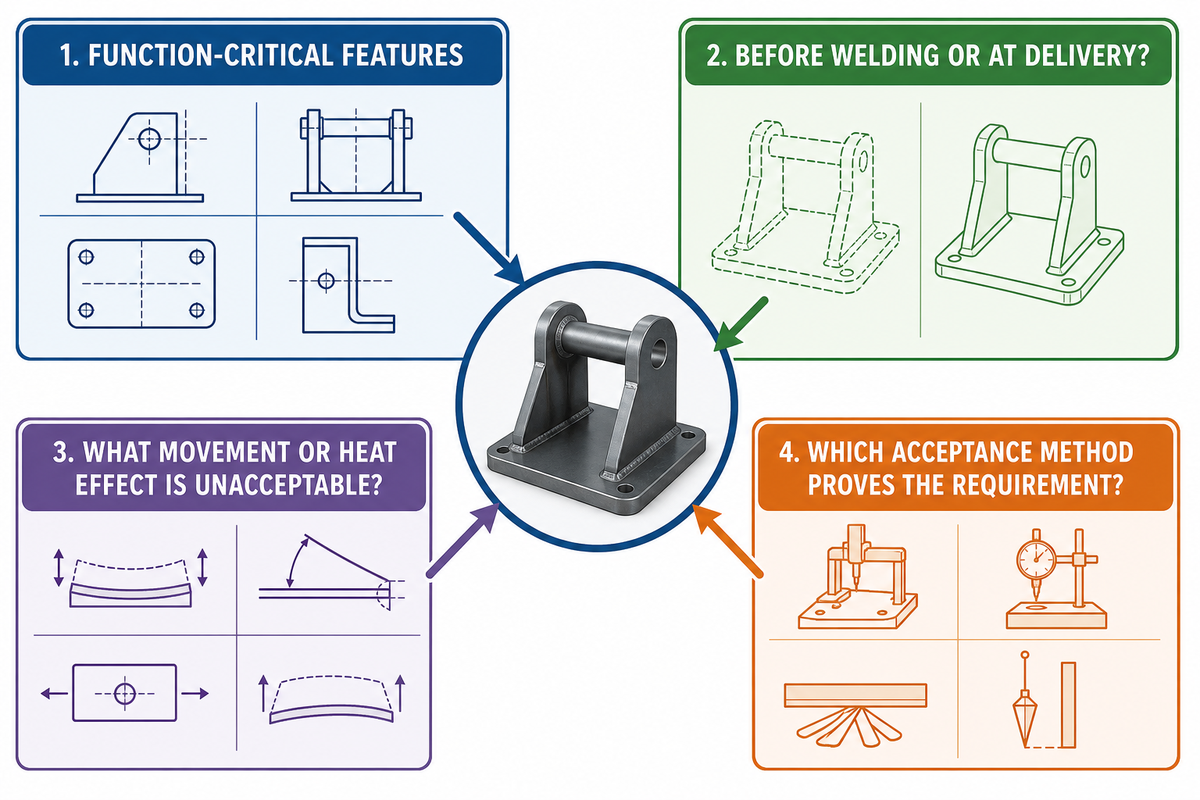
„Enge Toleranz“ ist keine vollständige Anweisung. Diese Übersicht macht aus der Bezeichnung 4 Fragen für den Einkäufer, damit Zeichnung, Besprechung des Fertigungsablaufs und Prüfanforderung auf denselben Lieferzustand ausgerichtet sind.
| Frage des Einkäufers | Was darzustellen oder zu erfragen ist | Abzustimmende Nachweise |
|---|---|---|
| 1. Welche Flächen oder Merkmale sind funktionskritisch? | Kennzeichnen Sie gegebenenfalls Bohrungen, Dichtflächen, Positioniermerkmale, Befestigungsbilder, Passkanten und geschützte Sichtflächen. | Zeichnungshinweis, Modellreferenz, Schnittstellenskizze oder präzisierte Merkmalsliste. |
| 2. Welche Maße gelten vor dem Schweißen und welche bei der Lieferung? | Trennen Sie Maße für das Ausrichten und Zusammenbauen von Maßen des Endzustands und geben Sie für jedes kritische Merkmal den Lieferzustand an. | Revisionsgeführte Zeichnung und alle genehmigten phasenspezifischen Hinweise. |
| 3. Welche Verformung oder Wärmeeinwirkung ist unzulässig? | Beschreiben Sie das Funktionsrisiko, etwa einen Ausrichtungsverlust, ein nicht mehr zugängliches Bearbeitungsaufmaß oder einen veränderten Passzustand, statt eine allgemeine Kontrollmethode zu vermuten. | Stellungnahme zur Prüfung des Fertigungsablaufs, Besprechung der Spannvorrichtung und vereinbarte Klärungsdokumentation. |
| 4. Mit welchem Abnahmeverfahren wird die Anforderung nachgewiesen? | Geben Sie das geforderte Merkmal, den Bezug, die Erwartungen an Stichproben oder Berichte sowie alle tatsächlich erforderlichen einkäuferspezifischen Verfahren an. | Abnahmematrix, Anforderung von Messergebnissen und projektspezifische Prüfanforderung. |
Wichtige Einschränkung: Diese Übersicht strukturiert eine Angebotsanfrage, stellt aber selbst keine Konformität fest. Wenn eine Abnahme nahe an einem Grenzwert liegt oder weitreichende Folgen hat, sollte die zuständige technische Stelle den relevanten Messaufbau, die Behandlung der Messunsicherheit und die Entscheidungsregel für die Abnahme festlegen oder genehmigen, statt davon auszugehen, dass ein allgemeiner Prüfbericht die Frage klärt.
Es geht nicht darum, für jedes Merkmal einen kostspieligen Prüfplan zu erzwingen. Der Zweck besteht darin, zu verhindern, dass eine funktionskritische Anforderung im Angebot wie eine übliche Werkstatttoleranz behandelt wird, nur weil das Merkmal nicht hervorgehoben wurde.
Die ASME-Toleranzanalyse für Schweißbaugruppen bietet relevante Hintergrundinformationen, macht diese Checkliste jedoch nicht zu einem Konformitätsverfahren.
Verzugsrisiko: Was Einkäufer in Zeichnung und Angebotsanfrage angeben müssen
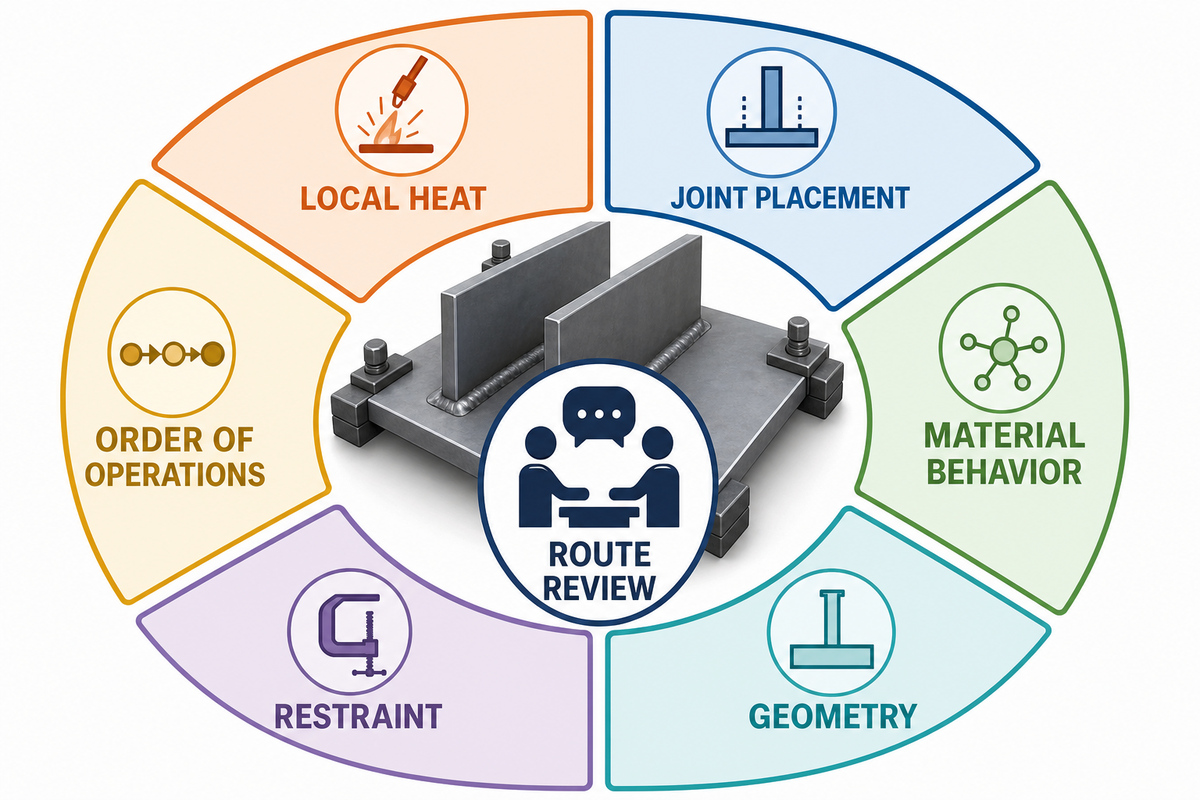
Schweißen und Bearbeitung beeinflussen sich über den Zustand des Bauteils, nicht über eine einfache Faustregel. Lokale Wärmeeinbringung, Lage der Schweißstöße, Werkstoffverhalten, Geometrie, Einspannung, Entspannung und Arbeitsreihenfolge können jeweils beeinflussen, was der Lieferant beurteilen muss.
Einkäufer sollten das benötigte Ergebnis und die Schnittstellen beschreiben, die nicht beeinträchtigt werden dürfen. Eine Forderung nach „Verzugskontrolle“ ohne Funktionsmerkmal, Bezug, Zustand oder Abnahmegrundlage verlangt vom Lieferanten, sowohl das Risiko als auch die Definition des Erfolgs selbst abzuleiten.
| Explizit angeben | Nicht als Annahme offenlassen |
|---|---|
| Gültige Zeichnungs-/Modellrevision und Einheitensystem | Welche Anlage oder E-Mail eine andere ersetzt |
| Lage der Schweißstöße, Sichtflächen und gegebenenfalls Zugangsbeschränkungen | Ob eine Fläche eingespannt, bearbeitet, geschliffen oder beschichtet werden darf |
| Funktionsschnittstellen, kritische Bezüge und Merkmale im Lieferzustand | Ob ein Nennmaß als Bezug für das Ausrichten und Zusammenbauen oder als endgültige Abnahmeanforderung dient |
| Bekannte Haltepunkte, Prüfanforderungen oder Kundengenehmigungen | Ob der Lieferant trotz einer ungeklärten Zeichnungsfrage fortfahren darf |
Fordern Sie bei wesentlichen Risiken eine Erläuterung zur Prüfung des Fertigungsablaufs an. Eine Antwort kann eine vorgeschlagene Reihenfolge, ein Konzept für die Spannvorrichtung, ein Bearbeitungsaufmaß, eine Prüfphase oder eine Frage benennen, die eine technische Entscheidung erfordert; sie darf nicht mit einem allgemeingültigen Fertigungsrezept verwechselt werden.
Eine Hochschulübersicht zu Ansätzen der Verzugskontrolle liefert den technischen Hintergrund dafür, warum Geometrie, Einspannung und Reihenfolge in diese Prüfung gehören.
Zu bestätigende Entscheidungen zu Werkstoff, Schweißverfahren und Spannvorrichtung
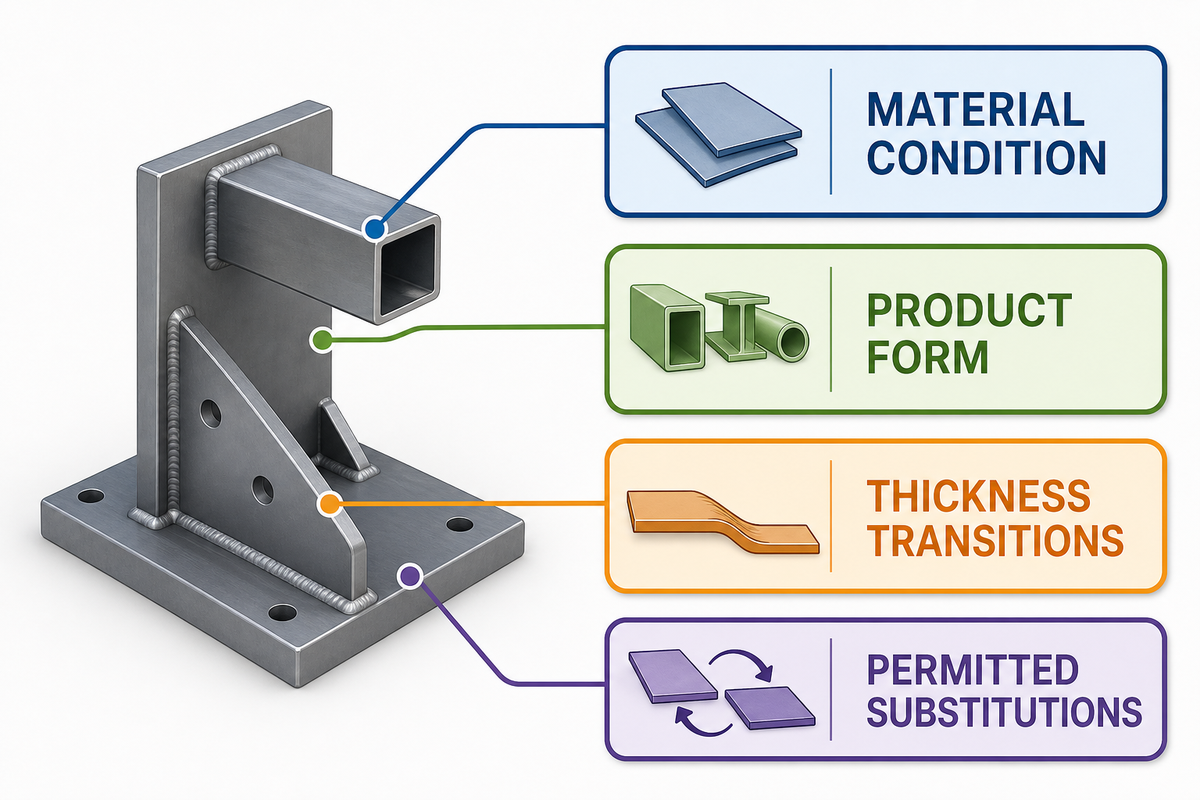
Ein Werkstoff ist mehr als die Bezeichnung einer Werkstoffgüte. Zustand, Produktform, Dickenübergänge, vorhandene Beschichtungen, Korrosionsumgebung, Anforderungen an die Oberflächenqualität und zulässige Ersatzwerkstoffe können sowohl den Fertigungsablauf als auch den Prüfbedarf verändern.
Ebenso kann ein Einkäufer eine Anforderung an den Schweißstoß, das Erscheinungsbild sichtbarer Schweißnähte, eine funktionale Einschränkung oder eine vorgeschriebene Norm angeben, ohne die gesamte Schweißanweisung der Werkstatt selbst auszuarbeiten. Wenn eine Verfahrensspezifikation, ein Qualifikationsnachweis, eine Einschränkung für Schweißzusätze, eine Wärmebehandlung oder eine Schweißerqualifikation erforderlich ist, nennen Sie die maßgebliche Grundlage und fordern Sie diese nur dort an, wo sie gilt.
Eine ungeeignete Kombination aus Werkstoff und Spannvorrichtung kann Nacharbeit verursachen, weil eine scheinbar geringfügige Änderung den Zugang zum Schweißstoß, das Bearbeitungsaufmaß oder den endgültigen Prüfzustand verändern kann; geben Sie deshalb erforderliche qualifizierte Arbeiten oder die ZfP-Grundlage an, statt davon auszugehen, dass jedes Bauteil dieselben Nachweise benötigt.
Sofern ein revisionsgeführtes CAD-Modell verfügbar ist, kann es Funktionsschnittstellen und Einschränkungen der Bearbeitungsmaschinen für bearbeitete Teile verdeutlichen; die Zeichnung bleibt die maßgebliche Anforderung.
Fügen Sie einer Angebotsanfrage für die Präzisionsmetallfertigung von Schweißbaugruppen und bearbeiteten Teilen das revisionsgeführte CAD-Modell bei, wenn es eine Funktionsschnittstelle verdeutlicht, wobei die angegebene Zeichnung maßgeblich bleibt.
Vor der Freigabe zu klärende Fragen
- Sind Werkstoffgüte, Zustand und zulässige Ersatzwerkstoffe eindeutig festgelegt?
- Sind Anforderungen an Oberflächenqualität, Maskierung, Erdung, Abdichtung oder zu schützende Flächen ersichtlich?
- Darf die vorgeschlagene Spannvorrichtung die in der Zeichnung dargestellten Flächen berühren, fixieren oder zur Positionierung nutzen?
- Sind für die Arbeiten eine kundengenehmigte Schweißanweisung, ein Nachweis, ein Zeugenpunkt oder besondere Personalqualifikationen erforderlich?
Wenn ein formales Qualitätsmanagementsystem gilt, bietet der veröffentlichte Anwendungsbereich von ISO 3834 einen nützlichen Bezugspunkt; welche Nachweise benötigt werden, bestimmen weiterhin die geltenden Projektanforderungen.
Prüfnachweise: Anforderungen an Sichtprüfung, Maßprüfung und anwendbare ZfP abstimmen
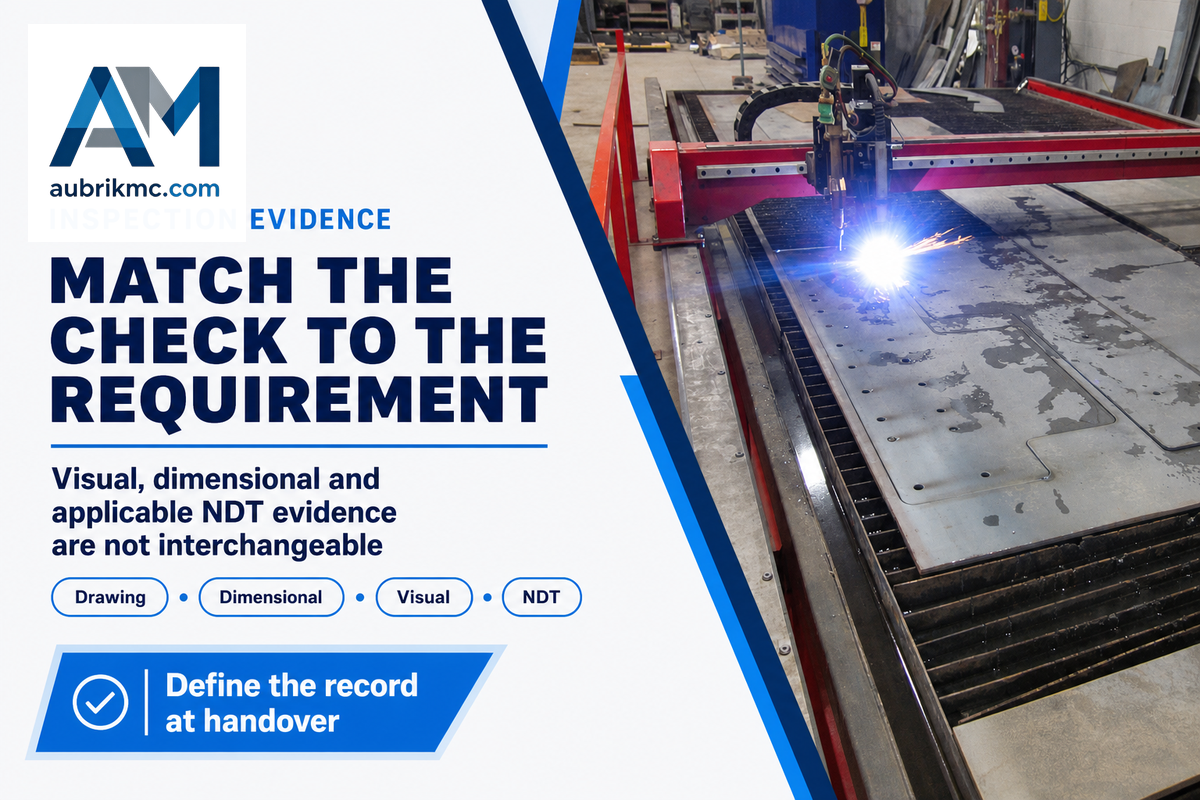
Sichtprüfung, Maßprüfung und zerstörungsfreie Prüfung sind nicht austauschbar. Jede beantwortet eine andere Abnahmefrage, und die Bestellanforderung sollte angeben, welche Frage relevant ist, welcher Bezug maßgeblich ist und welcher Nachweis bei der Übergabe erwartet wird.
Die Prüfplanung sollte vor dem ersten Lichtbogen oder dem ersten Einrichten beginnen und nicht erst, wenn ein fertiges Bauteil auf dem Aufspanntisch liegt. Auch die allgemeinen Prüfleitlinien des National Board ordnen die frühzeitige Prüfung anhand von Auftragspaket, Werkstoffen, Schweißstoßvorbereitung, geltenden Schweißanweisungen und Qualifikationen, Wärmebehandlung, ZfP und Projektanforderungen ein; die genaue Liste für einen Auftrag des Einkäufers bleibt vom Einzelfall abhängig.
“Die Inspektion beginnt vor dem ersten Bogen”
Welche Prüfnachweise gehören in die Bestellung?
Beginnen Sie mit der revisionsgeführten Zeichnung und den Abnahmekriterien, die für das bestellte Bauteil gelten. Geben Sie anschließend die tatsächlich erforderlichen Nachweise an: Werkstoff- oder Losrückverfolgbarkeit, sofern vorgeschrieben, Messergebnisse für benannte Merkmale, Aufzeichnungen zur Sichtabnahme, angeforderte ZfP-Berichte, erforderliche Verfahrens- oder Personalnachweise sowie alle Formblätter, Revisionen oder Freigabebedingungen des Einkäufers.
Machen Sie diese Liste nicht automatisch zum Pflichtprogramm für jede Bestellung. Arbeiten nach Regelwerk sowie sicherheitskritische, regulierte oder kundenseitig kontrollierte Arbeiten können ein umfassenderes, durch die maßgebliche Grundlage definiertes Unterlagenpaket erfordern, während für ein gewöhnliches gefertigtes Bauteil ein wesentlich kleinerer, eindeutig vereinbarter Nachweissatz ausreichen kann.
Aktuelle Informationen aus dem Prüfsektor bietet die AWS-Ressource Inspection Trends; sie ersetzt keinen anwendbaren Prüfplan.
Das 6-Dokumente-Paket für eine ausschreibungsreife Angebotsanfrage
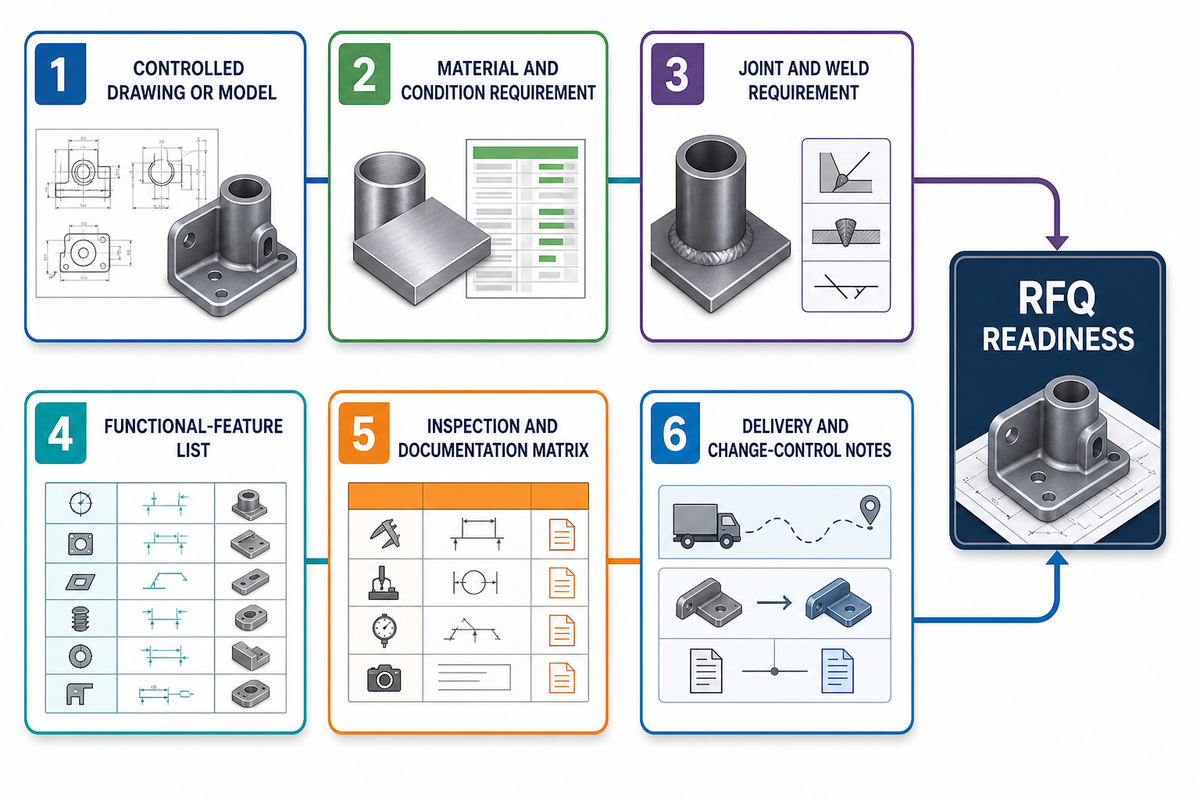
Dieses Basispaket hilft Einkäufern, ein technisch aussagekräftiges Angebot anzufordern. Es ist kein allgemeingültiges Konformitätsdossier; daher sollte jeder Punkt erweitert, reduziert oder präzisiert werden, wenn Produkt, Vertrag, Kunde oder maßgebliche Anforderung dies verlangen.
| Grundlegender Bestandteil | Was damit geklärt werden sollte |
|---|---|
| 1. Revisionsgeführte Zeichnung oder revisionsgeführtes Modell | Bauteilidentität, Revision, Einheiten, Maße, Hinweise und die maßgebliche Datei bei Abweichungen zwischen Dokumenten. |
| 2. Anforderungen an Werkstoff und Zustand | Werkstoffgüte, Form, Zustand, Oberflächenqualität, genehmigte Alternativen und gegebenenfalls Anforderungen an die Rückverfolgbarkeit. |
| 3. Anforderungen an Schweißstoß und Schweißnaht | Lage der Schweißstöße, Anforderungen an Erscheinungsbild oder Nachbearbeitung, Zugangsbeschränkungen und alle benannten maßgeblichen Vorgaben. |
| 4. Liste der Funktionsmerkmale | Schnittstellen im Lieferzustand, kritische Bezüge, Bearbeitungsflächen, Bohrungen, Dichtmerkmale oder geschützte Flächen. |
| 5. Prüf- und Dokumentationsmatrix | Welche Merkmale, Berichte, Zeugenpunkte, Abnahmegrundlagen und Formate erforderlich sind. |
| 6. Hinweise zu Lieferung und Änderungssteuerung | Menge, Verpackung, Zielort, erforderlicher Termin, Regeln für Teillieferungen, Genehmigungsweg und Freigabe von Änderungen. |
Paket bei Bedarf erweitern: Ermitteln Sie bei Arbeiten mit weitreichenden Folgen anhand des maßgeblichen Vertrags, Regelwerks, der zuständigen Stelle und des technischen Genehmigungswegs alle erforderlichen qualifizierten Schweißanweisungen, Verfahrensnachweise, Personalqualifikationen, Prüf- oder ZfP-Qualifikationen, Rückverfolgbarkeitsangaben und Abschlussunterlagen. Gehen Sie nicht davon aus, dass die Nennung dieser Punkte in einem allgemeinen Leitfaden sie für jedes Bauteil verbindlich macht.
Eine formale Qualitätsreferenz für das Schmelzschweißen bietet der veröffentlichte Anwendungsbereich von ISO 3834; er dient als Hintergrundinformation und nicht als allgemeingültige Dokumentationsliste.
Vor der Übergabe der Dateien durch die Konstruktion eine Triage-Tabelle für die Angebotsanfrage verwenden
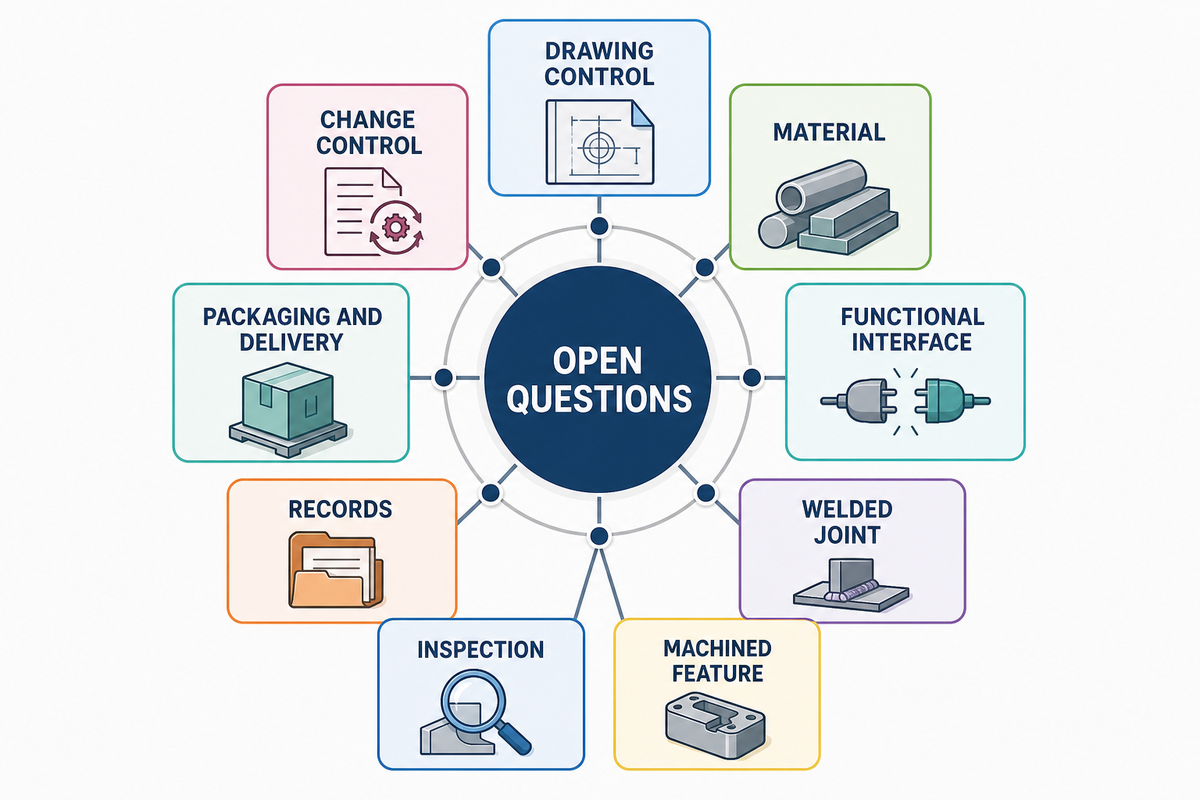
Unterschiedliche Anforderungsarten führen zu unterschiedlichen Fragen. Eine kurze Triage-Tabelle hält die Besprechung konkret: Der Einkauf erkennt, was zu beschaffen ist, die Konstruktion, was entschieden werden muss, und der Lieferant, welche Punkte feststehen und welche noch offen sind.
Sie sorgt außerdem für eine ehrliche erste Angebotsanfrage. Ein Einkäufer kann eine Prüfung anfordern, solange ein Punkt noch offen ist, sofern er als Annahme oder als vor Produktionsbeginn zu treffende Entscheidung gekennzeichnet und nicht als fertige Anforderung ausgegeben wird.
| Anforderungsart | Zu klärender oder zu kennzeichnender Punkt | Verantwortlich für die nächste Antwort |
|---|---|---|
| Zeichnungslenkung | Welche Datei und Revision sind für die Bestellung maßgeblich? | Einkäufer oder Konstruktionsverantwortlicher |
| Werkstoff | Welche Werkstoffgüte, welcher Zustand, welche Ersatzregel und welche Nachweise gelten? | Einkäufer mit technischer Unterstützung |
| Funktionsschnittstelle | Welches Merkmal muss bei der Lieferung funktionieren und unter welcher Gegenstückbedingung? | Konstruktionsverantwortlicher |
| Schweißstoß | Welche Vorgabe zu Lage, Zugänglichkeit, Erscheinungsbild oder maßgeblicher Anforderung steht fest? | Prüfung durch Konstruktion und Lieferant |
| Bearbeitetes Merkmal | Welche Fläche, Bohrung oder welches Muster ist endgültig, und wann wird es beurteilt? | Prüfung durch Konstruktion und Lieferant |
| Prüfung | Welche Abnahmegrundlage, welcher Bericht und welcher Haltepunkt sind tatsächlich erforderlich? | Qualitätsverantwortlicher oder Kunde |
| Nachweise | Welche Nachweise zur Rückverfolgbarkeit, Schweißanweisung, Qualifikation oder Berichterstattung gelten für diesen Auftrag? | Maßgebliche Projektinstanz |
| Verpackung und Lieferung | Wie werden fertige Schnittstellen geschützt, gekennzeichnet und freigegeben? | Einkauf und Logistik |
| Änderungssteuerung | Was geschieht, wenn sich eine Annahme zu Zeichnung, Werkstoff, Menge oder Fertigungsablauf ändert? | Einkäufer und Lieferant gemeinsam |
Nicht jede Zeile benötigt einen langen technischen Hinweis. Der Nutzen besteht darin, ein leeres Feld sichtbar zu machen, bevor daraus eine Auslegung in der Werkstatt, eine Meinungsverschiedenheit bei der Prüfung oder ein Änderungsauftrag nach der Materialdisposition wird.
Die Toleranzanalyse für Schweißbaugruppen liefert nützliche Hintergrundinformationen dazu, warum offene Fragen zum Fertigungsablauf und zur Prüfung frühzeitig sichtbar gemacht werden sollten.
Kosten- und Lieferzeitfaktoren ohne allgemeine Stundensatzliste
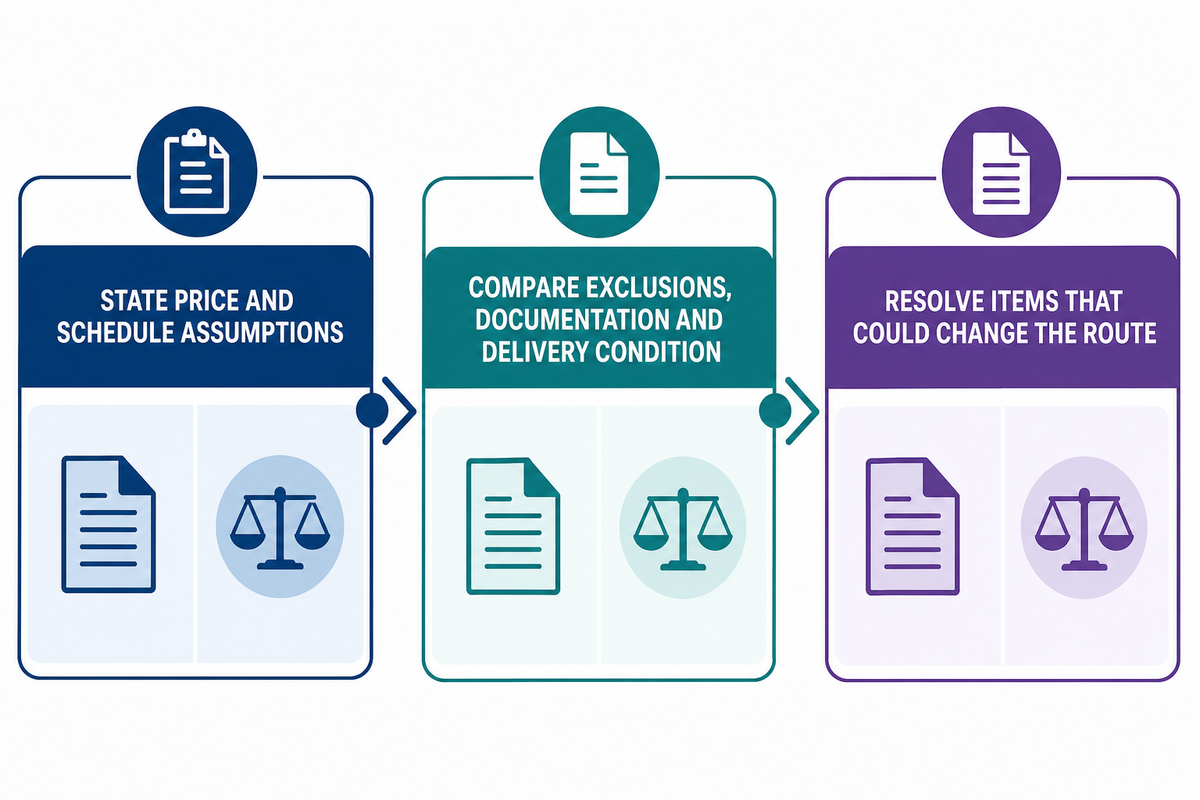
Ein aussagekräftiges Angebot basiert auf einem definierten Leistungsumfang und nicht auf einer allgemeinen Tabelle mit Werkstattstundensätzen. Technische Klärung, Einrichtung, Komplexität von Aufspannung oder Spannvorrichtung, Handhabung, Bearbeitungszugang, Prüfung, Dokumentation, Werkstoffverfügbarkeit, externe Prozesse, Losgröße, Verpackung und Lieferbedingungen können den vom Lieferanten zu bewertenden Fertigungsablauf jeweils verändern.
Bei Produktionsläufen, die Blechbearbeitung, Schweißen und spanende Bearbeitung kombinieren, hängt die Kostenerörterung außerdem davon ab, wo die einzelnen Übergaben und Prüfhaltepunkte im Fertigungsablauf liegen.
Deshalb können 2 Zeichnungen mit ähnlichen Maßen zu ganz unterschiedlichen Fragen führen. Bei der einen können eine offene Revision, eine kritische Schnittstelle nach dem Schweißen, ein vorgeschriebenes Berichtsformat oder eine kleine Losgröße vorliegen, die sich auf die Verteilung der Einrichtungskosten auswirkt; bei der anderen kann es sich um ein ausgereiftes Wiederholteil mit stabilen Annahmen handeln.
Ein ungeklärter Leistungsumfang verursacht ein Beschaffungsrisiko, weil eine offene Bedingung hinsichtlich Spannvorrichtung, Bericht oder Verpackung den CNC-Fertigungsablauf noch nach Planungsbeginn verändern kann; fügen Sie daher die geltenden Abnahmekriterien und Annahmen der Angebotsanfrage bei, damit der Lieferant Abweichungen erläutern kann.
- Bitten Sie jeden Lieferanten, die Annahmen offenzulegen, auf denen Preis und Terminplan beruhen.
- Vergleichen Sie Ausschlüsse, offene Punkte, Dokumentation und Lieferzustand, bevor Sie den Endpreis vergleichen.
- Klären Sie die Punkte, die den Fertigungsablauf verändern könnten, bevor Sie Angebote als gleichwertig behandeln.
Dieser Leitfaden nennt bewusst weder einen allgemeinen Stundensatz noch eine zugesagte Einsparung oder Lieferzeit. Diese Zahlen hängen vom Bauteil, den kaufmännischen Bedingungen, der Kapazität, dem Werkstoffmarkt, dem Qualitätsumfang und der aktuellen Auslastung des Lieferanten ab.
Eine Forschungsperspektive ohne Stundensatzliste bietet die NIST-Veröffentlichung zur kostengerechten Konstruktion; dieser Leitfaden leitet daraus weiterhin keine Preisaussage ab.
Wann ein Gespräch über integrierte Dienstleistungen angebracht ist
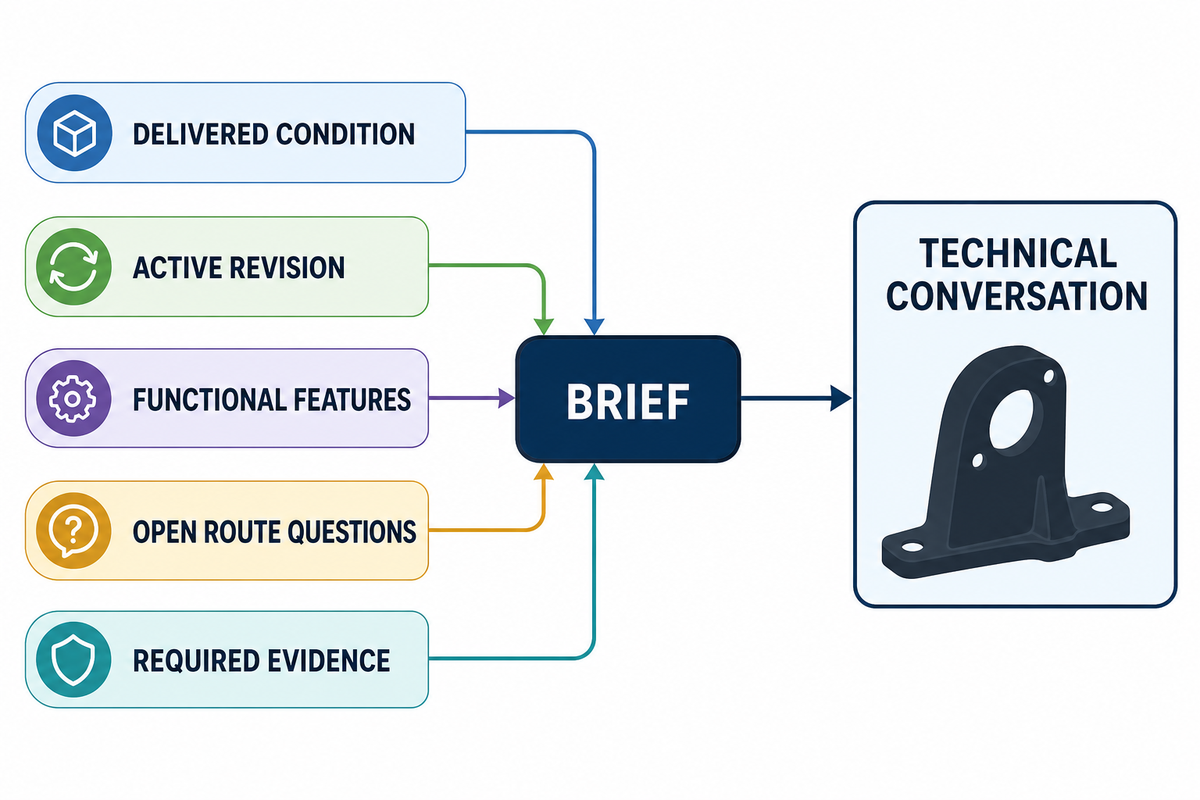
Leiten Sie die technische Abstimmung ein, sobald der Käufer den Lieferzustand, den aktuellen Revisionsstand, die funktionsrelevanten Merkmale, die offenen Fragen zum Fertigungsablauf und die erforderlichen Nachweise beschreiben kann. So entsteht ein produktives technisches Gespräch, ohne die kommerzielle Funktion einer Leistungsseite zu duplizieren, und der Lieferant erhält die nötigen Informationen, um Schnittstellen, Annahmen und technische Fragen vor der Erörterung der Fertigungsmöglichkeiten oder eines Angebots zu klären.
Diese Abstimmung ist sinnvoll, wenn unausgesprochene Annahmen, unklare Zeichnungen oder ungeklärte Abnahmekriterien nach Veröffentlichung der Angebotsanfrage zu Nacharbeit führen könnten, während die getrennte kommerzielle Abgrenzung den Schwerpunkt des Gesprächs auf dem Anwendungsbereich und den technischen Nachweisen statt auf einem Leistungsversprechen hält.
Für eine Erörterung des Leistungsumfangs nach Erstellung des Lastenhefts siehe Aubriks Leistungsumfang für CNC-Bearbeitung und Metallschweißen. Bringen Sie die ungeklärten Fragen mit; ein Angebot ist aussagekräftiger, wenn diese offenliegen, statt in einer Kette von Anhängen verborgen zu sein.
Wenn für das Projekt eine formelle Referenz zum Qualitätssystem erforderlich ist, siehe den veröffentlichten Anwendungsbereich der ISO 3834; dieser Einkaufsleitfaden schreibt kein Ergebnis für die Lieferantenqualifizierung vor.
Häufig gestellte Fragen
Gibt es CNC-Schweißen?
CNC-Schweißen ist eine unscharfe Bezeichnung; klären Sie daher vor einer Angebotsanfrage die beabsichtigte Bedeutung. Käufer können damit CNC-bearbeitete Teile meinen, die geschweißt werden sollen, automatisierte Schweißausrüstung, eine Schweißbaugruppe, die eine Fertigbearbeitung benötigt, oder einen Lieferanten, der mehrere Arbeitsgänge koordiniert. Geben Sie das zu liefernde Bauteil und die Verfahrensgrenzen an, statt sich auf eine Kurzbezeichnung zu verlassen. So wird vermieden, dass Angebote unter derselben Bezeichnung unterschiedliche Aufträge beschreiben.
Sollte ein geschweißtes Teil nach dem Schweißen bearbeitet werden?
Manchmal, insbesondere wenn eine Schnittstelle im Lieferzustand, ein Positioniermerkmal, eine Bohrung oder eine Fläche erst nach der Fertigung fertigbearbeitet werden muss. Eine allgemeingültige Regel gibt es nicht, da der Fertigungsablauf von Werkstoff, Geometrie, Schweißstößen, Einspannung und Lösen, Zugänglichkeit, Wärmebehandlung, Reparaturmöglichkeit, Funktionstoleranz und Abnahmeanforderungen abhängt. Fordern Sie eine Prüfung des Fertigungsablaufs an und formulieren Sie die endgültige Anforderung eindeutig. In der Antwort des Lieferanten sollten seine Annahmen und alle noch offenen technischen Entscheidungen klar erkennbar sein. Fügen Sie bei einem komplexen Teil eine knappe Anwendungsskizze oder einen Hinweis zum Gegenstück bei, damit für die Prüfung mehr Kontext als nur eine Maßangabe vorliegt. Wenn ein Merkmal in einem nachgelagerten Schritt eine Dicht-, Ausrichtungs- oder Montagefunktion erfüllt, benennen Sie diese Funktion und zeigen Sie nach Möglichkeit den Bezug zum Gegenstück. Dadurch kann der Prüfer die richtige Frage stellen, statt lediglich eine vertraute Arbeitsreihenfolge zu wählen.
Welche Informationen sollte eine Angebotsanfrage für geschweißte und bearbeitete Teile enthalten?
Geben Sie mindestens die aktuelle Zeichnung oder das aktuelle Modell, die Werkstoffvorgabe, die Menge, den Lieferzustand, die funktionsrelevanten Merkmale, Hinweise zu Schweißstößen oder zur Oberflächenqualität, die Erwartungen an die Prüfung, den Dokumentationsbedarf, die Verpackung, den Bestimmungsort und den Zieltermin an. Kennzeichnen Sie außerdem Unklarheiten und erforderliche Freigaben. Fügen Sie bei Arbeiten nach Regelwerk oder mit weitreichenden Folgen die projektspezifischen Anforderungen hinzu, die für Schweißanweisungen, Qualifikationen, Prüfungen, Rückverfolgbarkeit und Abschlussdokumentation maßgeblich sind. Wenn sich die Anforderung noch in der Entwicklung befindet, bitten Sie den Lieferanten, die Annahme aufzuführen, statt sie stillschweigend als eingeschlossen zu behandeln. Der Lieferant kann dann eine Schätzung für den bekannten Anwendungsbereich von einem endgültigen Angebot unterscheiden, das von freigegebenen Entscheidungen abhängt. Platzieren Sie Anweisungen zur Änderungskontrolle direkt neben dem Zeichnungsverweis, insbesondere wenn ein überarbeitetes Modell, eine Werkstoffsubstitution, ein anderes Prüfformat oder eine Mengenänderung den Fertigungsablauf verändern könnte. Wenn mehrere Abteilungen für die Angaben verantwortlich sind, legen Sie fest, wer zur Klärung jedes offenen Punkts befugt ist und durch welchen Nachweis die Freigabe mitgeteilt wird.