Get in Touch with Aubrik Company

ISO 9001 & CE
Self-Aligning Welding Rotator
Self-Aligning Welding Rotator — Turning Rolls That Auto-Adjust from 5 to 500 Tonnes
One roller bed for your whole cylinder mix — no manual wheel-spacing setup between jobs.
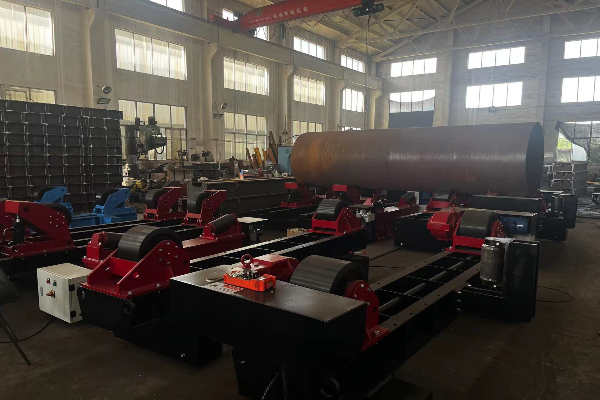
A self-aligning welding rotator carries your tank, pressure vessel, or pipe spool on trunnion-mounted rollers that pivot to the workpiece on their own. Load a 600 mm pipe, then a 4 metre wind-tower section, on the same welding rotator — the wheel sets swing to the new diameter as the part settles, with zero bolt adjustment. Built in both standard and hydraulic fit-up configurations, ABOKE’s turning rolls span capacity classes from 5 to 500 tonnes.
5–500 t
Capacity classes
250–6,300 mm
Workpiece diameter range
PU / steel
Wheel material options
6–60 m/h
Stepless VFD speed
0 setup
No manual wheel adjustment
ISO 9001 & CE
Certified, since 1999
2 HRS
Lost daily to setup by regional fabricators.
60+ TON
The larger the workpiece — a 60 ton pressure vessel, a 200 ton tank — the longer the crew spends positioning instead of welding.
Mechanically, the root cause runs deep: fixed wheel carriers can only support one band of diameters at a time, so they cannot follow a workpiece whose size changes from job to job. A self-aligning welding rotator removes that constraint.
ABOKE engineers the rollers onto trunnion brackets that pivot freely, so the wheel set swings to match the cylinder’s radius the moment the part is craned on — the principle behind roller beds for rotating cylindrical objects since the foundational US Patent 3,027,159, and refined in modern anti-drift designs such as US Patent 8,342,493 B2 in the USPTO record, where the idler axes are angled to oppose axial wander automatically.
Used as a pipe rotator for welding, the same ABOKE bed turns a spool for a continuous circumferential seam.
Changeover then drops to seconds: a one-metre pipe and a five-metre tank run on the same bed without a single wheel moved by hand. There is a second, quieter benefit that matters most to automated shops — because the wheels self-center, the workpiece centerline stays at roughly the same height regardless of diameter.
With a fixed welding head or a column-and-boom, the torch height barely changes between jobs, so operators stop chasing seam position every time the part size changes. Among the different types of welding rotators, the self-aligning design is the one built for variety.
Where a conventional rotator keeps its rollers bolted in place, a self-aligning rotator lets each turning roll find the workpiece on its own. That is why self-aligning rotators offer real value on large-scale welding projects with a changing diameter mix — compared to conventional rotators, they keep automatic welding moving without an operator resetting a single roller, and the welding rollers carry the load no matter which cylinder lands next.
Rotator vs. Positioner — Which One Is This?
Welding Rotator (Turning Roll)
Rotates cylindrical workpieces — tanks, pipes, vessels — on rollers for circumferential and longitudinal seams. If your work is round and runs metres long, you need a rotator. (We build both, but this page is about the roller-type self-aligning rotator).
Welding Positioner
Tilts and turns a part on a table or headstock, and suits smaller or irregular assemblies. If it’s a bracket or frame that has to be tipped to a comfortable angle, you need a positioner.
ABOKE Self-Aligning Welding Rotator Range: 5 t to 500 t Models & How to Size Yours
Supplied as a drive unit plus one or more idler units and scaled across capacity classes, ABOKE’s self-aligning welding rotators put a single bed under a wide band of cylindrical workpieces. These self-aligning rotators offer one bed for a whole cylinder mix: each set rotates the workpiece for automatic welding, and the welding rollers are chosen for your surface and temperature needs.
| Polyurethane (PU) | Gentler on the shell and protect thin-wall finishes. |
|---|---|
| Steel-Faced | Handle higher loads and elevated temperatures near the weld zone. |
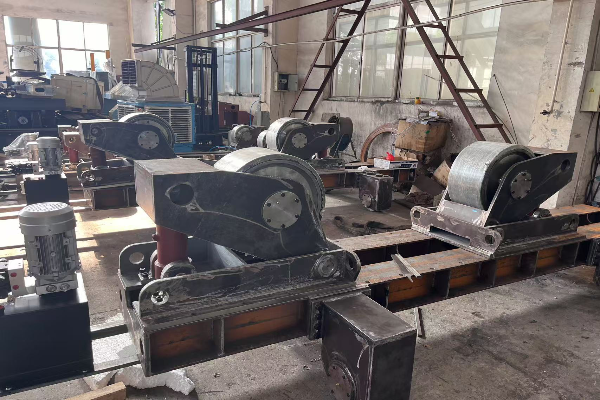
ABOKE Capacity-to-Diameter Selection Matrix
Use the capacity class that covers your heaviest workpiece and the diameter range that spans your smallest and largest cylinders. Bands below are typical for self-aligning turning rolls; ABOKE confirms exact figures per model on the spec sheet.
| Capacity class | Typical workpiece Ø range | Wheel material | Line speed | Typical use |
|---|---|---|---|---|
| 5–10 t | 250–2,500 mm | PU | 6–60 m/h | Pipe spools, small drums |
| 20–40 t | 500–3,500 mm | PU / steel | 6–60 m/h | Tanks, heat exchangers |
| 60–100 t | 800–5,000 mm | Steel / PU | 6–60 m/h | Pressure vessels, boilers |
| 150–300 t | 1,000–6,300 mm | Steel | 6–60 m/h | Wind towers, large vessels |
| 500 t+ | Custom | Steel | Custom | Heavy / OEM builds |
Size on Eccentric Load — Not Headline Weight
The rated capacity on a data sheet applies only when the load sits centered on the rollers. Off-center it drops fast: an industry guide shows a 1,000 kg-rated unit may carry only about 600 kg at 200 mm eccentricity.
Size your rotator by taking the heaviest workpiece plus fixture weight, multiplying by a 1.5× safety factor, and using that against the eccentric rating. Four numbers decide whether a rotator actually performs in your shop. A self-adjusting carriage makes this possible — the subject of US Patent 4,407,621.
Self-Aligning vs. Conventional vs. Adjustable Welding Rotators — A Data Comparison
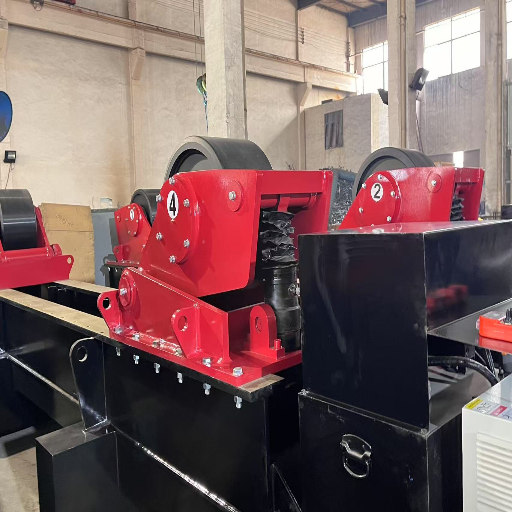
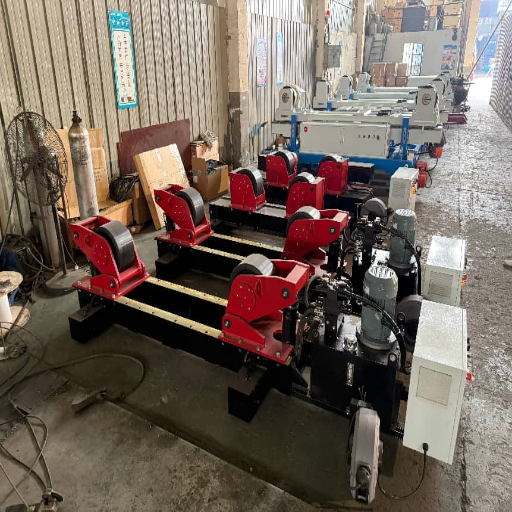
The three roller types differ in exactly one thing that drives cost and throughput: how the wheels follow a change in diameter. This table puts the trade-off in concrete terms rather than marketing labels.
| Factor | Self-Aligning | Conventional | Adjustable (screw) |
|---|---|---|---|
| Diameter changeover | Automatic, seconds | Unbolt + slide rollers | Screw / motor reposition |
| Manual setup per Ø | None | Yes, every change | Partial |
| One-setup Ø coverage | Full rated range | One band | Stepped range |
| Thin-wall stability | 4-point self-leveling | 2-point, point load risk | 2–4 point |
| Best for | High-mix, fixed-boom | Single Ø, high volume | Few set diameters |
| Relative cost | Higher | Lowest | Medium |
Honesty matters here, because over-buying is a real cost: a self-aligning rotator is not automatically the right answer, and we will not claim it suits every shop. The honest version is this — if your shop runs one pipe diameter at high volume, a conventional rotator gives repeatable accuracy at the lowest price, with nothing to calibrate. The structural reason self-alignment earns its higher price is changeover: it pays off when an industrial buyer or a regional fabricator changes diameters often — say a 20 ton stainless tank one shift and a 60 ton vessel the next — or runs thin-wall stainless and aluminum, where a four-point cradle prevents the indentation and distortion risk a two-point set can leave. ABOKE engineers the anti-drift geometry — idler axes angled to cancel axial wander — to keep long seams tracking, as covered in patents such as EP 2499385 B1; every unit ships CE-marked. The one trade-off to weigh is the hidden cost — the higher upfront price of that complex mechanical design.
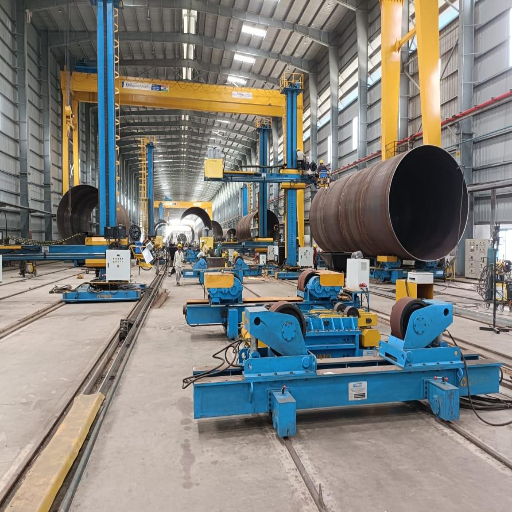
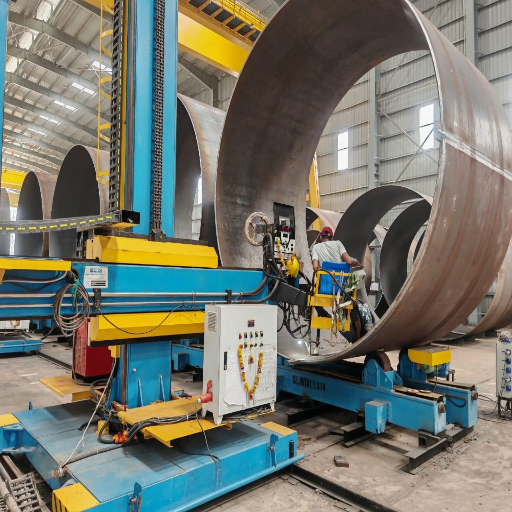
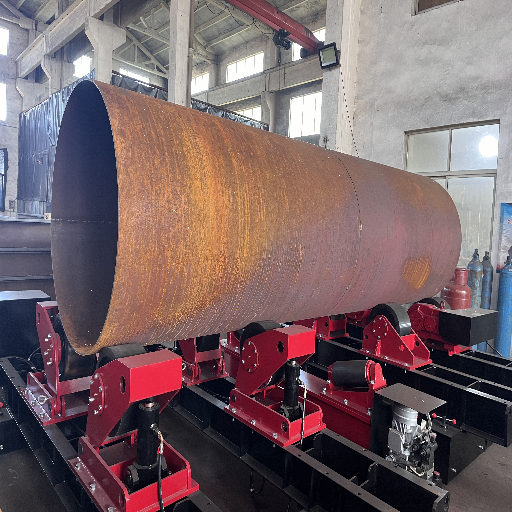
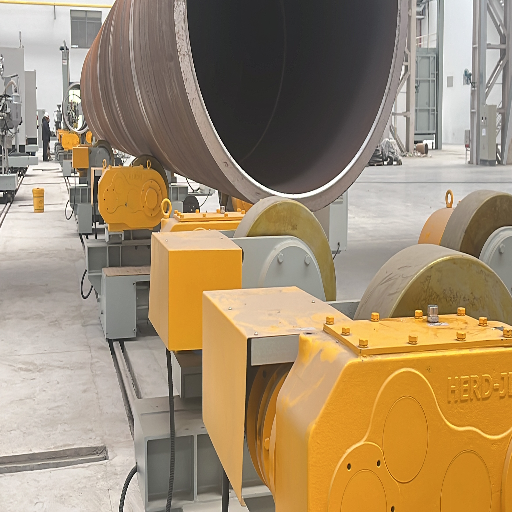
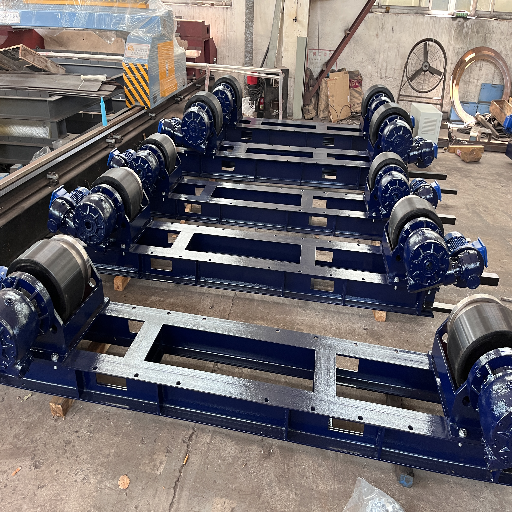
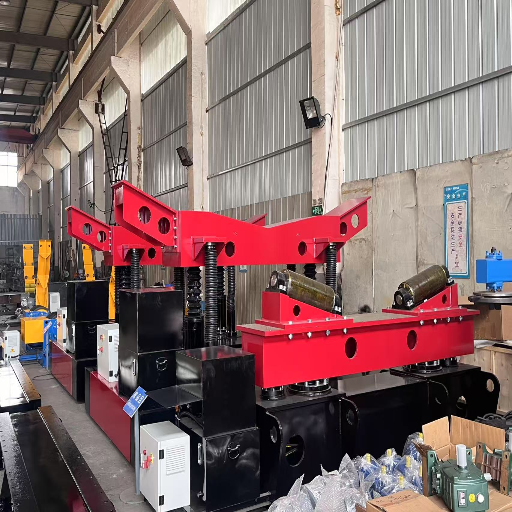
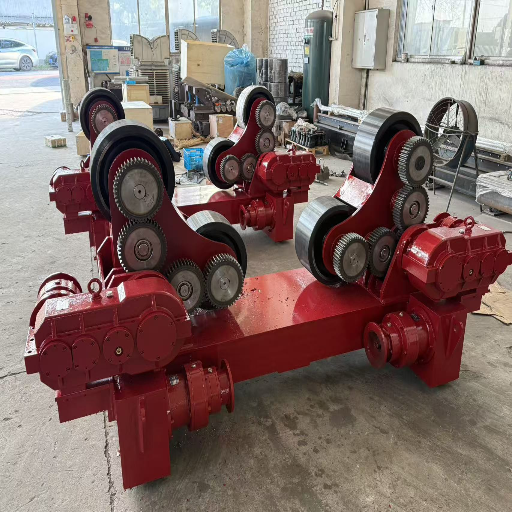
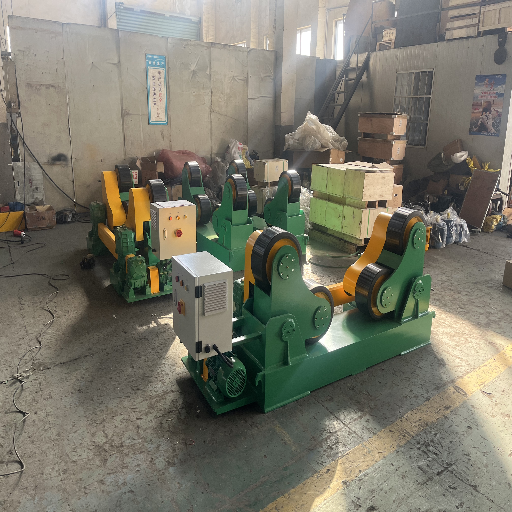
State-of-the-Art Manufacturing Facility & Production Lines
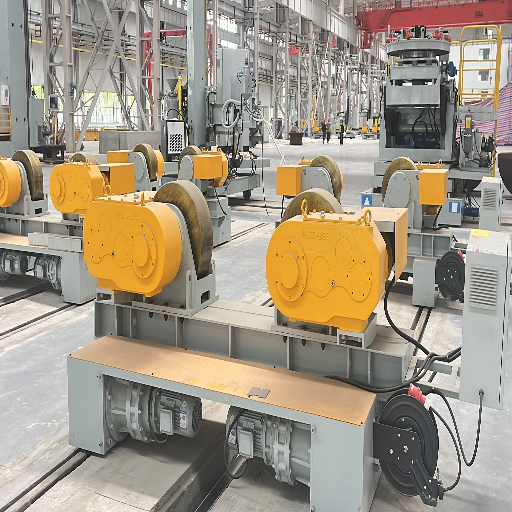
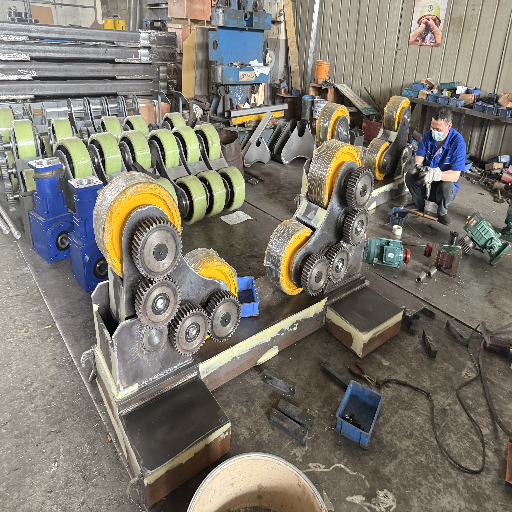
Welding Rotator Pricing, Lead Time, OEM & Warranty — A Procurement Guide
Price tracks capacity class far more than brand, which is why a single list number is misleading. Indicative industry bands below give your budget a realistic starting range; for the exact figure, ABOKE quotes against your tonnage, diameter, wheel material and control package.
Welding Rotator Price-by-Capacity Reference Bands
| Capacity class | Indicative industry price band | What moves the number |
|---|---|---|
| Light (≤ ~1 t) | ~$3,000–$8,000 | Wheel material, control type |
| Mid (5–20 t) | ~$10,000–$30,000 | Drive + idler count, VFD, diameter range |
| Heavy (50–180 t) | ~$40,000–$100,000+ | Frame, anti-drift, certification, custom |
Indicative bands compiled from published industry pricing; your exact quote depends on configuration.
What to put in your RFQ
Send your heaviest workpiece weight + fixture, smallest and largest diameter, wall thickness and material, and required line speed. Ask for the eccentric-load chart, wheel-material recommendation, drive/idler layout, lead time, and spare-parts policy.
ABOKE supplies OEM and customized builds, backs every machine with a one-year free warranty, and ships worldwide from Wuxi. Quality management follows ISO 9001:2015.
Contact ABOKE for an exact quotation
Welding Rotator Configuration & Sizing Tools
Welding Rotator Sizing System
Size your equipment based on real-world eccentric loads, not just headline weight. This tool applies a strict 1.5× safety factor plus off-center derating to ensure operational safety and machine longevity.
Access ToolWelding Rotator Type Decision System
A self-aligning rotator is not always the universally correct answer. Based on your workpiece variability, wall thickness, and production environment, different mechanical structures offer varying ROI.
Evaluate TypeCapacity-to-Diameter Model Selector
Sizing a self-aligning rotator correctly requires balancing two critical vectors: maximum vessel weight and external diameter. Using the matrix ensures your equipment provides optimal surface contact without motor strain.
Select ModelFAQ — Self-Aligning Welding Rotator Questions
Choose self-aligning if you change workpiece diameters often, run thin-wall vessels, or feed a fixed welding head; the wheels follow each diameter with no manual setup. Choose conventional if you run one diameter at high volume and want the lowest price with nothing to calibrate.
Our range covers capacity classes from 5 to 500 tonnes, with custom builds above that. Size on the eccentric (off-center) rating, not the headline tonnage — a unit may carry far less load when the center of gravity is offset, so apply a 1.5× safety factor to your heaviest workpiece plus fixture.
Typical self-aligning beds span roughly 250 mm to 6,300 mm across the model range, with the exact band set by the capacity class. Tell us your smallest and largest cylinder and we match a single bed to the full range where possible.
Polyurethane wheels are gentler on the shell, protect thin-wall and finished surfaces, and damp noise; steel-faced wheels suit higher loads and the elevated temperatures near a heavy weld zone. Many vessel shops run a PU/steel combination.
Yes. Pipe spools are one of the most common applications — the rollers rotate the pipe for continuous circumferential welds, and the self-centering action keeps the seam at a stable height even as you move between pipe sizes.
Pressure-vessel and tank fabrication, petroleum and chemical, power generation, shipbuilding, wind-energy (tower sections), boilers and heat exchangers, and general heavy machinery — anywhere large cylinders are welded.
As an indicative guide, light units run roughly $3,000–$8,000, mid-capacity (5–20 t) about $10,000–$30,000, and heavy units (50–180 t) from $40,000 to $100,000+. Your exact price depends on capacity, diameter range, wheel material and controls — request a quotation.
Every ABOKE machine carries a one-year free warranty, with OEM/customization available and documented spare-parts support. Polyurethane tyres, drive gearboxes and control components are the parts most likely to need replacement over a long service life, so we keep them available and quote lead times up front. As an exporter to eight-plus countries since 1999 — Spain, Germany, Russia, India, Brazil, France, Italy and Vietnam — we ship and support worldwide, and can build to a customer’s drawing or control specification under OEM terms.
Line speed is typically 6–60 m/h with stepless variable-frequency (VFD) control, so you can match surface speed to the welding process — SAW, MIG or TIG — and the workpiece radius.
Routine work is light: keep the wheels and pivots clean, check the gearbox oil and the wheel-carrier locking, and inspect the drive and control box. Wheel wear is the main consumable — polyurethane tyres are replaceable.
A rotator (turning roll) rotates a cylindrical workpiece on rollers; a positioner tilts and turns a part on a table or headstock. Round, long work goes on a rotator; brackets and frames that need tipping go on a positioner.
Our Engineering Perspective on Self-Alignment
The capacity, diameter and speed bands on this page reflect standard self-aligning turning-roll practice; ABOKE confirms exact figures per model on the spec sheet, and the pricing bands are published industry indicatives, not our list prices. We build these rotators in Wuxi and recommend self-alignment only where a shop’s diameter mix or thin-wall work actually justifies it — a single-diameter line is often better served by a conventional bed.
Get Instant Quote